
Dioon holmgrenii
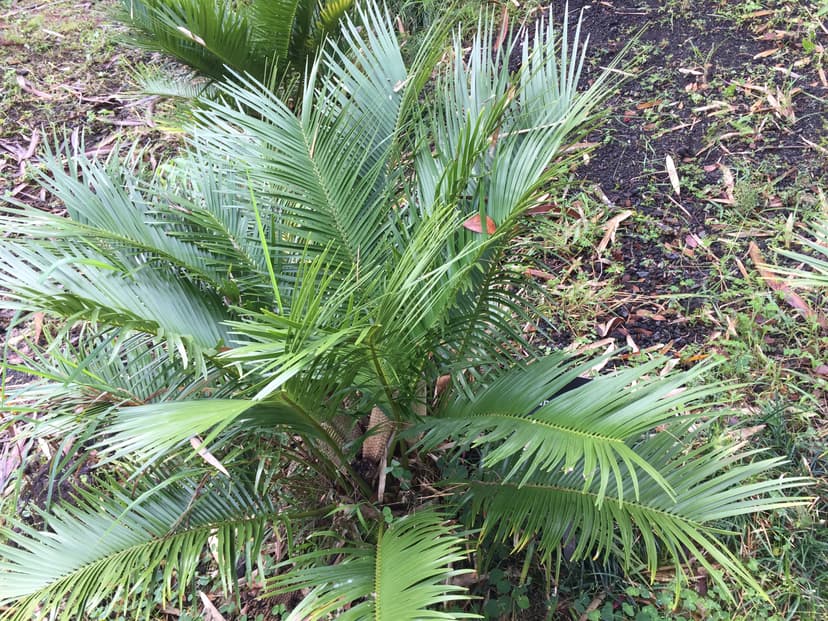
Dioon holmgrenii, commonly known as the sun palm, is a species of cycad native to a limited region in Oaxaca, Mexico. It thrives in humid pine-oak forests and is distinguished by its obligate mutualistic relationship with the beetle Pharaxonotha occidentalis, which aids in its pollination.
Key Facts
- ›Endemic to a small area southwest of San Gabriel Mixtepec, Oaxaca, Mexico.
- ›Known by the common name 'palma del sol' or 'sun palm'.
- ›Found in humid pine-oak forest habitats.
- ›Has only two known subpopulations.
- ›Engages in an obligate mutualistic relationship with the beetle Pharaxonotha occidentalis for pollination.

Palma Del Sol, Sun Palm
Mexico
About Dioon holmgrenii
Dioon holmgrenii, commonly referred to as the sun palm or 'palma del sol', is a species of cycad belonging to the Zamiaceae family. This plant is notable for its extremely restricted natural distribution, being endemic to a specific region in Oaxaca, Mexico, located just southwest of San Gabriel Mixtepec. Its habitat preference lies within humid pine-oak forests, where it has been observed to persist in only two known subpopulations.
Botanical Characteristics and Reproduction
While detailed descriptions of its physical form are limited in available records, Dioon holmgrenii engages in a critical and obligatory mutualistic relationship for its reproduction. The beetle Pharaxonotha occidentalis plays a vital role, inhabiting and breeding within the male cones of the cycad. During this process, the beetles consume pollen and parts of the cone tissue. Crucially, as they move between male and female cones, they act as the primary vectors for pollen transfer, ensuring the fertilization of the female cones and the continuation of the species. This specialized interaction highlights the delicate ecological balance required for the survival of Dioon holmgrenii.
Source: Wikipedia ↗
Frequently Asked Questions
What is the common name for Dioon holmgrenii?
Dioon holmgrenii is commonly known as 'palma del sol', which translates to 'sun palm'.
Where is Dioon holmgrenii found naturally?
This cycad species is endemic to Mexico, specifically occurring in an area just to the southwest of San Gabriel Mixtepec, Oaxaca.
What type of habitat does Dioon holmgrenii prefer?
Dioon holmgrenii grows in humid pine-oak forest habitats.
Are there many populations of Dioon holmgrenii?
No, there are only two known subpopulations of Dioon holmgrenii.
How does Dioon holmgrenii reproduce?
Dioon holmgrenii has an obligate mutualistic relationship with the beetle Pharaxonotha occidentalis. The beetles live and breed in male cones, consuming pollen and cone tissues, and in the process, transfer pollen to female cones, facilitating pollination.
Related Cycad species

Encephalartos horridus
Encephalartos horridus, commonly known as the Eastern Cape blue cycad, is a distinctive, low-growing cycad native to the Eastern Cape Province of South Africa. It is recognized for its striking blue-gray, spiny leaves and typically develops a subterranean stem. This species thrives in arid shrublands and rocky ridges, exhibiting a slow growth rate and requiring specific conditions for successful cultivation.
Zamia inermis
Zamia inermis is a critically endangered cycad species native to Actopan, Veracruz, Mexico. It is characterized by its shrub-like growth, with a trunk that can be branched and upright leaves composed of numerous linear-lanceolate leaflets. This species is dioecious and faces significant threats from habitat loss, wildfires, and over-harvesting.

Encephalartos dolomiticus
Encephalartos dolomiticus, commonly known as the Wolkberg cycad, is a critically endangered cycad species native to the Wolkberg region of South Africa. This tree-like cycad typically grows up to 2 meters tall and is characterized by its distinctive bluish leaves forming a crown, with lance-shaped leaflets arranged oppositely along the rachis. It is a dioecious species, producing separate male and female cones.