
Stangeria eriopus
Adaptable, found in habitats ranging from grassland to closed forest, in full sunshine or shade, often near coastal dunes but with low salt tolerance. Prefers sandy, slightly acidic soil but can grow on clay or stony soils.·Subterranean stem with above-ground leaves.·Insect-pollinated, emitting a faint odor to attract beetles.·Vulnerable
Stangeria eriopus is a unique cycad species native to southern Africa, distinguished by its fern-like leaves that are pinnately-veined. It exhibits considerable variation in leaf length depending on its habitat, with forest forms having longer leaves and grassland forms having shorter, tougher leaves adapted to fire and drought. This species is the sole representative of its genus and is known for its subterranean stem and carrot-shaped tuber.
Key Facts
- ›Endemic to southern Africa, found in coastal regions of South Africa and southern Mozambique.
- ›Possesses unique pinnately-veined, fern-like leaves, unlike other cycads.
- ›Occurs in two forms: a forest form with longer leaves and a grassland form with shorter, more resilient leaves.
- ›Has a completely subterranean stem and a large, carrot-shaped root tuber.
- ›Reproduction involves stalked, silvery cones that are borne on separate male and female plants (dioecious).
- ›Considered Vulnerable by the IUCN due to habitat loss and over-exploitation for traditional medicine.

Natal Grass Cycad, Hottentot's Head, Stangeria
South Africa, Mozambique
- Completely subterranean
- Tuber shaped like a carrot
- Reaches a diameter of 10 to 25 centimeters
- Bifurcates into several shoot tips
- Forms woolly scales at the beginning of new shoots which fall off early
- Stalked, feathered, fern-like
- Between 25 cm and 2 m long
- Pinnately-veined, a distinguishing feature
- Petiole comprises one third to one half of the overall length
- Young leaves bent in bud position, tip rolled up
- Young leaves dotted with short, gray, unbranched hairs that usually fall off quickly
- Forest form has larger, wider leaves up to 2 m
- Grassland form has shorter leaves with a thicker cuticle
- Stalked reproductive organs
- Male and female cones borne on different plants
- Both male and female cones are pedunculated and covered with silvery hair when young, which is deciduous
- Male cone: Cylindrical, tapers to tip, 30-40 mm diameter, 10-25 cm long, turns yellowish-brown at maturity.
- Female cone: Ellipsoidal to conical with rounded tip, approx. 18 inches long, 8 cm diameter, turns dark green at maturity.
- About 2 inches long and 14 mm wide
- Consist of a hard, dark red part
- Surrounded by a fleshy, purple seed coat which later turns brown
Traditional Medicine, Animal Feed Additive
- Habitat loss
- Over-exploiting for traditional medicine
- Potential introduction of pests like Aulacaspis Yasumatsui
- Fungus Guignardia Mangiferae
- Larvae of butterfly Callioratis Millari feed on leaves
About Stangeria eriopus
Stangeria eriopus is a distinctive cycad species native to the coastal regions of southern Africa, specifically South Africa and southern Mozambique. It holds the unique position of being the sole species within the genus Stangeria. This perennial evergreen cycad is notable for its exceptionally long lifespan and its remarkable adaptation to various environments, from grasslands prone to fire and drought to more sheltered forest settings.
Botanical Characteristics
The most striking feature of Stangeria eriopus is its foliage. Unlike most cycads, its leaves are stalked, feathered, and fern-like, possessing pinnately-veined structures that set it apart botanically. These leaves can range from 30 cm in the grassland form to up to 2 meters in the forest form, with the petiole making up a significant portion of the overall length. Young leaves emerge coiled and are often covered in fine, grey hairs that typically shed as they mature.
The plant's stem is entirely subterranean, presenting as a large, carrot-shaped tuber that can reach diameters of 10 to 25 centimeters. This tuber bifurcates into multiple shoot tips. Reproduction occurs through stalked cones, with male and female cones borne on separate plants, a characteristic known as dioecious. The cones are initially covered in silvery hairs that are lost upon maturity. Male cones are cylindrical, while female cones are more ellipsoidal to conical.
Distribution, Habitat, and Conservation
Stangeria eriopus thrives in a narrow coastal strip, typically found within 50 kilometers of the sea. It exhibits adaptability, growing in diverse habitats including grasslands and forests, and tolerating both full sun and shade, although it has low salt tolerance. Sandy, slightly acidic soils are preferred, but it can also grow on clay or stony soils at the northern limits of its range.
Despite its adaptability, Stangeria eriopus is classified as Vulnerable on the IUCN Red List. This status is primarily due to habitat loss and the unsustainable harvesting of plants for traditional medicinal purposes, where the tuber is used for various tinctures and as an emetic. Additionally, the species faces threats from potential invasive pests and diseases. Conservation efforts include asexual reproduction from root parts and tissue culture, which aid in propagation and preservation.
Source: Wikipedia ↗
Frequently Asked Questions
What makes Stangeria eriopus different from other cycads?
Stangeria eriopus is botanically distinct from other cycads due to its pinnately-veined, fern-like leaves, a characteristic not found in any other cycad species. Its reproductive cones are also stalked, and its stem is entirely subterranean.
Where is Stangeria eriopus found in the wild?
This cycad is native to a narrow coastal strip extending about 800 kilometers along the KwaZulu-Cape and Maputaland coastal forest mosaics of South Africa and southern Mozambique. It is typically found within 50 km of the sea, but not closer than 2-3 km.
What are the two main forms of Stangeria eriopus?
Stangeria eriopus exists in two variable forms. The forest form, found in wetter areas, has large, wide leaves up to 2 meters long. The grassland form, adapted to fire and drought, has shorter leaves, around 30 cm long, with a thicker cuticle.
How does Stangeria eriopus reproduce?
As a dioecious species, Stangeria eriopus has separate male and female plants. Both sexes produce stalked cones that are covered with silvery hair when young. These cones mature and release pollen (from male cones) or seeds (from female cones).
What is the conservation status of Stangeria eriopus?
Stangeria eriopus is listed as Vulnerable on the IUCN Red List. Its primary threats include habitat destruction and unsustainable harvesting for traditional medicinal purposes, leading to over-exploitation.
What are the uses of Stangeria eriopus?
In traditional South African medicine, the subterranean tuber stem is used to produce medicinal tinctures and as an emetic. The dried tuber is also mixed with animal feed to combat internal parasites in cattle. These uses contribute to its endangered status.
Related Cycad species
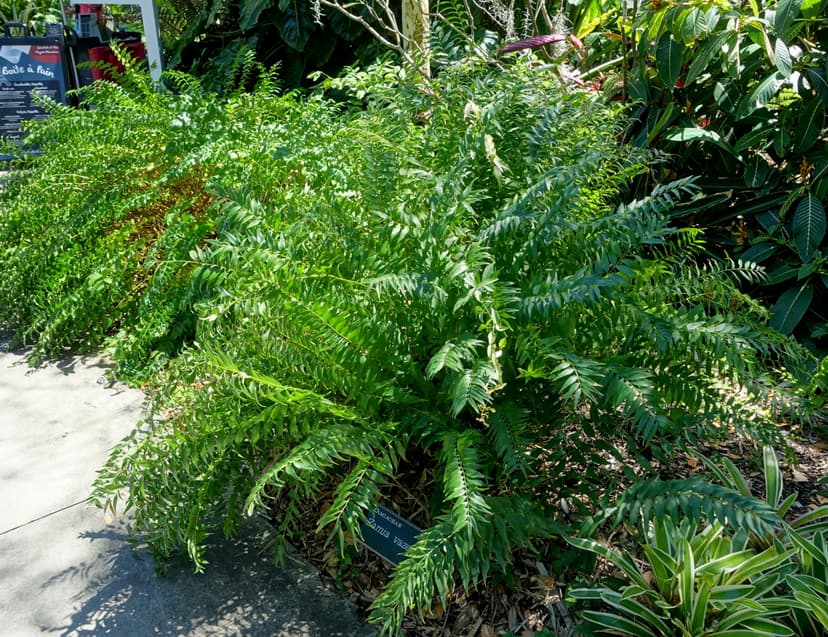
Zamia vazquezii
Zamia vazquezii is a critically endangered cycad species native to a small area in northern Veracruz, Mexico. It is characterized by its subterranean stem and pinnately compound leaves with toothed leaflets. The species is dioecious, producing distinct male and female cones, and its seeds are orange-red to red.

Encephalartos altensteinii
Encephalartos altensteinii is a species of palm-like cycad native to South Africa, known for its impressive height and broad, toothed leaflets. It is commonly referred to as the breadtree or Eastern Cape giant cycad and is recognized for its long-lived individuals, with one specimen at the Royal Botanic Gardens, Kew, being considered the world's oldest potted plant. The species is currently listed as vulnerable due to various threats.
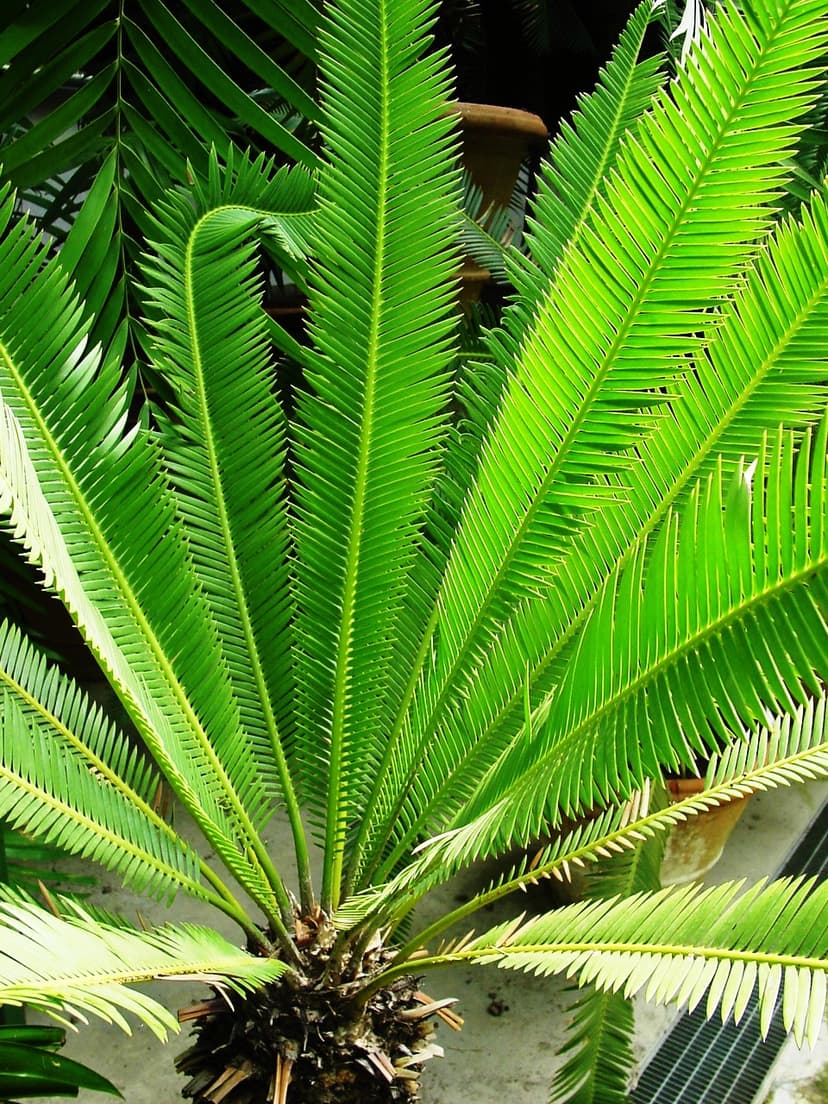
Dioon purpusii
Dioon purpusii, commonly known as Purpus' cycad, is a cycad species native to a limited region in Mexico, specifically Oaxaca and Puebla. This species is characterized by its feather-like leaves that sprout from the top of a trunk, which can grow up to 5 meters tall. A unique botanical feature is its obligatory mutualistic relationship with the beetle Pharaxonotha bicolor, which plays a crucial role in its pollination.