
Dioon spinulosum
Tropical evergreen rainforests on limestone cliffs and rocky hillsides.·Arborescent
Dioon spinulosum, also known as the giant dioon or spiny dioon, is a cycad species native to the tropical rainforests of Veracruz and Oaxaca, Mexico. It is distinguished by its impressive size, being one of the tallest cycads globally, and its large reproductive cones. The species thrives on limestone cliffs and rocky hillsides.
Key Facts
- ›Endemic to limestone cliffs and rocky hillsides in Veracruz and Oaxaca, Mexico.
- ›Can reach up to 16 meters (52 ft) in height, making it one of the tallest cycads.
- ›Mature leaves can be 1.5–2 meters long with 140 to 240 leaflets.
- ›Produces some of the largest seed cones among cycad species, up to 80 cm long and 30 cm in diameter.
- ›Prefers well-drained soil and is typically found at elevations between 30 to 300 meters.

Giant Dioon, Spiny Dioon, Gum Palm, Coyolito De Cerro
Veracruz, Mexico, Oaxaca, Mexico
- May exceptionally reach as much as 16 meters in height.
- More typically 3–6 m tall.
Mature leaves are numerous., Measure 1.5–2 m in length., Possess 140 to 240 leaflets., Edges of the leaves have small spines.
- Among the largest of the cycads.
- Measure almost 80 centimeters in length together with its stem.
- Measure 30 cm in diameter.
About Dioon spinulosum
Dioon spinulosum: The Giant Dioon
Dioon spinulosum, commonly referred to as the giant dioon or spiny dioon, is a remarkable cycad species native to specific regions of Mexico. Its natural habitat is confined to the tropical rainforests found on limestone cliffs and rocky hillsides in the states of Veracruz and Oaxaca. This species is notable for its impressive size, holding the distinction of being one of the tallest cycads globally, with potential to reach up to 16 meters in height.
Botanical Characteristics
The mature plants of Dioon spinulosum are characterized by their substantial stature, though typically ranging between 3 to 6 meters. Their leaves are numerous, measuring between 1.5 to 2 meters in length, and are adorned with a considerable number of leaflets, generally between 140 and 240. A distinctive feature, reflected in its scientific name 'spinulosum' (meaning 'with small spines'), is the presence of fine spines along the edges of its leaves. The reproductive cones of this cycad are exceptionally large, among the biggest found in the cycad family, reaching lengths of nearly 80 centimeters and diameters of up to 30 centimeters.
Range and Habitat
Dioon spinulosum is endemic to a limited geographical area within Mexico, specifically in the states of Oaxaca and Veracruz. Historically, its distribution may have been broader, but it now primarily grows in the lowlands of the Sierra Madre Oriental mountains. It thrives in tropical evergreen rainforest environments, favoring rocky outcrops and limestone formations. While it can be found at elevations from 30 to 300 meters above sea level, it often grows as part of the forest understory, with only a few individuals reaching above the canopy.
Cultivation and Conservation
In cultivation, Dioon spinulosum is known for its slow growth rate and possesses a moderate tolerance for salinity. It is considered cold-hardy in USDA zones 9B through 11, indicating its adaptability to certain climatic conditions outside its native tropical range. The species requires well-drained soil and consistent watering. While the article text does not specify its conservation status, its endemic nature and specific habitat requirements suggest a need for careful management and protection.
Source: Wikipedia ↗
Frequently Asked Questions
What is Dioon spinulosum?
Dioon spinulosum is a species of cycad, commonly known as the giant dioon or spiny dioon. It is a notable plant for its impressive stature, being one of the tallest cycads in the world, and its large reproductive cones.
Where is Dioon spinulosum found naturally?
This cycad is endemic to the tropical rainforests of the Mexican states of Veracruz and Oaxaca. It specifically grows on limestone cliffs and rocky hillsides within these regions.
What are the distinctive features of Dioon spinulosum?
Dioon spinulosum is characterized by its potential to grow up to 16 meters tall. Its mature leaves are long, measuring 1.5 to 2 meters, and possess numerous leaflets. The species also produces exceptionally large seed cones.
What is the meaning of the scientific name Dioon spinulosum?
The species name 'spinulosum' is derived from Latin and means 'with small spines.' This likely refers to the spiny edges of its leaves, contributing to its common name 'spiny dioon'.
What are the common names for Dioon spinulosum?
Dioon spinulosum is widely recognized by the common names giant dioon and spiny dioon. In Spanish, it is known as Coyolito de Cerro.
What kind of habitat does Dioon spinulosum prefer?
The species thrives in tropical evergreen rainforests, specifically on limestone hills and cliffs. It is found at altitudes ranging from 30 to 300 meters above sea level and often grows as part of the understory.
Is Dioon spinulosum difficult to grow?
In cultivation, Dioon spinulosum is considered slow-growing. It prefers well-drained soil with regular watering and can tolerate soils with limited nutrients or those rich in limestone. It is cold hardy in USDA zones 9B to 11.
Related Cycad species

Encephalartos lanatus
Encephalartos lanatus, commonly known as the Olifants River cycad, is a slow-growing cycad species native to Mpumalanga and Gauteng in South Africa. Characterized by its bluish-green, woolly leaves and the unique arrangement of leaflets, this species thrives in rocky, prairie-covered slopes and exhibits remarkable resilience to fire and frost.
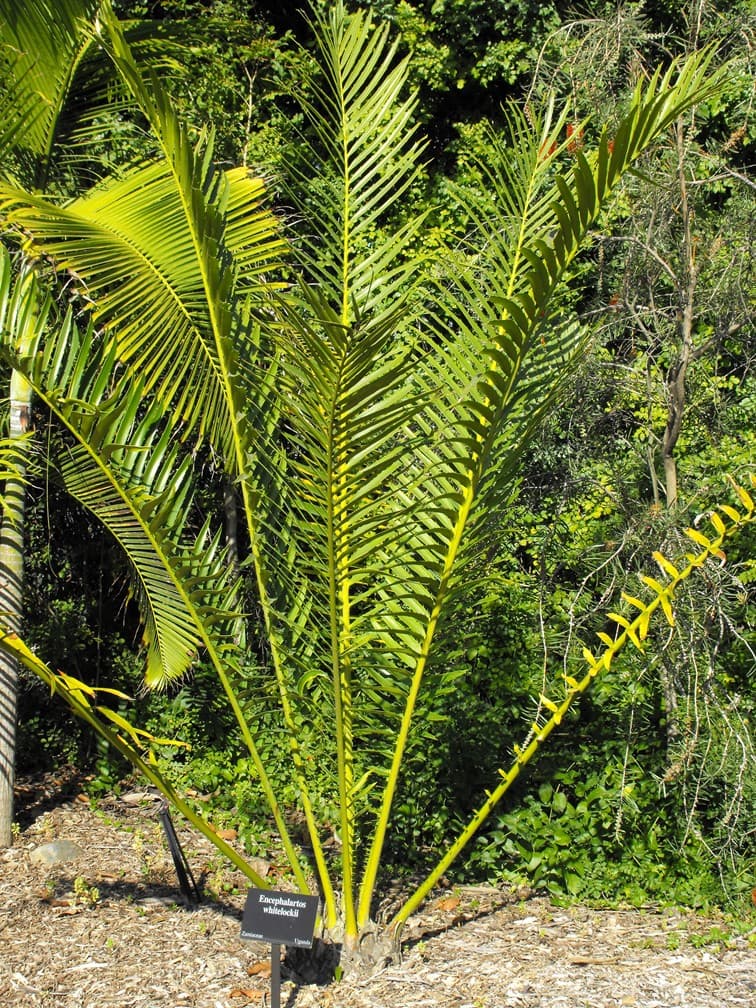
Encephalartos whitelockii
Encephalartos whitelockii is a critically endangered cycad species native to a single location in southwestern Uganda, forming one of Africa's most impressive cycad populations along the Mpanga River. This large, arborescent cycad is characterized by its tall stems topped with stiff, glossy dark green fronds and distinctive bluish-green cones, and it plays an important role in the local ecosystem, particularly for baboons.
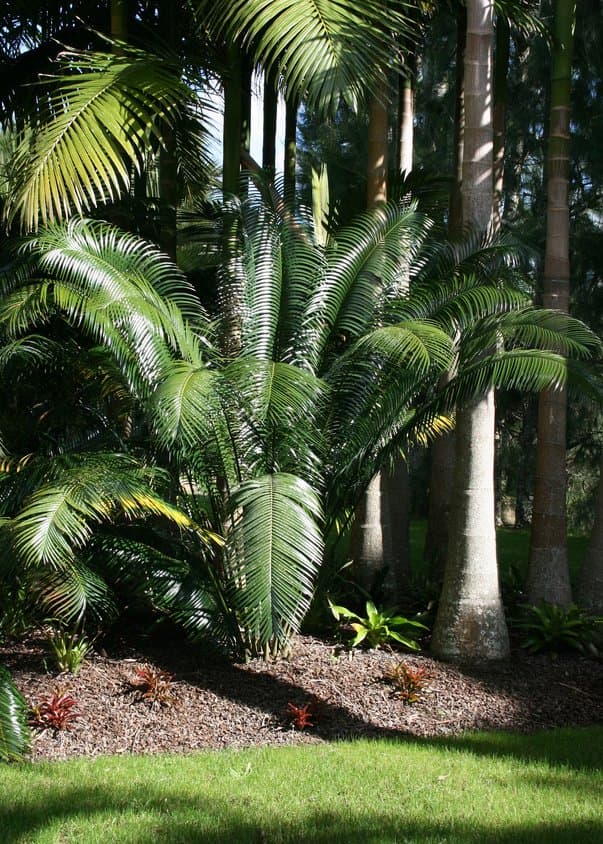
Lepidozamia peroffskyana
Lepidozamia peroffskyana is a palm-like cycad native to eastern Australia, specifically in Queensland and New South Wales. It is characterized by its slow growth, long lifespan, and impressive reproductive cones, which are among the largest in the cycad world. The species is named in honor of Count Peroffsky, a benefactor of the St. Petersburg Botanical Garden.