
Encephalartos bubalinus
The specific habitat details are not provided in the text, but cycads generally thrive in tropical and subtropical environments.·Arborescent to sub-shrubby
Encephalartos bubalinus is a species of cycad native to Kenya and Tanzania, characterized by its upright or reclining stem and pinnate leaves. This dioecious plant produces distinctive greenish male and female cones, with seeds enclosed in a red-orange sarcotesta. It is known for its tough, spiny leaflets.
Key Facts
- ›Native to Kenya and Tanzania.
- ›Features an upright or reclining stem up to 2 meters tall and 35-45 cm in diameter.
- ›Pinnate leaves are 60-160 cm long with 50-90 pairs of tough, spiny leaflets.
- ›Produces large, greenish male and female cones.
- ›Seeds are ovoid, 30-40 mm long, and covered by a red-orange sarcotesta.

Kenya, Tanzania
Upright or sometimes reclining, Reaches up to 2 meters in height, 35–45 cm in diameter
- Pinnate
- 60 to 160 cm long
- Composed of 50-90 pairs of tough leaflets
- Leaflets arranged alternately along the midrib at a 45° angle
- Leaflets become spiny near the base
- Greenish in color
- Male cones: 27.5–55 cm long, 13–5 cm in diameter
- Female cones: 32-45 cm long, 20–25 cm wide
Roughly Ovoid, 30–40 mm Long, Enveloped In A Red-Orange Sarcotesta
About Encephalartos bubalinus
Encephalartos bubalinus is a species of cycad native to the East African nations of Kenya and Tanzania. It is a distinctive member of the Zamiaceae family, recognizable by its unique botanical features and reproductive structures.
Description and Characteristics
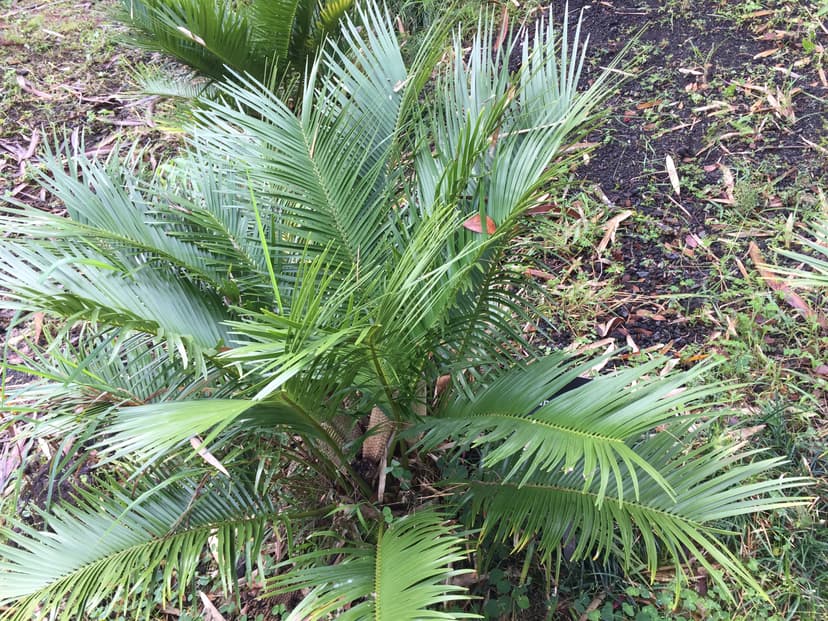
The stem of Encephalartos bubalinus can grow upright or sometimes recline, reaching mature heights of up to 2 meters and a substantial diameter of 35–45 cm. Crowning the stem are its pinnate leaves, which can extend from 60 to 160 cm in length. Each leaf is composed of numerous leaflets, typically ranging from 50 to 90 pairs. These tough leaflets are arranged alternately along the midrib at a 45° angle, and they develop spiny characteristics towards the base, providing a protective element.
As a dioecious species, Encephalartos bubalinus has separate male and female plants. The reproductive cones are a notable feature, both appearing greenish. Male cones are elongated, measuring 27.5–55 cm in length and 13–5 cm in diameter. Female cones are broader, with lengths from 32-45 cm and a width of 20–25 cm. Following pollination, the seeds are produced, which are roughly ovoid, about 30–40 mm long, and distinctively enclosed within a red-orange sarcotesta, a fleshy outer layer.
Source: Wikipedia ↗
Frequently Asked Questions
Where is Encephalartos bubalinus found naturally?
Encephalartos bubalinus is indigenous to the East African countries of Kenya and Tanzania. Its natural range is restricted to these two nations.
What are the typical physical characteristics of Encephalartos bubalinus?
This cycad species typically has a stem that grows upright or sometimes reclines, reaching heights of up to 2 meters and a diameter of 35-45 cm. Its leaves are pinnate, measuring between 60 and 160 cm in length, and are adorned with numerous tough, spiny leaflets.
What do the cones of Encephalartos bubalinus look like?
Encephalartos bubalinus produces greenish cones. The male cones are elongated, measuring 27.5–55 cm in length and 13–5 cm in diameter, while the female cones are wider, ranging from 32-45 cm long and 20–25 cm wide.
How are the seeds of Encephalartos bubalinus described?
The seeds of Encephalartos bubalinus are roughly ovoid in shape and are approximately 30–40 mm in length. They are notable for being enveloped in a vibrant red-orange sarcotesta, which is a fleshy outer covering.
Is Encephalartos bubalinus a male and female plant?
Yes, Encephalartos bubalinus is a dioecious species, meaning that individual plants are either male or female. This requires pollination between separate male and female individuals for seed production.
Related Cycad species

Encephalartos horridus
Encephalartos horridus, commonly known as the Eastern Cape blue cycad, is a distinctive, low-growing cycad native to the Eastern Cape Province of South Africa. It is recognized for its striking blue-gray, spiny leaves and typically develops a subterranean stem. This species thrives in arid shrublands and rocky ridges, exhibiting a slow growth rate and requiring specific conditions for successful cultivation.
Zamia inermis
Zamia inermis is a critically endangered cycad species native to Actopan, Veracruz, Mexico. It is characterized by its shrub-like growth, with a trunk that can be branched and upright leaves composed of numerous linear-lanceolate leaflets. This species is dioecious and faces significant threats from habitat loss, wildfires, and over-harvesting.

Encephalartos dolomiticus
Encephalartos dolomiticus, commonly known as the Wolkberg cycad, is a critically endangered cycad species native to the Wolkberg region of South Africa. This tree-like cycad typically grows up to 2 meters tall and is characterized by its distinctive bluish leaves forming a crown, with lance-shaped leaflets arranged oppositely along the rachis. It is a dioecious species, producing separate male and female cones.