
Encephalartos septentrionalis
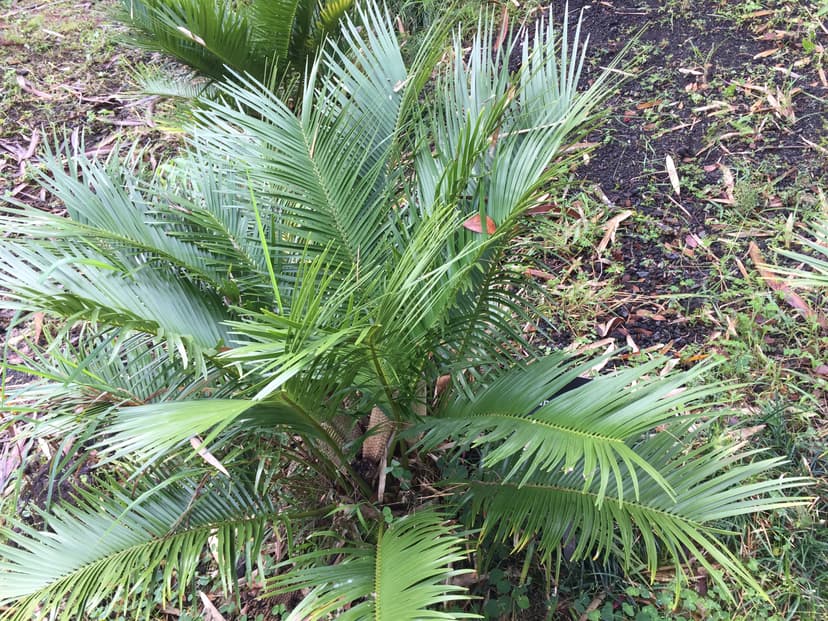
Arborescent, with a partially subterranean stem.
Encephalartos septentrionalis, commonly known as the Nile cycad, is a distinctive cycad species found in parts of South Sudan, northern Uganda, the Democratic Republic of the Congo, and the Central African Republic. It is characterized by its partially subterranean, round stem and striking feather-like leaves, which can reach considerable lengths. This species is dioecious, with separate male and female plants producing distinctively shaped cones.
Key Facts
- ›Native to South Sudan, northern Uganda, northern DRC, and Central African Republic.
- ›Features a round stem, partially underground, up to 2 meters tall and 25-30 cm in diameter.
- ›Leaves are pinnate, 90-150 cm long, with 40-50 pairs of lance-shaped leaflets.
- ›Dioecious, with male cones 12-20 cm long and female cones solitary, 23-35 cm long.
- ›Seeds are oval-shaped with a reddish sarcotesta.

Nile Cycad
South Sudan, Northern Uganda, Northern Democratic Republic of the Congo, Central African Republic
Round Stem, Partially Underground, Up To 2 Meters In Height, 25–30 Centimeters In Diameter
Feather-like, 90–150 centimeters long, Form a crown at the top of the stem, Supported by a 2.5–5 centimeter long petiole, Contain 40–50 pairs of lance-shaped leaflets, Leaflets have smooth edges, Greyish-green color
- Male plants produce up to 8–10 ellipsoid cones
- Male cones are 12–20 centimeters long and 6–8 centimeters wide
- Male cones are supported by stalks
- Female plants produce solitary cylindrical cones
- Female cones hang down
- Female cones measure 23–35 centimeters long and 18–20 centimeters in diameter when ripe
- Female cones are yellowish-brown in color
Roughly Oval-Shaped, Covered By A Reddish Sarcotesta
About Encephalartos septentrionalis
Encephalartos septentrionalis: The Nile Cycad
Encephalartos septentrionalis, commonly referred to as the Nile cycad, is a species of cycad native to a specific region of central and eastern Africa. Its natural distribution spans South Sudan, northern Uganda, the northern Democratic Republic of the Congo, and the interior of the Central African Republic. This cycad is distinguished by its stout, round stem, which often grows partially submerged in the ground, reaching heights of up to two meters and diameters of 25 to 30 centimeters.
Botanical Features
The foliage of Encephalartos septentrionalis is a notable characteristic, with its feather-like leaves measuring an impressive 90 to 150 centimeters in length. These leaves emerge from the top of the stem, forming a crown. Each leaf is comprised of numerous pairs of lance-shaped leaflets, which are smooth-edged and possess a greyish-green hue. The plant is dioecious, meaning individual plants are either male or female. Reproductive structures, known as cones, differ between sexes: male plants produce several ellipsoid cones, while female plants bear a single, large cylindrical cone that hangs downwards. The seeds are oval and enclosed in a distinctive reddish outer layer.
Distribution and Habitat
The Nile cycad thrives in the specific geographic areas mentioned, though detailed information about its precise habitat within these regions is not extensively documented in available records. Its presence is confirmed across parts of South Sudan, northern Uganda, the Okapi Faunal Reserve in the Democratic Republic of the Congo, and the Central African Republic. The species' scientific name, Encephalartos septentrionalis, reflects its northern (septentrionalis) distribution within the Encephalartos genus.
Source: Wikipedia ↗
Frequently Asked Questions
What is Encephalartos septentrionalis commonly called?
Encephalartos septentrionalis is commonly known as the Nile cycad. This name likely refers to its presence in regions associated with the Nile River basin or its tributaries.
Where is the Nile cycad found in the wild?
The Nile cycad is indigenous to several African countries, including South Sudan, northern Uganda, the northern Democratic Republic of the Congo, and the interior of the Central African Republic.
What are the physical characteristics of Encephalartos septentrionalis?
This cycad species has a round stem that is partially buried underground, reaching up to 2 meters in height and 25–30 cm in diameter. Its leaves are feather-like, measuring 90–150 cm long, and are composed of numerous pairs of lance-shaped leaflets.
How do male and female Nile cycads differ?
Encephalartos septentrionalis is dioecious, meaning it has separate male and female plants. Male plants produce multiple ellipsoid cones, while female plants bear solitary, hanging cylindrical cones.
What do the cones of Encephalartos septentrionalis look like?
Male cones are ellipsoid, typically 12–20 cm long and 6–8 cm wide, and are borne on stalks. Female cones are solitary, cylindrical, hang downwards, and can measure 23–35 cm long and 18–20 cm in diameter when mature, displaying a yellowish-brown color.
What are the seeds of the Nile cycad like?
The seeds of Encephalartos septentrionalis are roughly oval in shape. They are distinguished by being covered with a reddish outer layer known as a sarcotesta.
Related Cycad species

Encephalartos horridus
Encephalartos horridus, commonly known as the Eastern Cape blue cycad, is a distinctive, low-growing cycad native to the Eastern Cape Province of South Africa. It is recognized for its striking blue-gray, spiny leaves and typically develops a subterranean stem. This species thrives in arid shrublands and rocky ridges, exhibiting a slow growth rate and requiring specific conditions for successful cultivation.
Zamia inermis
Zamia inermis is a critically endangered cycad species native to Actopan, Veracruz, Mexico. It is characterized by its shrub-like growth, with a trunk that can be branched and upright leaves composed of numerous linear-lanceolate leaflets. This species is dioecious and faces significant threats from habitat loss, wildfires, and over-harvesting.

Encephalartos dolomiticus
Encephalartos dolomiticus, commonly known as the Wolkberg cycad, is a critically endangered cycad species native to the Wolkberg region of South Africa. This tree-like cycad typically grows up to 2 meters tall and is characterized by its distinctive bluish leaves forming a crown, with lance-shaped leaflets arranged oppositely along the rachis. It is a dioecious species, producing separate male and female cones.