
Encephalartos turneri
Arborescent with erect or decumbent stems, potentially with secondary stems from suckers.
Encephalartos turneri is a species of cycad native to Mozambique, discovered by Ian Sutherland Turner in Nampula. This plant is characterized by its erect or decumbent stem, reaching up to 3 meters in height, and distinctive pinnate leaves that can grow up to 150 cm long. It is a dioecious species, producing separate male and female cones with notable tomentose covering.
Key Facts
- ›Native to Mozambique, specifically discovered in Nampula.
- ›Can grow stems up to 3 meters tall and 80 cm in diameter.
- ›Leaves are pinnate, arched, and can reach 150 cm in length.
- ›Dioecious, with distinct male and female cones.
- ›Male cones are subcylindrical, about 30 cm long; female cones are ovoid, about 28 cm long.
- ›Seeds are oblong and covered with a brownish sarcotesta.
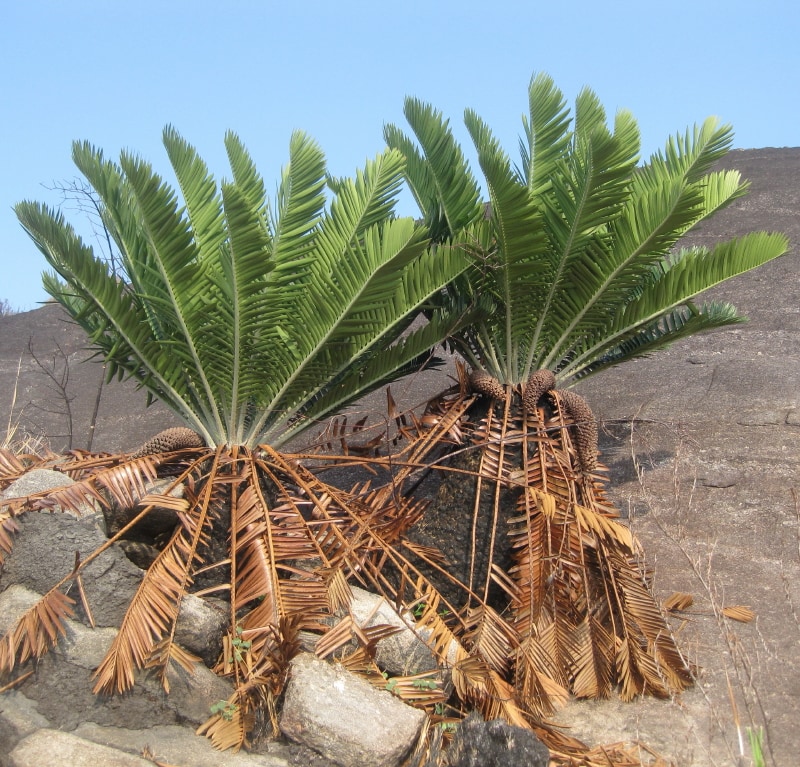
Mozambique
- Erect or sometimes decumbent
- Up to 3 m tall
- Diameter up to 80 cm
- Covered with ovate, densely tomentose catafilli
- Secondary stems originate from suckers at the base of the main stem
- Pinnate and arched
- Up to 150 cm long
- Arranged in a crown at the apex of the stem
- Composed of numerous pairs of lanceolate leaflets
- Leaflet margins are entire
- Leaflet apex is hooked
- Leaflets are on average 20 cm long
- Leaflets are reduced to thorns towards the base of the petiole
- Male cones: 1 to 3 subcylindrical, about 30 cm long and 8–10 cm broad, pedunculated, yellowish, tomentose.
- Female cones: 1 to 3 ovoid, about 28 cm long and with a diameter of 15 cm, more or less the same color as the male ones.
Oblong, 32–35 mm Long, Covered With A Brownish Sarcotesta
About Encephalartos turneri
Encephalartos turneri is a species of cycad native to Mozambique, specifically discovered in the Nampula region by Ian Sutherland Turner. This plant is distinguished by its robust stem structure and striking foliage.
Botanical Description
The stem of Encephalartos turneri can grow erect or sometimes lie decumbent, reaching heights of up to 3 meters with a substantial diameter of 80 cm. The stem is covered in ovate, densely tomentose protective scales called catafilli. It is common for secondary stems to arise from suckers at the base of the main stem, contributing to a fuller growth habit.
The leaves are pinnate and exhibit an arched form, measuring up to 150 cm in length. They are arranged in a crown at the apex of the stem. Each leaf is composed of numerous pairs of lanceolate leaflets, characterized by entire margins and a hooked apex. These leaflets average 20 cm in length and are reduced to thorns near the base of the petiole.
Reproduction
Encephalartos turneri is a dioecious species, meaning individual plants are either male or female. Male specimens bear 1 to 3 subcylindrical cones, which are pedunculated and measure approximately 30 cm in length and 8–10 cm in breadth, with a yellowish, tomentose surface. Female specimens produce 1 to 3 ovoid cones, about 28 cm long and 15 cm in diameter, sharing a similar yellowish, tomentose appearance with the male cones.
The seeds are oblong, measuring 32–35 mm in length, and are enclosed in a brownish sarcotesta.
Source: Wikipedia ↗
Frequently Asked Questions
Where is Encephalartos turneri found naturally?
Encephalartos turneri is naturally found in Mozambique. It was specifically discovered by Ian Sutherland Turner in the Nampula region of the country.
What are the dimensions of the stem of Encephalartos turneri?
The stem of Encephalartos turneri is typically erect or sometimes decumbent, and can grow up to 3 meters tall. Its diameter can reach up to 80 cm.
How long can the leaves of Encephalartos turneri grow?
The pinnate leaves of Encephalartos turneri are arched and can grow up to 150 cm in length. They are arranged in a crown at the apex of the stem.
What do the reproductive cones of Encephalartos turneri look like?
Encephalartos turneri is dioecious, meaning it has separate male and female plants. Male specimens produce subcylindrical cones, about 30 cm long and 8–10 cm broad, while female specimens have ovoid cones, approximately 28 cm long and 15 cm in diameter. Both are yellowish and tomentose.
What are the characteristics of the seeds of Encephalartos turneri?
The seeds of Encephalartos turneri are oblong in shape, measuring between 32–35 mm long. They are covered with a brownish sarcotesta.
Related Cycad species

Encephalartos horridus
Encephalartos horridus, commonly known as the Eastern Cape blue cycad, is a distinctive, low-growing cycad native to the Eastern Cape Province of South Africa. It is recognized for its striking blue-gray, spiny leaves and typically develops a subterranean stem. This species thrives in arid shrublands and rocky ridges, exhibiting a slow growth rate and requiring specific conditions for successful cultivation.
Zamia inermis
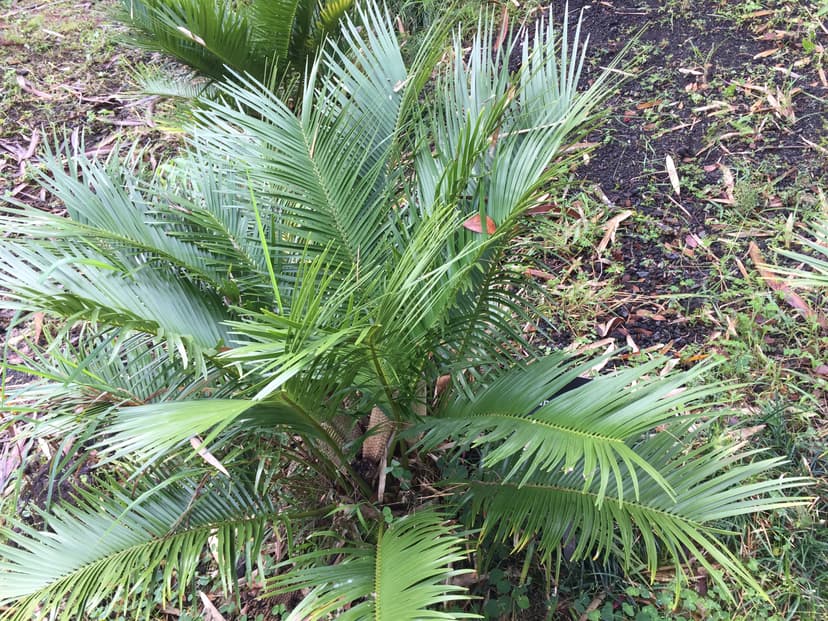
Zamia inermis is a critically endangered cycad species native to Actopan, Veracruz, Mexico. It is characterized by its shrub-like growth, with a trunk that can be branched and upright leaves composed of numerous linear-lanceolate leaflets. This species is dioecious and faces significant threats from habitat loss, wildfires, and over-harvesting.

Encephalartos dolomiticus
Encephalartos dolomiticus, commonly known as the Wolkberg cycad, is a critically endangered cycad species native to the Wolkberg region of South Africa. This tree-like cycad typically grows up to 2 meters tall and is characterized by its distinctive bluish leaves forming a crown, with lance-shaped leaflets arranged oppositely along the rachis. It is a dioecious species, producing separate male and female cones.