
Encephalartos villosus
Frost-free coastal bush·Dwarf, largely underground stem
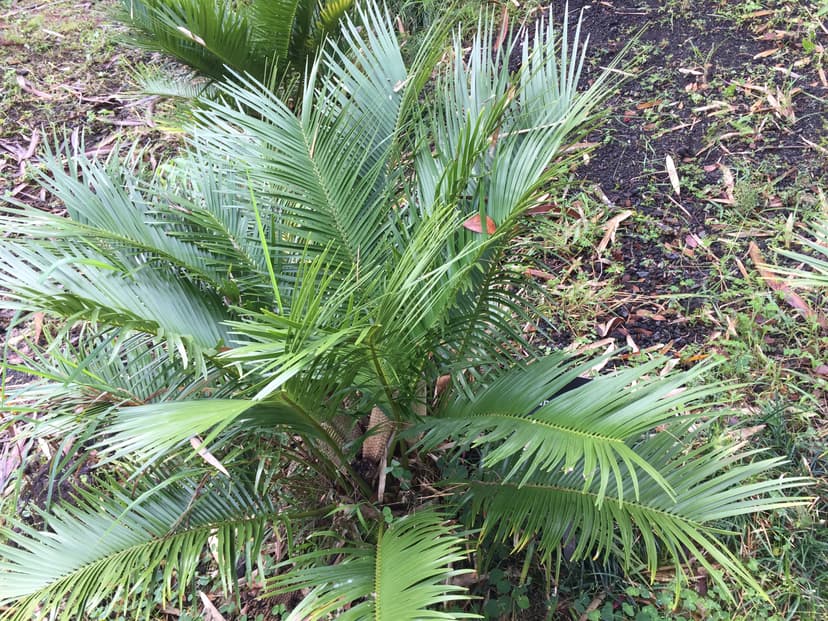
Encephalartos villosus is a common South African cycad characterized by a largely subterranean trunk, giving it a dwarf appearance. It is widely distributed from the East London vicinity to Eswatini, thriving in frost-free coastal bush habitats. This species is notable for its variability in leaf and cone shape and is frequently cultivated due to its affordability.
Key Facts
- ›Occurs from East London, South Africa, to Eswatini.
- ›Primarily a dwarf species with a largely underground trunk.
- ›Common throughout its range and widely cultivated.
- ›Seeds are consumed and dispersed by the purple-crested lourie and trumpeter hornbill.
- ›Hybridizes readily with other Encephalartos species in certain regions.

South Africa, Eswatini
- Largely underground
- Results in very little of the plant being visible
Variable In Shape
Variable in shape, Male plants may carry up to 15 cones, Females typically have one or two cones
Embedded In Bright-Red Flesh
Ornamental
About Encephalartos villosus
Encephalartos villosus is a prominent cycad species native to South Africa and extending into Eswatini. Its natural distribution spans from the coastal areas near East London to regions up to 100 km inland in Eswatini. This species is recognized for its commonality throughout its range and its status as the most frequently cultivated cycad in Southern Africa, largely owing to its affordability.
Description and Habitat
A defining characteristic of Encephalartos villosus is its habit of growing with a largely underground trunk, which gives the impression of a dwarf plant with very little visible above the ground. The crown of the plant is typically adorned with tightly packed bracts covered in dense, grey, woolly hair, a feature alluded to in its species name 'villosus,' meaning hairy. This cycad prefers frost-free coastal bush environments. It is known to hybridize readily with other Encephalartos species, such as Encephalartos altensteinii in the Eastern Cape and Encephalartos lebomboensis in the Pongola area.
Reproduction and Seed Dispersal
Like all cycads, Encephalartos villosus is dioecious, meaning individual plants are either male or female. Male plants can produce numerous cones, sometimes up to fifteen, while female plants typically bear only one or two. The reproductive cycle plays a role in the local ecosystem, as the seeds, which are encased in bright red flesh, are consumed and subsequently dispersed by bird species, notably the purple-crested lourie (Tauraco porphyreolophus) and the trumpeter hornbill (Bycanistes bucinator).
Variability
Due to its extensive geographical distribution, Encephalartos villosus exhibits notable variability in both its leaf and cone morphology. This variation contributes to its diverse appearance across its native range.
Source: Wikipedia ↗
Frequently Asked Questions
What does Encephalartos villosus look like?
Encephalartos villosus is typically a dwarf cycad with a trunk that is mostly underground, making very little of the plant visible above ground. The crown is usually covered in densely packed bracts with fuzzy grey hair.
Where is Encephalartos villosus found naturally?
This species is native to South Africa, with its range extending from the East London coastal area northwards to Eswatini. It is commonly found in frost-free coastal bush environments.
How does Encephalartos villosus reproduce?
As with all cycads, Encephalartos villosus is dioecious, meaning it has separate male and female plants. Male plants can bear up to 15 cones, while females typically produce one or two. The seeds are embedded in bright red flesh.
What animals help spread the seeds of Encephalartos villosus?
The seeds of Encephalartos villosus, which are surrounded by bright red flesh, are eaten and dispersed by the purple-crested lourie and the trumpeter hornbill.
Is Encephalartos villosus rare or endangered?
Encephalartos villosus is noted as being common throughout its geographical range and is the most frequently cultivated cycad in Southern Africa, largely due to its affordable price.
Related Cycad species

Encephalartos horridus
Encephalartos horridus, commonly known as the Eastern Cape blue cycad, is a distinctive, low-growing cycad native to the Eastern Cape Province of South Africa. It is recognized for its striking blue-gray, spiny leaves and typically develops a subterranean stem. This species thrives in arid shrublands and rocky ridges, exhibiting a slow growth rate and requiring specific conditions for successful cultivation.
Zamia inermis
Zamia inermis is a critically endangered cycad species native to Actopan, Veracruz, Mexico. It is characterized by its shrub-like growth, with a trunk that can be branched and upright leaves composed of numerous linear-lanceolate leaflets. This species is dioecious and faces significant threats from habitat loss, wildfires, and over-harvesting.

Encephalartos dolomiticus
Encephalartos dolomiticus, commonly known as the Wolkberg cycad, is a critically endangered cycad species native to the Wolkberg region of South Africa. This tree-like cycad typically grows up to 2 meters tall and is characterized by its distinctive bluish leaves forming a crown, with lance-shaped leaflets arranged oppositely along the rachis. It is a dioecious species, producing separate male and female cones.