
Macrozamia macdonnellii
The specific habitat is not detailed, but it is indigenous to the Northern Territory of Australia.·Arborescent, with a stocky trunk from which leaves radiate.
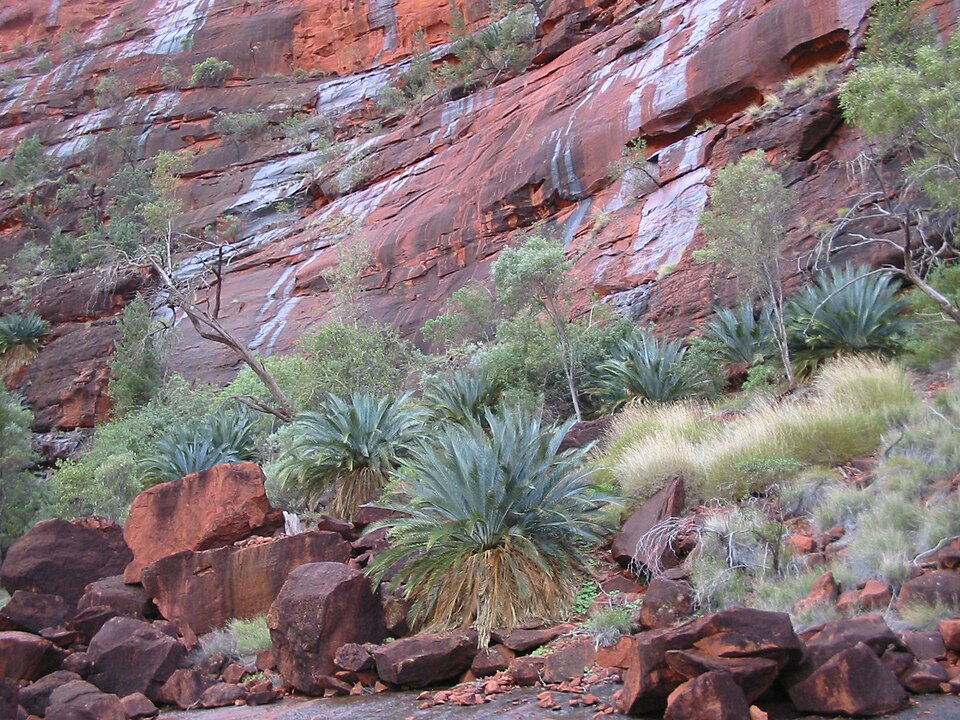
Macrozamia macdonnellii, also known as the Macdonnell Ranges Cycad, is a species of cycad native to the Northern Territory of Australia. It is characterized by large, bluish-green pinnate leaves that emerge from a stocky trunk, and distinct male and female cones. The seeds are egg-sized with a bright red outer layer.
Key Facts
- ›Endemic to the Northern Territory, Australia.
- ›Possesses large, frond-like pinnate bluish-green leaves.
- ›Male and female reproductive cones are borne on separate plants.
- ›Female cones are broader and partially enclose egg-sized seeds with a red sarcotesta.
- ›Not typically eaten by the Arrernte people due to extensive toxin leaching required.
Macdonnell Ranges Cycad
Northern Territory, Australia
Stocky Trunk
Large, Frond-Like Pinnate Leaves, Bluish-Green In Color
Male and female cones on separate plants, Female cone is broader than the male cone
Size of An Egg, Bright Red Outer Layer
Food Source
About Macrozamia macdonnellii
The Macrozamia macdonnellii, commonly known as the MacDonnell Ranges Cycad, is a distinctive species of cycad native exclusively to the Northern Territory of Australia. It is a member of the Zamiaceae family.
Botanical Description
This species is characterized by its stocky trunk, from the top of which a crown of large, frond-like pinnate leaves emerges. These leaves are notable for their bluish-green coloration. Macrozamia macdonnellii is dioecious, meaning that male and female reproductive cones are borne on separate plants. The female cones are broader than their male counterparts and partially enclose the seeds. These seeds are approximately egg-sized and are distinguished by a vibrant red outer layer, or sarcotesta.
Ethnobotany and Ecology
While indigenous to the region, the Macrozamia macdonnellii is not commonly consumed by the Arrernte people of the Macdonnell Ranges. This is due to the significant and extensive process of toxin leaching that is required to render the plant safe for consumption, highlighting its inherent toxicity in its natural state.
Source: Wikipedia ↗
Frequently Asked Questions
What is the common name for Macrozamia macdonnellii?
The common name for Macrozamia macdonnellii is the MacDonnell Ranges Cycad. This name reflects its native range within the Macdonnell Ranges.
Where is Macrozamia macdonnellii found?
Macrozamia macdonnellii is endemic to the Northern Territory of Australia. Its natural distribution is restricted to this region.
What do the leaves of Macrozamia macdonnellii look like?
Macrozamia macdonnellii has large, frond-like pinnate leaves that are bluish-green in color. These leaves radiate from the top of its trunk.
How are the reproductive structures of Macrozamia macdonnellii arranged?
The male and female reproductive cones of Macrozamia macdonnellii are found on separate plants, meaning it is dioecious. The female cone is broader than the male cone.
What are the seeds of Macrozamia macdonnellii like?
The seeds of Macrozamia macdonnellii are roughly the size of an egg. They are notable for their bright red outer layer, known as the sarcotesta.
Is Macrozamia macdonnellii edible?
Macrozamia macdonnellii is not typically eaten by the Arrernte people. This is due to the extensive process of toxin leaching that would be required to make it safe for consumption.
Related Cycad species

Encephalartos horridus
Encephalartos horridus, commonly known as the Eastern Cape blue cycad, is a distinctive, low-growing cycad native to the Eastern Cape Province of South Africa. It is recognized for its striking blue-gray, spiny leaves and typically develops a subterranean stem. This species thrives in arid shrublands and rocky ridges, exhibiting a slow growth rate and requiring specific conditions for successful cultivation.
Zamia inermis
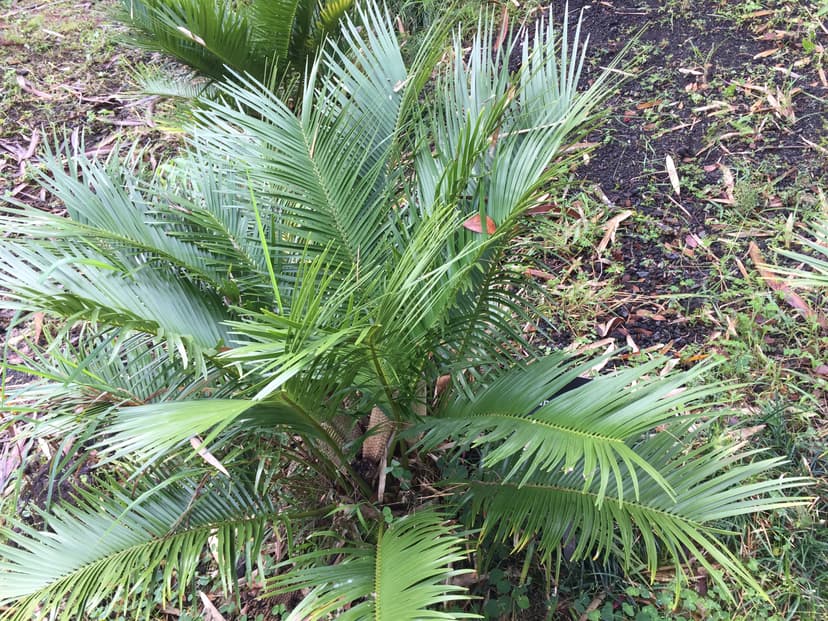
Zamia inermis is a critically endangered cycad species native to Actopan, Veracruz, Mexico. It is characterized by its shrub-like growth, with a trunk that can be branched and upright leaves composed of numerous linear-lanceolate leaflets. This species is dioecious and faces significant threats from habitat loss, wildfires, and over-harvesting.

Encephalartos dolomiticus
Encephalartos dolomiticus, commonly known as the Wolkberg cycad, is a critically endangered cycad species native to the Wolkberg region of South Africa. This tree-like cycad typically grows up to 2 meters tall and is characterized by its distinctive bluish leaves forming a crown, with lance-shaped leaflets arranged oppositely along the rachis. It is a dioecious species, producing separate male and female cones.