
Macrozamia mountperriensis
Dry and warm conditions, typically found in open forest conditions such as eucalypt forests or Araucarian rainforests, at altitudes between two hundred and four hundred metres on slopes and ranges.·Small stature with stems·Insects, including those in the order Coleoptera·Not at risk
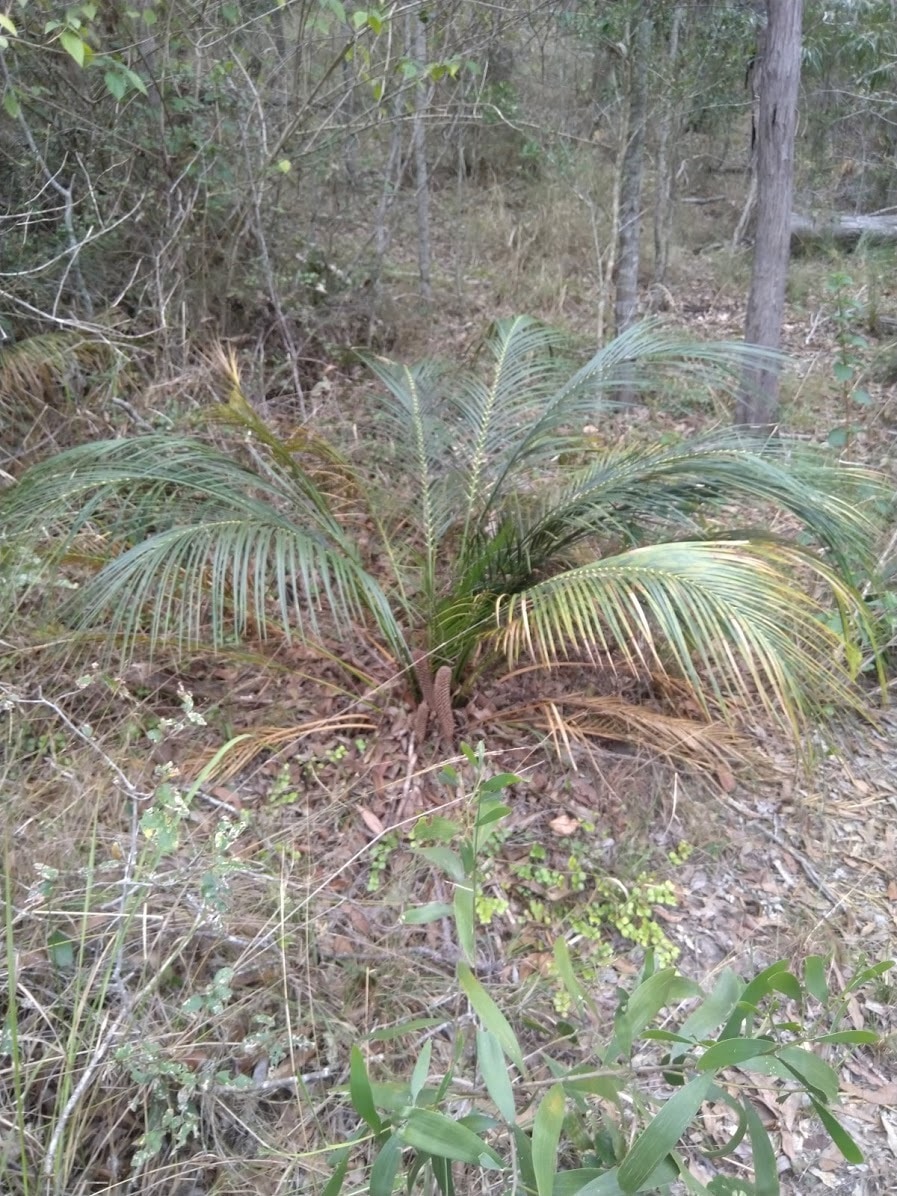
Macrozamia mountperriensis is a cycad species distinguished by its relatively small stature and light green leaves, often with yellow undertones. Native to the Mount Perry region of Queensland, Australia, it thrives in dry, warm conditions within open forests and rainforests. A notable botanical feature is its cylindrical cones, which display small green and orange spots, and its seeds are orange and yellow.
Key Facts
- ›Endemic to the Mount Perry region in Queensland, Australia.
- ›Characterized by a small stature with stems averaging 15-20 cm in height.
- ›Leaves are pinnate, around 80 cm long, with 50-110 leaflets.
- ›Reproductive cones are cylindrical, with male cones measuring up to 30 cm and female cones up to 40 cm.
- ›Contains symbiotic cyanobacteria and is toxic.
- ›Pollination is primarily facilitated by insects.
Queensland, Australia
Range Between 15–20 Centimetres In Height
- Pinnate with 50 to 110 leaflets.
- Approximately 80 centimetres long on average.
- Leaflets are straight, approximately 5-9 mm wide.
- Young leaves are lighter green with yellow undertones.
- Mature leaves are darker green.
- Cylindrical cones growing from the root.
- Male cones are 30 centimetres long and around 1.3 centimetres in diameter.
- Female cones are 20–40 centimetres long and 10 centimetres in diameter.
- Cones have small green and orange spots.
Approximately 25 mm long and 16 mm wide., Orange and yellow in color.
About Macrozamia mountperriensis
Macrozamia mountperriensis is a species of cycad native to the Mount Perry region of Queensland, Australia. It is distinguished by its relatively small stature, with stems typically reaching only 15-20 centimeters in height, and its light green leaves that can exhibit yellow undertones. The plant is recognized for its pinnate leaves, which average around 80 centimeters in length and are composed of 50 to 110 leaflets.
Botanical Features
The reproductive structures of Macrozamia mountperriensis are cylindrical cones that emerge from the plant's root system. Male cones measure approximately 30 centimeters long and 1.3 centimeters in diameter, while female cones are larger, ranging from 20 to 40 centimeters in length and 10 centimeters in diameter. A key identifying feature of these cones is the presence of small green and orange spots. The seeds produced are about 25 mm long and 16 mm wide, displaying an orange and yellow coloration.
Habitat and Distribution
This species is endemic to the Mount Perry area, west of Bundaberg, and is found in townships such as Brooweena, Biggenden, and Aramara. It prefers dry and warm climates, typically growing at altitudes between 200 and 400 meters on slopes and ranges. Macrozamia mountperriensis commonly inhabits open forest environments, including eucalypt forests and Araucarian rainforests. The plant is known to contain symbiotic cyanobacteria and is considered toxic, with insects playing a role in its pollination.
Conservation and Discovery
Macrozamia mountperriensis is not considered threatened, possessing a large population and strong habitat presence across multiple forests in its native region. It is not currently listed on the IUCN Red List. The species was first formally described in 1886 by Frederick Manson Bailey based on specimens collected on Mount Perry. Its scientific name directly reflects its geographical origin.
Source: Wikipedia ↗
Frequently Asked Questions
Where is Macrozamia mountperriensis found?
Macrozamia mountperriensis is native to the Mount Perry region in Queensland, Australia, west of Bundaberg. It can be found in townships such as Brooweena, Biggenden, and Aramara, and thrives in open forest conditions like eucalypt forests or Araucarian rainforests.
What are the distinctive physical characteristics of Macrozamia mountperriensis?
This species is recognized by its small size, with stems typically 15-20 cm tall, and its light green leaves that can have yellow undertones. The leaves are pinnate and around 80 cm long, featuring 50 to 110 leaflets. Cones are cylindrical and marked with small green and orange spots.
Is Macrozamia mountperriensis a poisonous plant?
Yes, Macrozamia mountperriensis is considered poisonous. Like all members of the Zamiaceae family, it contains toxins and also harbors symbiotic cyanobacteria, which can contribute to its toxicity.
What is the conservation status of Macrozamia mountperriensis?
Macrozamia mountperriensis is not considered to be at risk of extinction and is not listed on the IUCN Red List. It has a strong population and widespread habitat across numerous forests in its native region.
How does Macrozamia mountperriensis reproduce?
Pollination of Macrozamia mountperriensis is primarily carried out by insects, including those from the order Coleoptera. Pollen shedding typically occurs in October and November, with seeds shedding around Spring.
Related Cycad species

Encephalartos horridus
Encephalartos horridus, commonly known as the Eastern Cape blue cycad, is a distinctive, low-growing cycad native to the Eastern Cape Province of South Africa. It is recognized for its striking blue-gray, spiny leaves and typically develops a subterranean stem. This species thrives in arid shrublands and rocky ridges, exhibiting a slow growth rate and requiring specific conditions for successful cultivation.
Zamia inermis
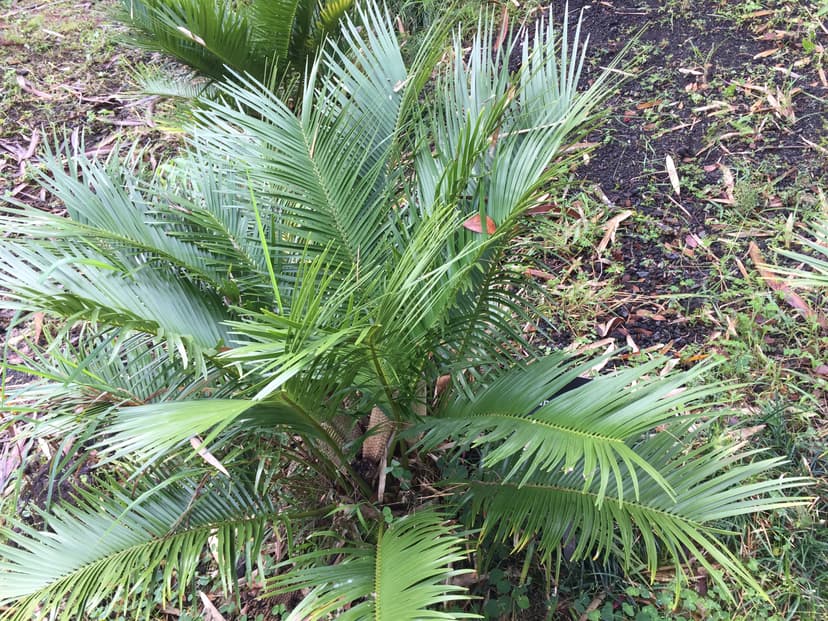
Zamia inermis is a critically endangered cycad species native to Actopan, Veracruz, Mexico. It is characterized by its shrub-like growth, with a trunk that can be branched and upright leaves composed of numerous linear-lanceolate leaflets. This species is dioecious and faces significant threats from habitat loss, wildfires, and over-harvesting.

Encephalartos dolomiticus
Encephalartos dolomiticus, commonly known as the Wolkberg cycad, is a critically endangered cycad species native to the Wolkberg region of South Africa. This tree-like cycad typically grows up to 2 meters tall and is characterized by its distinctive bluish leaves forming a crown, with lance-shaped leaflets arranged oppositely along the rachis. It is a dioecious species, producing separate male and female cones.