
Macrozamia spiralis
Sclerophyll forest on low-nutrient soils.·Acaulescent (stem does not generally grow above ground level).·Endangered
Macrozamia spiralis is a species of cycad endemic to New South Wales, Australia, typically found in sclerophyll forests on low-nutrient soils. This acaulescent plant characteristically lacks an above-ground trunk and features spirally arranged leaves, which can twist up to 360 degrees. Its reproductive cones, both male and female, are notable features, and the species plays a role in symbiotic relationships with nitrogen-fixing cyanobacteria.
Key Facts
- ›Endemic to New South Wales, Australia.
- ›Characteristically acaulescent, with stems generally not growing above ground.
- ›Leaves can twist 180 to 360 degrees.
- ›Forms symbiotic relationships with Nostoc cyanobacteria for nitrogen fixation.
- ›Rated as endangered in 2003.
- ›Can be propagated by seed, with germination taking 12-18 months.

Burrawang
New South Wales, Australia
8–20 cm In Diameter, Does Not Generally Grow Above Ground Level
- 2–12 leaves per plant
- Range from 35 to 100 cm in length
- 45–120 simple pinnae per compound frond
- Pinnae are 12–20 cm long at the leaf's greatest width
- Pinnae are 0.5–1 cm wide
- Rachis of the leaf is often twisted 180 degrees, sometimes up to 360 degrees
- Male cones: 1 to 4 per plant, fusiform, 15–20 cm high by 5–6 cm wide.
- Female cones: single, oval, 12–20 cm high and 6–9 cm wide.
Orange to red fleshy seeds, Reported to be ripe in April and May
Production of Alcohol, Adhesive Pastes, Laundry Starch
About Macrozamia spiralis
Macrozamia spiralis is a distinctive species of cycad native to New South Wales, Australia, belonging to the Zamiaceae family. It is primarily found in sclerophyll forests, thriving on low-nutrient soils. This species is characterized by its acaulescent nature, meaning its stem typically remains below ground, giving the appearance of lacking a trunk.
Botanical Features
The plant typically bears between 2 and 12 leaves, each reaching lengths of up to 100 cm. A unique characteristic of Macrozamia spiralis is the tendency for its leaf rachis (the central stem of the leaf) to twist, often by 180 degrees and sometimes up to 360 degrees. Reproduction occurs through separate male and female plants (dioecious). Male plants produce fusiform pollen cones measuring 15-20 cm in height, while female plants bear a single oval seed cone, 12-20 cm high. The seeds are noted for their orange to red, fleshy appearance.
Ecology and Conservation
Macrozamia spiralis engages in a crucial symbiotic relationship with cyanobacteria, specifically Nostoc, found in its coralloid roots. These bacteria fix nitrogen, providing vital nutrients for the cycad, particularly in its nutrient-poor habitat. The species is known to regrow from the ground after bushfires, indicating a degree of fire adaptation. Plants reach reproductive maturity between 10 and 20 years of age and are thought to live for over 60 years. Despite its resilience, Macrozamia spiralis was classified as endangered in 2003, though it is found in several protected conservation areas where it is common.
Cultivation and Uses
For cultivation, Macrozamia spiralis requires good drainage and benefits from supplementary watering during dry spells. It can be grown in pots or directly in the ground, and can even thrive under established trees. Propagation from seed is possible but requires patience, with germination taking 12 to 18 months. Historically, the plant has been utilized for producing alcohol, adhesive pastes, and laundry starch.
Source: Wikipedia ↗
Frequently Asked Questions
What is Macrozamia spiralis?
Macrozamia spiralis is a species of cycad belonging to the Zamiaceae family. It is native to eastern Australia, specifically New South Wales, and is known for its distinctive spirally arranged leaves and subterranean stem.
Where is Macrozamia spiralis found?
This cycad species is endemic to central New South Wales, Australia. Its distribution spans from Dunedoo and the Goulburn River valley eastwards over the Blue Mountains into the Sydney Basin, and it is found in areas like Werakata National Park and Windsor Downs Nature Reserve.
What are the characteristics of Macrozamia spiralis leaves?
The leaves of Macrozamia spiralis are compound fronds that can range from 35 to 100 cm in length. Each frond contains 45 to 120 simple pinnae, each measuring 0.5 to 1 cm wide. A notable feature is that the rachis, or central stem of the leaf, is often twisted 180 degrees, and sometimes up to 360 degrees.
How does Macrozamia spiralis reproduce?
Macrozamia spiralis is a dioecious species, meaning it has separate male and female plants. Male plants produce 1 to 4 spindle-shaped pollen-bearing cones, while female plants produce a single oval seed cone. The seeds are orange to red and fleshy, and plants begin to reproduce between 10 and 20 years of age.
What is the conservation status of Macrozamia spiralis?
Macrozamia spiralis was rated as endangered in 2003. It is protected in several conservation areas within its natural range, where it is considered common.
Are there any symbiotic relationships involving Macrozamia spiralis?
Yes, Macrozamia spiralis seedlings have coralloid roots that rise above ground and contain cyanobacteria, primarily of the Nostoc genus. These cyanobacteria form a symbiotic relationship with the cycad by fixing nitrogen, which is essential for the plant's growth on low-nutrient soils.
Related Cycad species

Encephalartos horridus
Encephalartos horridus, commonly known as the Eastern Cape blue cycad, is a distinctive, low-growing cycad native to the Eastern Cape Province of South Africa. It is recognized for its striking blue-gray, spiny leaves and typically develops a subterranean stem. This species thrives in arid shrublands and rocky ridges, exhibiting a slow growth rate and requiring specific conditions for successful cultivation.

Cycas beddomei
Cycas beddomei is a species of cycad native to a small region in the Andhra Pradesh state of India, specifically the Tirumala Hills. It is characterized by erect, solitary stems topped with a crown of stiff, pinnate leaves and is found in scrubland and brush-covered hills. A unique feature is the fleshy layer within its seeds, which is believed to provide a water source, crucial for its survival in arid conditions.
Ceratozamia hildae
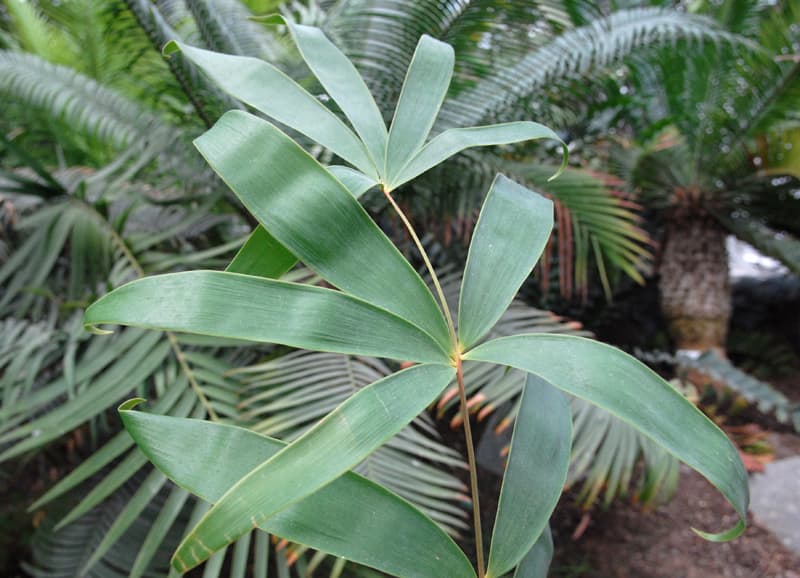
Ceratozamia hildae, commonly known as the Bamboo Cycad, is a species native to Mexico, thriving in moist, humid tropical forests. It is distinguished by its long, papery leaves that cluster at nodes, giving it a bamboo-like appearance, and an underground stem that initially develops a branched root system before producing above-ground stems.