
Zamia vazquezii
Its natural habitat is restricted to northern Veracruz state in eastern Mexico.·Subterranean stem with above-ground leaves.·Critically Endangered
Zamia vazquezii is a critically endangered cycad species native to a small area in northern Veracruz, Mexico. It is characterized by its subterranean stem and pinnately compound leaves with toothed leaflets. The species is dioecious, producing distinct male and female cones, and its seeds are orange-red to red.
Key Facts
- ›Endemic to northern Veracruz state, Mexico.
- ›Classified as Critically Endangered with only two wild populations and a total of fewer than 50 individuals.
- ›Possesses a subterranean, sub-globular stem up to 10 cm in diameter.
- ›Leaves are compound, ranging from 0.3 to 1 meter in length, with 12-25 leaflets.
- ›Leaflets are ovate to reverse pear-shaped, toothed along the outer two-thirds, and measure 6-7 cm long.
- ›Dioecious, with male cones 5-7 cm long and female cones 10-15 cm long.
Veracruz, Mexico
Subterranean, Sub-Global, Up To 10 cm In Diameter
- Compound leaves
- 3 to 30 leaves per plant
- 0.3 to 1 meter long
- Petiole 15 to 49 cm long, may be smooth or lightly prickled
- 12 to 25 leaflets per leaf axis
- Leaflets ovate to reverse pear-shaped with pointed tips
- Leaflets toothed along the outer two-thirds of their margins
- Leaflets 6 to 7 cm long and 3 to 4 cm wide in the middle
- Dioecious
- Male cones: Ovoid to ovoid-cylindrical, 5-7 cm long, 2-2.5 cm in diameter, tan in color, on peduncles 1.5-2.5 cm long.
- Female cones: Cylindrical to ovoid-cylindrical, 10-15 cm long, 5-7 cm in diameter, tan to brown in color.
Orange-Red To Red In Color, 1.3 To 1.8 cm Long, 0.5 To 0.8 cm In Diameter
Habitat Loss
About Zamia vazquezii
Zamia vazquezii is a species of cycad belonging to the Zamiaceae family, notable for its critically endangered status and restricted natural range. This species is endemic to northern Veracruz state in eastern Mexico, where it faces significant threats primarily from habitat loss.
Botanical Description
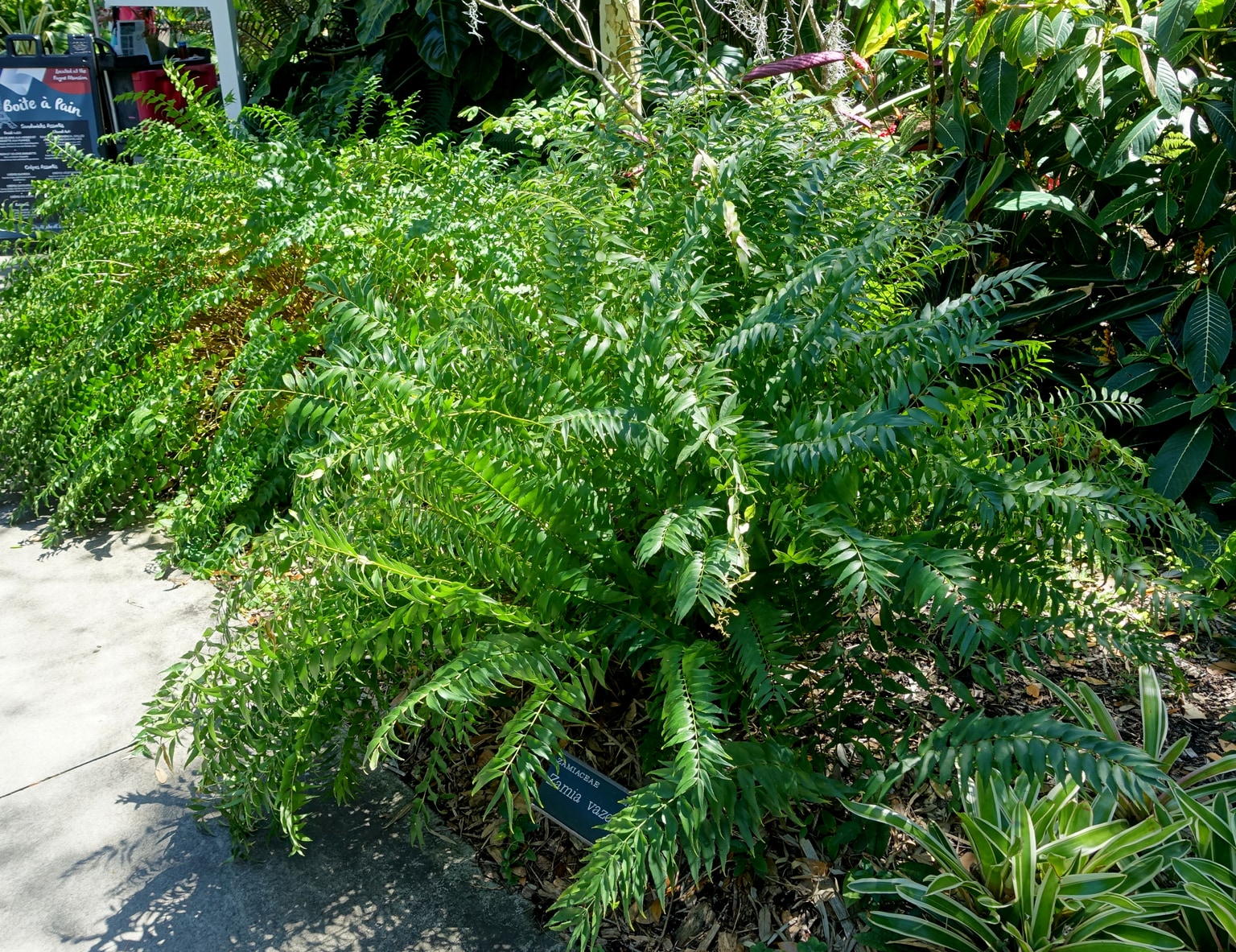
Zamia vazquezii possesses a subterranean stem that is sub-globular in shape and can reach up to 10 centimeters in diameter. The plant produces between three and thirty compound leaves, each measuring between 0.3 and 1 meter in length. The petiole, or leaf stalk, is 15 to 49 centimeters long and may be either smooth or lightly covered with prickles. The leaf axis supports 12 to 25 leaflets that are ovate to reverse pear-shaped, featuring pointed tips and toothed margins along their outer two-thirds. These leaflets are typically 6 to 7 centimeters long and 3 to 4 centimeters wide at their broadest point.
Like other members of the Zamia genus, Z. vazquezii is dioecious, meaning individual plants are either male or female. The male reproductive structures, known as strobili or cones, are ovoid to ovoid-cylindrical, measuring 5 to 7 centimeters long and 2 to 2.5 centimeters in diameter, and are tan in color. They are borne on peduncles (stalks) that are 1.5 to 2.5 centimeters long. The female cones are larger, cylindrical to ovoid-cylindrical, and range from 10 to 15 centimeters in length and 5 to 7 centimeters in diameter, with colors varying from tan to brown. The seeds of Zamia vazquezii are a striking orange-red to red, measuring 1.3 to 1.8 centimeters long and 0.5 to 0.8 centimeters in diameter.
Conservation Status and Distribution
Zamia vazquezii is critically endangered, with only two known wild populations containing a combined total of fewer than 50 individuals. This precarious situation underscores the urgent need for conservation efforts to protect this unique species and its limited habitat in Veracruz, Mexico.
Source: Wikipedia ↗
Frequently Asked Questions
What is the scientific name for this cycad species?
The scientific name for this species is Zamia vazquezii. It was formerly sometimes confused with Zamia fischeri due to morphological similarities.
Where is Zamia vazquezii found in the wild?
Zamia vazquezii is endemic to the northern Veracruz state in eastern Mexico. Its natural habitat is restricted to this region.
What is the conservation status of Zamia vazquezii?
Zamia vazquezii is classified as Critically Endangered. This designation reflects the severe threats to its survival in its natural habitat.
How many individuals of Zamia vazquezii are there in the wild?
There are very few individuals remaining in the wild, with only two documented populations. The combined total number of individuals is estimated to be no more than 50.
What are the key distinguishing features of Zamia vazquezii's leaves?
The leaves are compound, typically between 0.3 and 1 meter in length, with a petiole that can be smooth or lightly prickled. Each leaf axis bears 12 to 25 leaflets that are ovate to reverse pear-shaped, pointed, and toothed along the outer two-thirds of their margins.
What do the cones of Zamia vazquezii look like?
Zamia vazquezii is dioecious, meaning it has separate male and female plants. Male cones (strobili) are ovoid to cylindrical and tan, measuring 5-7 cm long, while female cones are cylindrical to ovoid-cylindrical, tan to brown, and larger, measuring 10-15 cm long.
What is the origin of the specific name 'vazquezii'?
The specific epithet 'vazquezii' honors Mario Vázques Torres, who was the first person to collect this plant.
Related Cycad species

Stangeria eriopus
Stangeria eriopus is a unique cycad species native to southern Africa, distinguished by its fern-like leaves that are pinnately-veined. It exhibits considerable variation in leaf length depending on its habitat, with forest forms having longer leaves and grassland forms having shorter, tougher leaves adapted to fire and drought. This species is the sole representative of its genus and is known for its subterranean stem and carrot-shaped tuber.
Zamia inermis
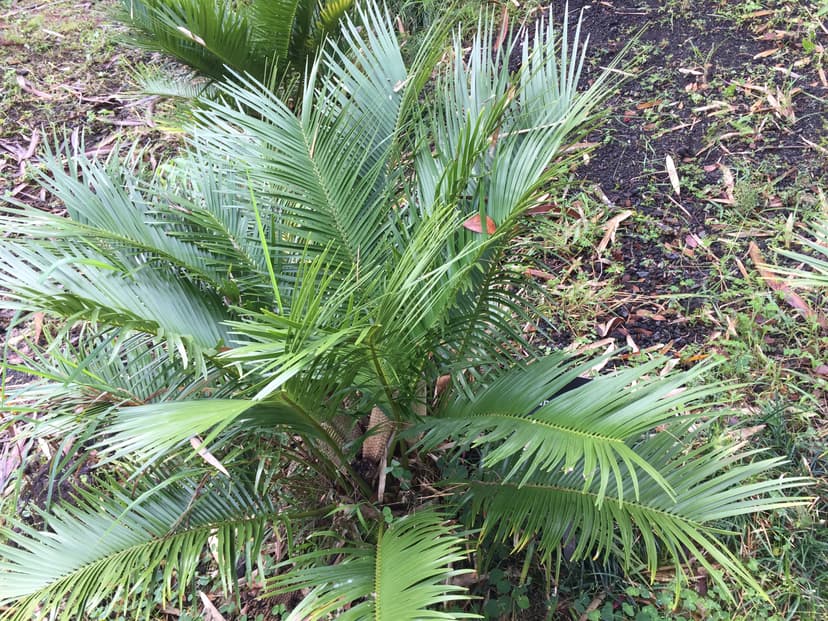
Zamia inermis is a critically endangered cycad species native to Actopan, Veracruz, Mexico. It is characterized by its shrub-like growth, with a trunk that can be branched and upright leaves composed of numerous linear-lanceolate leaflets. This species is dioecious and faces significant threats from habitat loss, wildfires, and over-harvesting.

Encephalartos dolomiticus
Encephalartos dolomiticus, commonly known as the Wolkberg cycad, is a critically endangered cycad species native to the Wolkberg region of South Africa. This tree-like cycad typically grows up to 2 meters tall and is characterized by its distinctive bluish leaves forming a crown, with lance-shaped leaflets arranged oppositely along the rachis. It is a dioecious species, producing separate male and female cones.