
Zamia boliviana
Cerrado ecoregion·Arborescent (with an in-ground stem)·Insect (obligate mutualism with Pharaxonotha cerradensis beetle)·Threatened (implied by research focus on conservation)
Zamia boliviana is a species of cycad native to Bolivia and the Mato Grosso region of Brazil. It is characterized by an underground stem and compound leaves that can reach over a meter in length, featuring linear-lanceolate leaflets with smooth edges and a few teeth near the tip. This species engages in an obligate mutualistic relationship with the beetle Pharaxonotha cerradensis for pollination.
Key Facts
- ›Endemic to Bolivia and Mato Grosso, Brazil.
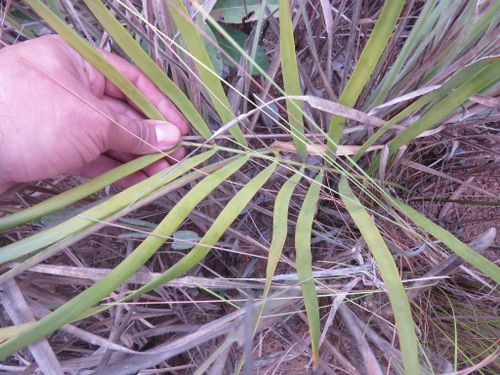
- ›Possesses an in-ground cylindrical stem and compound leaves up to 119 cm long.
- ›Leaflets are linear-lanceolate, tapering to a point, with smooth edges and occasional teeth.
- ›Dioecious, with distinct male and female plants.
- ›Pollination is facilitated by the beetle Pharaxonotha cerradensis, which lives in male cones.
- ›Found in the Cerrado ecoregion at altitudes between 130 and 450 meters.
Bolivia, Mato Grosso, Brazil
In-Ground Cylindrical Stem
- Compound leaves up to 119 cm long.
- 16 to 40 linear-lanceolate leaflets per leaf.
- Leaflets are 19 to 29 cm long and 1.1 to 2.0 cm wide.
- Leaflets taper to a point.
- Leaflet edges are smooth for most of the length with a few teeth near the tip.
- Petiole is smooth, without prickles.
- Male cones: Up to five per plant, cylindrical, on short peduncles, covered in yellow-cream hairs.
- Female cones: One per plant, cream-tan with green undertones or cream-yellow to tan.
11.1 to 15.3 mm long by 7.2 to 10.2 mm wide.
About Zamia boliviana
Zamia boliviana is a species of cycad belonging to the Zamiaceae family, recognized for its unique botanical features and its restricted native range. This species is endemic to the South American continent, specifically found within Bolivia and the Mato Grosso region of Brazil. It is a notable member of the Cerrado ecoregion, typically inhabiting areas between 130 and 450 meters above sea level.
Botanical Description
The plant is characterized by an underground, cylindrical stem from which one to three compound leaves emerge, reaching a height of up to 0.8 meters. The leaves themselves can extend to an impressive length of 119 centimeters. Each leaf comprises 16 to 40 leaflets that are linear-lanceolate in shape, measuring between 19 and 29 centimeters in length and 1.1 to 2.0 centimeters in width. These leaflets taper to a fine point and possess smooth edges for the majority of their length, with only a few teeth present near the apex. The petiole, or leaf stalk, is notably smooth and lacks prickles, a trait that distinguishes it within the genus Zamia.
Reproduction and Mutualism
Like all members of the Zamia genus, Zamia boliviana is dioecious, meaning that individual plants are either male or female. Male plants bear up to five cylindrical strobili (cones) on short stalks, which are covered in yellowish-cream hairs. Female plants, on the other hand, produce a single cone that varies in color from cream-tan with green undertones to cream-yellow or tan. The reproductive cycle is timed with the dry season, with cones emerging between June and October. Male cones have a lifespan of approximately 60 days, while female cones persist for about 330 days, releasing their seeds from April to August. Reproduction is not an annual event for all female plants, with studies indicating that only a majority reproduce in any given year.
A critical aspect of Zamia boliviana's reproductive biology is its obligate mutualistic relationship with the beetle Pharaxonotha cerradensis. This beetle lives and breeds exclusively within the male cones of the cycad. By consuming pollen and cone tissues, the beetles serve as essential pollinators, transferring pollen to the female cones. This specialized interaction highlights the intricate ecological dependencies within its habitat.
Source: Wikipedia ↗
Frequently Asked Questions
What are the main characteristics of Zamia boliviana's leaves?
Zamia boliviana has compound leaves that can grow up to 119 centimeters long. Each leaf typically has 16 to 40 leaflets, which are linear-lanceolate in shape, measuring 19 to 29 centimeters in length. The leaflets taper to a point and have smooth edges for most of their length, with a few teeth near the tip.
How does Zamia boliviana reproduce?
Zamia boliviana is dioecious, meaning individual plants are either male or female. Male plants produce up to five cylindrical male cones covered in yellow-cream hairs, while female plants produce a single cone that is cream-tan with green undertones or cream-yellow to tan. Both male and female cones emerge during the dry season.
What is the pollination mechanism of Zamia boliviana?
The pollination of Zamia boliviana is carried out through an obligate mutualistic relationship with the beetle Pharaxonotha cerradensis. These beetles live and breed within the male cones, consuming pollen and cone tissues. In the process, they transfer pollen to the female cones, acting as the primary pollinating vector.
Where is Zamia boliviana found?
Zamia boliviana is endemic to specific regions in South America. Its natural range includes Bolivia, specifically in the departments of Beni, Cochabamba, La Paz, and Santa Cruz, as well as the state of Mato Grosso in Brazil. It thrives in the Cerrado ecoregion at altitudes between 130 and 450 meters.
What are the reproductive cycles of Zamia boliviana's cones?
Male cones of Zamia boliviana emerge during the dry season and last for about 60 days. Female cones also emerge during this period but persist for a much longer duration, approximately 330 days, releasing their seeds between April and August. Female plants do not necessarily produce seeds every year, with only a portion of them reproducing annually.
Related Cycad species

Encephalartos horridus
Encephalartos horridus, commonly known as the Eastern Cape blue cycad, is a distinctive, low-growing cycad native to the Eastern Cape Province of South Africa. It is recognized for its striking blue-gray, spiny leaves and typically develops a subterranean stem. This species thrives in arid shrublands and rocky ridges, exhibiting a slow growth rate and requiring specific conditions for successful cultivation.
Zamia inermis
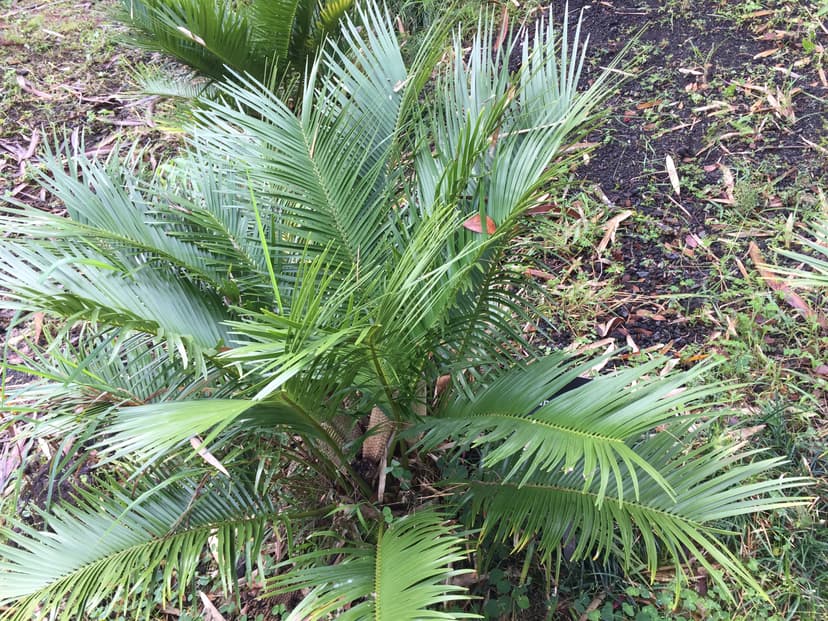
Zamia inermis is a critically endangered cycad species native to Actopan, Veracruz, Mexico. It is characterized by its shrub-like growth, with a trunk that can be branched and upright leaves composed of numerous linear-lanceolate leaflets. This species is dioecious and faces significant threats from habitat loss, wildfires, and over-harvesting.

Encephalartos dolomiticus
Encephalartos dolomiticus, commonly known as the Wolkberg cycad, is a critically endangered cycad species native to the Wolkberg region of South Africa. This tree-like cycad typically grows up to 2 meters tall and is characterized by its distinctive bluish leaves forming a crown, with lance-shaped leaflets arranged oppositely along the rachis. It is a dioecious species, producing separate male and female cones.