
Zamia decumbens
Sinkholes, ridges, and mountaintops within the Maya Mountains.·Decumbent (stems run horizontally along the ground)·Critically Endangered (proposed under previous nomenclature)
Zamia decumbens, commonly known as the sinkhole cycad, is a species endemic to Belize, distinguished by its unique decumbent stems that lie horizontally along the ground. It is notable for its preference for sinkhole environments within the Maya Mountains, where it benefits from consistent water sources and protection from herbivores. Distinctive leaf and cone characteristics further separate it from other cycad species found in Belize.
Key Facts
- ›Endemic to Belize, found primarily in the Maya Mountains.
- ›Characterized by decumbent (horizontal) stems, an unusual trait within the Zamia genus.
- ›Populations are often found in sinkholes, which provide a stable environment with water and protection.
- ›Leaves are pinnately compound, reaching up to 175 cm in length with numerous leaflets.
- ›Both male and female cones are present, with female cones being larger.
- ›Seeds are red and egg-shaped.
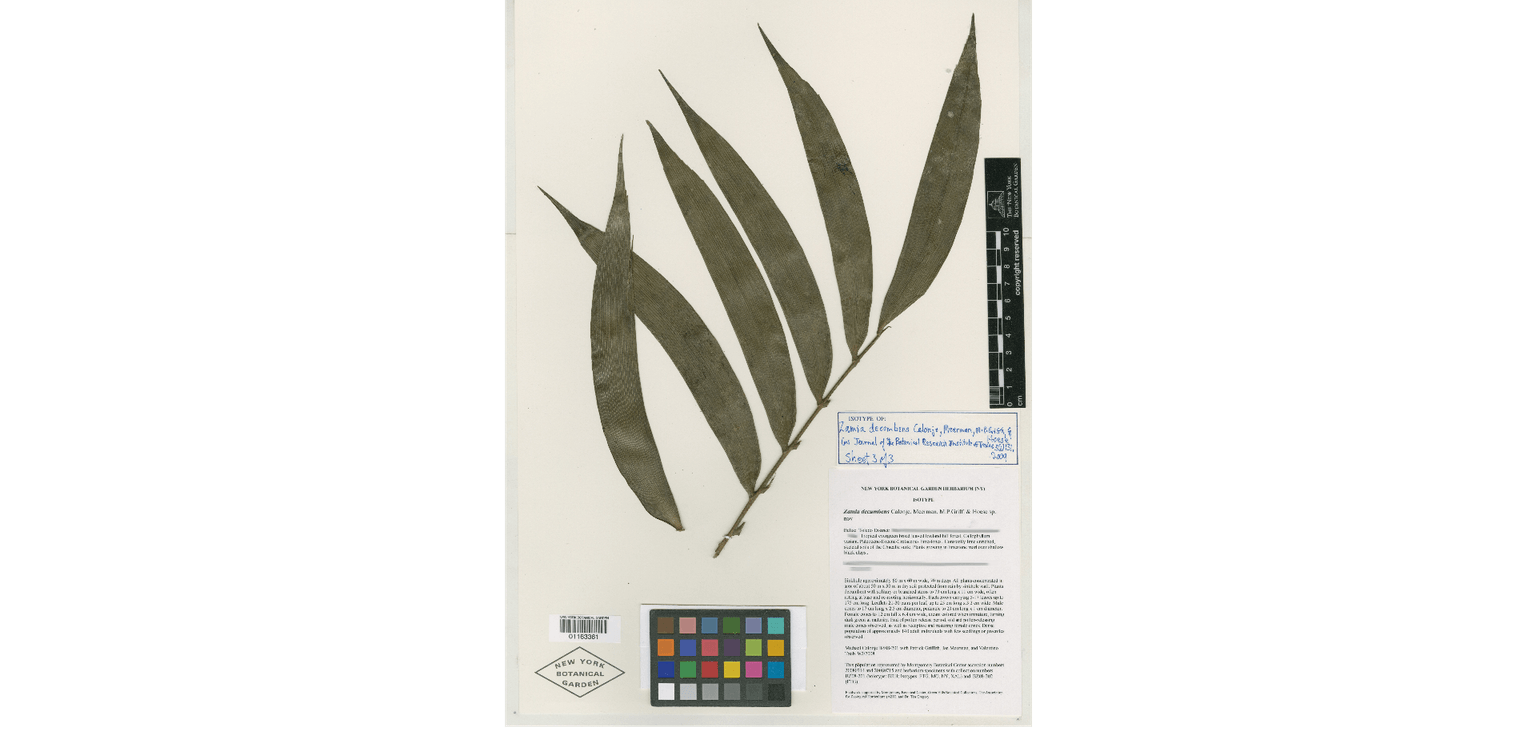
Sinkhole Cycad
Belize
- Sparingly branched cylindrical stems
- Up to 80 cm long
- Up to 11 cm in diameter
- Occasionally dies at the base while forming new roots higher up the stem
- Pinnately compound
- Up to 175 cm long
- Up to 28 pairs of leaflets
- Leaflets are lanceolate and gradually tapering toward tip
- Leaflets up to 30 cm long and 5 cm across
- Microsporangiate strobili are conical to cylindrical, up to 16.5 cm long and 2.5 cm in diameter.
- Megasporangiate strobili are cylindrical, up to 20 cm long and 6.5 cm in diameter.
Red, Egg-Shaped, Up To 2 cm Long
About Zamia decumbens
Zamia decumbens: The Sinkhole Cycad
Zamia decumbens, commonly known as the sinkhole cycad, is a distinctive cycad species recognized for its unique botanical features and restricted geographic distribution. It is known exclusively from Belize, where it thrives in the Maya Mountains. This species is particularly notable for its decumbent stems, a characteristic that causes its trunks to grow horizontally along the ground rather than vertically, a trait that sets it apart within the Zamia genus. The plant can exhibit a remarkable adaptation where it forms new roots higher up the stem as the base occasionally withers.
Habitat and Distribution
The sinkhole cycad's populations are primarily found in the Maya Mountains of Belize. While some occur on ridges and mountaintops, the largest and most robust populations are situated at the bottom of sinkholes. These geological formations provide an ideal microhabitat, offering a consistent water supply and protection from herbivores due to their steep walls. This specialized environment likely contributes to the survival and success of Zamia decumbens.
Botanical Characteristics
Zamia decumbens possesses sparingly branched, cylindrical stems that can reach up to 80 cm in length and 11 cm in diameter. Each plant typically bears between 5 and 17 leaves, which are pinnately compound and can extend up to 175 cm. The leaflets are lanceolate, gradually tapering to a point, and measure up to 30 cm long and 5 cm wide. The species produces both male and female reproductive cones; male cones are conical to cylindrical, measuring up to 16.5 cm long, while female cones are cylindrical and can grow up to 20 cm long. The seeds are characteristically red and egg-shaped, reaching up to 2 cm in length.
Conservation and Recognition
Prior to its formal recognition as a distinct species, Zamia decumbens was erroneously identified in print as Zamia prasina. Under this mistaken identity, it was proposed for protection as a critically endangered species, highlighting its presumed vulnerability. Its specific adaptations and reliance on unique habitats underscore the importance of its conservation within Belize.
Source: Wikipedia ↗
Frequently Asked Questions
What is the common name for Zamia decumbens?
Zamia decumbens is commonly known as the sinkhole cycad. This name likely refers to its preferred habitat within sinkholes.
Where is Zamia decumbens found geographically?
This species is endemic to Belize, with its known populations concentrated in the Maya Mountains. It has been observed on ridges, mountaintops, and notably, at the bottom of sinkholes.
What makes the stem of Zamia decumbens unusual?
Zamia decumbens possesses decumbent stems, meaning its trunks grow horizontally along the ground rather than upright. This is an uncommon growth form within the Zamia genus.
What are the characteristics of Zamia decumbens' leaves?
The leaves of Zamia decumbens are pinnately compound and can grow up to 175 cm long. They feature up to 28 pairs of lanceolate leaflets, each up to 30 cm long and 5 cm wide.
What are the reproductive structures of Zamia decumbens?
Zamia decumbens produces both male (microsporangiate) and female (megasporangiate) cones. Male cones are conical to cylindrical and up to 16.5 cm long, while female cones are cylindrical and can reach up to 20 cm in length.
What are the seeds of Zamia decumbens like?
The seeds of Zamia decumbens are described as red and egg-shaped, with individual seeds measuring up to 2 cm in length.
Has Zamia decumbens been considered for protection?
Yes, prior to its recognition as a distinct species, it was erroneously referred to as Z. prasina and proposed for protection as a critically endangered species.
Related Cycad species

Encephalartos horridus
Encephalartos horridus, commonly known as the Eastern Cape blue cycad, is a distinctive, low-growing cycad native to the Eastern Cape Province of South Africa. It is recognized for its striking blue-gray, spiny leaves and typically develops a subterranean stem. This species thrives in arid shrublands and rocky ridges, exhibiting a slow growth rate and requiring specific conditions for successful cultivation.
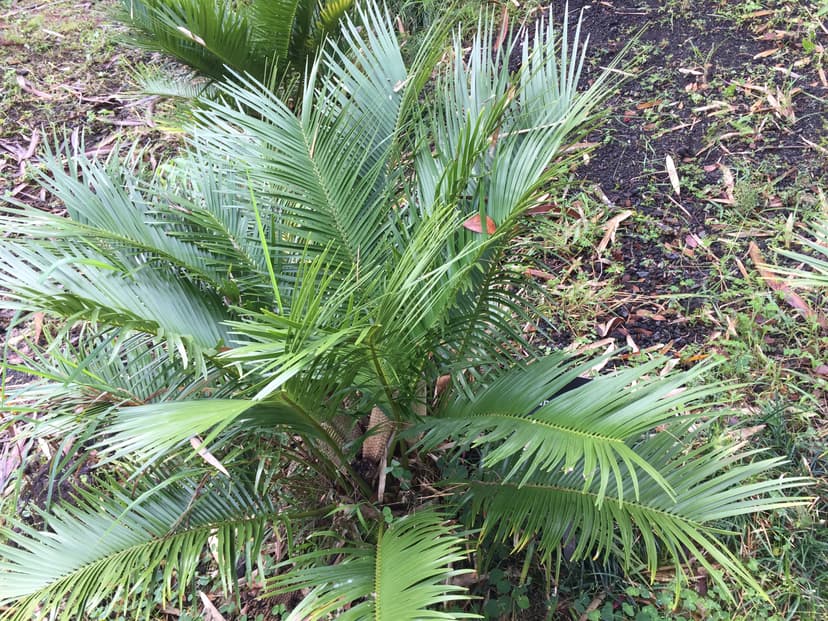
Zamia inermis
Zamia inermis is a critically endangered cycad species native to Actopan, Veracruz, Mexico. It is characterized by its shrub-like growth, with a trunk that can be branched and upright leaves composed of numerous linear-lanceolate leaflets. This species is dioecious and faces significant threats from habitat loss, wildfires, and over-harvesting.

Encephalartos dolomiticus
Encephalartos dolomiticus, commonly known as the Wolkberg cycad, is a critically endangered cycad species native to the Wolkberg region of South Africa. This tree-like cycad typically grows up to 2 meters tall and is characterized by its distinctive bluish leaves forming a crown, with lance-shaped leaflets arranged oppositely along the rachis. It is a dioecious species, producing separate male and female cones.