
Zamia furfuracea
Southeastern Veracruz state in eastern Mexico.·Shrub-like with a short, sometimes subterranean trunk.·insects (specifically the cycad weevil Rhopalotria mollis)·Endangered
Zamia furfuracea, commonly known as the cardboard palm or cardboard cycad, is a slow-growing cycad species native to southeastern Veracruz, Mexico. Its distinctive feature is its crown of stiff, fuzzy green leaves that resemble palm fronds, emerging from a short, often subterranean trunk. This dioecious plant is known for its toxicity and has a critically endangered conservation status due to illegal collection for horticulture.
Key Facts
- ›Endemic to southeastern Veracruz state in eastern Mexico.
- ›Characterized by stiff, pubescent, green leaflets that form a crown resembling palm fronds.
- ›All parts of the plant are toxic, containing cycasin and a nervous system toxin.
- ›It is a dioecious species, with separate male and female plants producing cones.
- ›Classified as Endangered due to habitat loss and illegal collection for horticultural trade.
- ›Popular in cultivation, often grown as a houseplant or container plant.
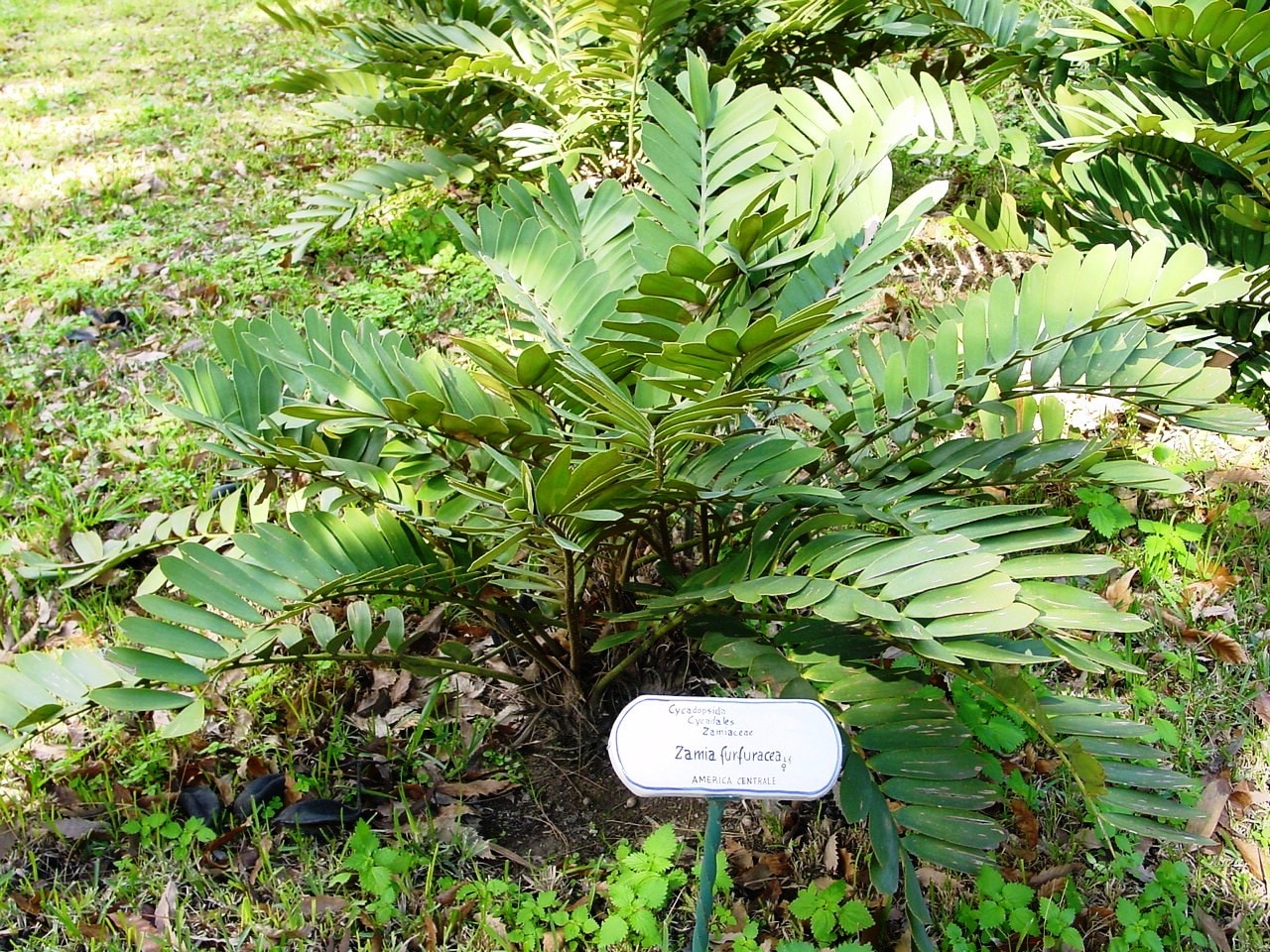
Cardboard Palm, Cardboard Cycad, Cardboard Plant, Cardboard Sago, Jamaican Sago, Mexican Cycad
Mexico
Short, up to 20 cm broad and high, Usually subterranean, Marked with scars from old leaf bases
- 50–150 cm long
- Petiole 15–30 cm long
- 6-12 pairs of leaflets per leaf
- Leaflets are extremely stiff and pubescent
- Leaflet color is green
- Leaflets grow 8–20 cm long and 3–5 cm wide
- Leaflets occasionally toothed toward the tips
- Crowns of leaves resemble fern or palm fronds
- Leaves are erect in full sun, horizontal in shade
- Female cones are rusty-brown and egg-shaped.
- Male cone clusters are smaller than female cones.
- Cones are produced on separate plants.
Fleshy, Brightly Crimson-Colored
Ornamental, Horticultural Use
Illegal Collection For Horticultural Use, Habitat Loss
About Zamia furfuracea
Zamia furfuracea, commonly recognized as the cardboard palm or cardboard cycad, is a species of cycad native to the southeastern Veracruz state in eastern Mexico. Despite its common name, it is not a palm tree but rather a cycad, with a growth habit that superficially resembles one. The plant is characterized by a short, stout trunk, which can be partly subterranean and is marked by the scars of old leaf bases. It exhibits very slow growth when young, but this rate increases once the trunk matures. Typically, the entire plant, including its leaves, reaches a height of about 1.3 meters and can spread to a width of around 2 meters.
Botanical Features
The most striking feature of Zamia furfuracea is its crown of stiff, fuzzy green leaves. Each leaf can measure between 50 to 150 cm in length, attached to a petiole of 15 to 30 cm. These leaves bear 6 to 12 pairs of leaflets, which are notably stiff, pubescent, and measure 8 to 20 cm long and 3 to 5 cm wide. The leaflets may occasionally have toothed edges near their tips. The arrangement of these leaves forms circular crowns that bear a resemblance to fern or palm fronds, orienting erectly in full sun and horizontally in shade.
Reproduction and Toxicity
Zamia furfuracea is a dioecious species, meaning that male and female reproductive cones are borne on separate plants. Female plants produce rusty-brown, egg-shaped cones, while male plants bear smaller pollen-producing cone clusters. Pollination is carried out by specific insects, most notably the cycad weevil Rhopalotria mollis. A significant characteristic of this species is its toxicity; all parts contain cycasin and an unidentified nervous system toxin, posing a danger to both animals and humans. The seeds are particularly hazardous and can be lethal to small mammals, while causing severe liver and kidney failure and eventual paralysis in humans, with dehydration occurring rapidly. No known treatment for this poisoning exists.
Conservation and Cultivation
The reproduction of Zamia furfuracea relies on the fleshy, bright crimson seeds produced by female plants. The germination process is notoriously slow and challenging to achieve in cultivation. This difficulty, coupled with its popularity in horticulture, has led to many plants being illegally collected from the wild, resulting in the species being classified as Endangered. Despite its conservation concerns, Zamia furfuracea is relatively easy to care for in cultivation. It thrives in moist, well-drained soil and tolerates both full sun and shade, though not deep, constant shade. While it possesses some salt and drought tolerance, it requires protection from extreme cold. It is frequently cultivated as a houseplant in temperate climates and as an outdoor container or bedding plant in subtropical regions, making it one of the most popular cycad species after Cycas revoluta.
Source: Wikipedia ↗
Frequently Asked Questions
What is the cardboard palm commonly known as?
The cardboard palm is commonly known as the cardboard palm, cardboard cycad, cardboard plant, cardboard sago, Jamaican sago, and Mexican cycad. Although its growth habit is similar to a palm tree, it is botanically classified as a cycad.
Where is Zamia furfuracea native to?
Zamia furfuracea is native to southeastern Veracruz state in eastern Mexico. Its natural geographic distribution is restricted to this region.
What are the characteristics of Zamia furfuracea leaves?
The leaves of Zamia furfuracea are typically 50–150 cm long, with a petiole of 15–30 cm. They consist of 6-12 pairs of extremely stiff, fuzzy green leaflets, each measuring 8–20 cm long and 3–5 cm wide. The leaflets are occasionally toothed near their tips.
Is Zamia furfuracea toxic?
Yes, all parts of Zamia furfuracea are toxic. They contain cycasin and an unknown nervous system toxin that is poisonous to animals and humans. The seeds are particularly dangerous and can be fatal to small mammals and cause severe organ failure in humans.
Why is Zamia furfuracea classified as Endangered?
Zamia furfuracea is classified as Endangered primarily because many plants sold for horticultural use are illegally collected from the wild. The species' slow germination process and difficulty in cultivation contribute to this unsustainable harvesting practice.
How does Zamia furfuracea reproduce?
Zamia furfuracea is a dioecious species, meaning male and female reproductive structures are on separate plants. Female plants produce rusty-brown seed cones, and pollination is facilitated by specific insects, notably the cycad weevil Rhopalotria mollis.
Related Cycad species

Encephalartos horridus
Encephalartos horridus, commonly known as the Eastern Cape blue cycad, is a distinctive, low-growing cycad native to the Eastern Cape Province of South Africa. It is recognized for its striking blue-gray, spiny leaves and typically develops a subterranean stem. This species thrives in arid shrublands and rocky ridges, exhibiting a slow growth rate and requiring specific conditions for successful cultivation.

Cycas beddomei
Cycas beddomei is a species of cycad native to a small region in the Andhra Pradesh state of India, specifically the Tirumala Hills. It is characterized by erect, solitary stems topped with a crown of stiff, pinnate leaves and is found in scrubland and brush-covered hills. A unique feature is the fleshy layer within its seeds, which is believed to provide a water source, crucial for its survival in arid conditions.

Macrozamia spiralis
Macrozamia spiralis is a species of cycad endemic to New South Wales, Australia, typically found in sclerophyll forests on low-nutrient soils. This acaulescent plant characteristically lacks an above-ground trunk and features spirally arranged leaves, which can twist up to 360 degrees. Its reproductive cones, both male and female, are notable features, and the species plays a role in symbiotic relationships with nitrogen-fixing cyanobacteria.