
Zamia wallisii
Found at elevations of 300–1000 meters.·Critically Endangered
Zamia wallisii, commonly known as the chigua, is a cycad species endemic to Colombia. It is distinguished by its exceptionally large leaves, featuring leaflets that can reach up to 60 cm in length and 30 cm in width, making them the largest of any gymnosperm. The species is critically endangered, with only a single known population facing severe threats from habitat loss.
Key Facts
- ›Endemic to Colombia.
- ›Possesses the largest leaflets of any gymnosperm, up to 60 cm long and 30 cm wide.
- ›Described in 1875 by Alexander Braun based on material collected by Gustav Wallis.
- ›Went unseen for 100 years after initial collections were lost, leading to doubts about its existence.
- ›Rediscovered in the 1980s by Ian Sutherland Turner.
- ›Critically Endangered due to a single known population of fewer than 50 individuals.
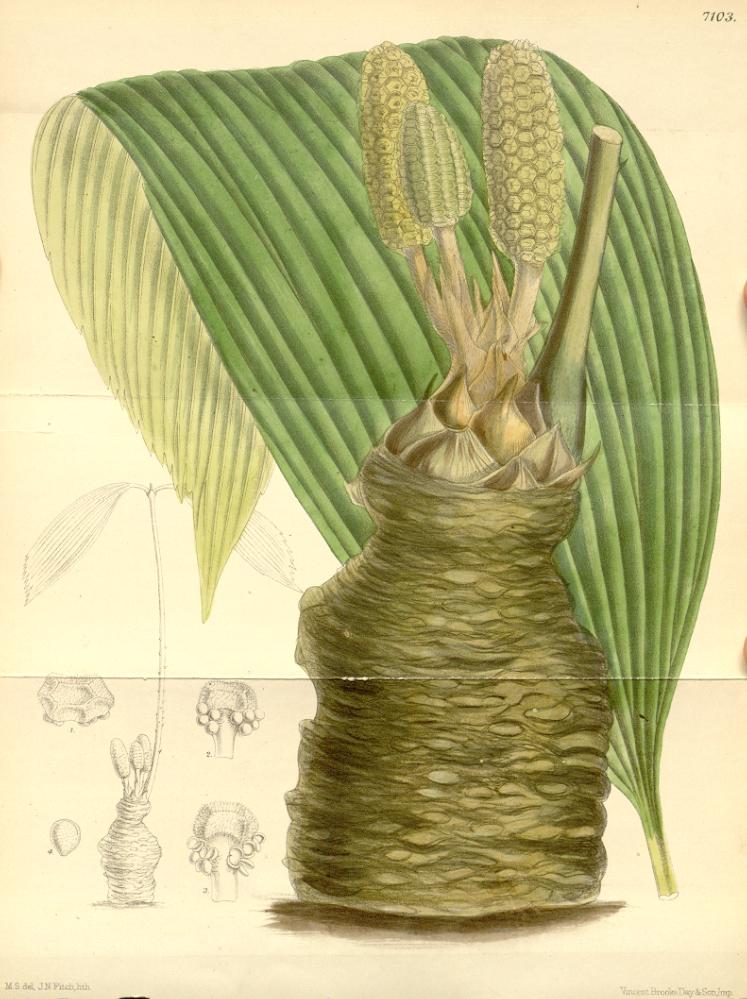
Chigua
Colombia
- Leaves have 2–18 leaflets.
- Leaflets are up to 60 cm long.
- Leaflets are up to 30 cm wide.
- Possesses the largest leaflets of any gymnosperm.
Deforestation, Habitat Loss
About Zamia wallisii
What is Zamia wallisii?
Zamia wallisii, commonly known as the chigua, is a remarkable species of cycad that is native and endemic to Colombia. This plant belongs to the Zamiaceae family and is distinguished by its exceptionally large foliage, holding the record for the largest leaflets among all gymnosperms. Each leaflet can measure up to 60 centimeters in length and 30 centimeters in width, contributing to a substantial leaf structure.
Historical Context and Discovery
The species was first described in 1875 by Alexander Braun, based on specimens collected by Gustav Wallis in Colombia at elevations ranging from 300 to 1000 meters. Following its initial description, the plant was collected again in 1888 by Guillermo Kalbreyer. However, both of these early collections were subsequently lost, and no type specimen remained extant. This loss of material led to significant doubt regarding the species' existence for a period of 100 years. Its presence was only reconfirmed in the 1980s through the rediscovery efforts of Ian Sutherland Turner.
Conservation Status and Threats
Zamia wallisii faces an extremely precarious conservation status, being listed as Critically Endangered. The species is known from only a single population, which comprises fewer than 50 individuals. This small population is situated in an area that is actively experiencing deforestation, posing a severe and immediate threat to its survival. The known locations of Zamia wallisii are near the town of Frontino in the Antioquia Department, as well as near Urrao and within the boundaries of Las Orquideas National Park.
Source: Wikipedia ↗
Frequently Asked Questions
What is Zamia wallisii commonly called?
Zamia wallisii is commonly known as the chigua. This common name is used to refer to this specific cycad species.
Where is Zamia wallisii found naturally?
Zamia wallisii is endemic to Colombia. It is found in the Antioquia Department, near the towns of Frontino and Urrao, and within Las Orquideas National Park.
What makes the leaves of Zamia wallisii unique?
The leaves of Zamia wallisii are notable for their size, featuring leaflets that can grow up to 60 cm (24 inches) long and 30 cm (12 inches) wide. These are the largest leaflets found on any gymnosperm.
What is the conservation status of Zamia wallisii?
Zamia wallisii is listed as Critically Endangered. This status is due to its extremely small population, with fewer than 50 individuals known to exist.
What historical challenges has Zamia wallisii faced?
The species faced significant doubt about its existence for a century after its initial collections were lost and it was not seen again for 100 years. Its survival was uncertain until its rediscovery in the 1980s.
What are the primary threats to Zamia wallisii?
The main threat to Zamia wallisii is habitat loss due to deforestation. The single known population is located in an area where its natural environment is being rapidly consumed.
Related Cycad species

Zamia montana
Zamia montana is a critically endangered cycad species endemic to the Antioquia Department of Colombia. Found in subtropical or tropical moist montane forests, this species is characterized by its extreme rarity and the significant threats posed by logging activities within its natural habitat. The species faces a high risk of extinction, with its only known population located in an area that has undergone recent logging.
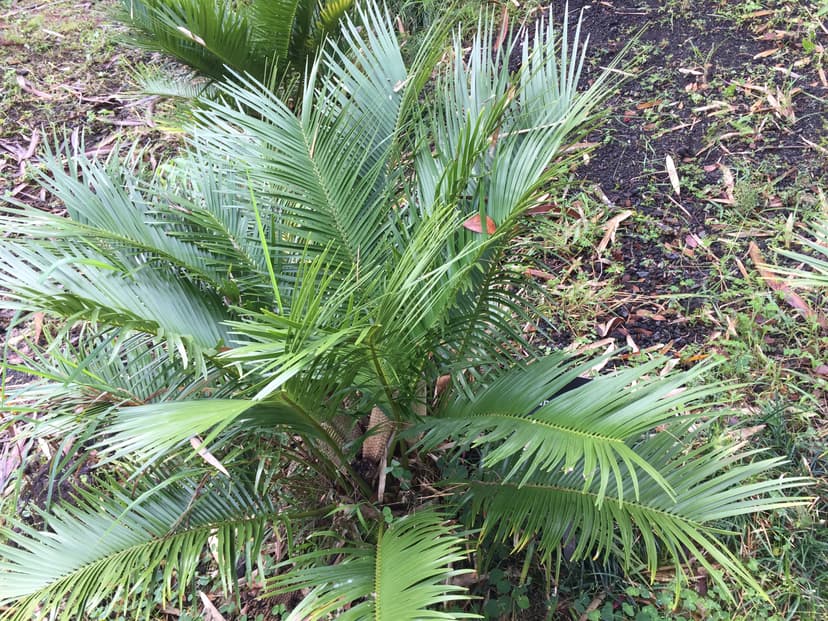
Zamia inermis
Zamia inermis is a critically endangered cycad species native to Actopan, Veracruz, Mexico. It is characterized by its shrub-like growth, with a trunk that can be branched and upright leaves composed of numerous linear-lanceolate leaflets. This species is dioecious and faces significant threats from habitat loss, wildfires, and over-harvesting.

Encephalartos dolomiticus
Encephalartos dolomiticus, commonly known as the Wolkberg cycad, is a critically endangered cycad species native to the Wolkberg region of South Africa. This tree-like cycad typically grows up to 2 meters tall and is characterized by its distinctive bluish leaves forming a crown, with lance-shaped leaflets arranged oppositely along the rachis. It is a dioecious species, producing separate male and female cones.