
Acrocanthosaurus
Carnivore·Cretaceous·Oklahoma, USA·Bipedal
Acrocanthosaurus is a genus of large theropod dinosaurs that roamed North America during the Early and Late Cretaceous periods. Known for its distinctive high neural spines along its back, it was one of the largest predators in its ecosystem, likely preying on large herbivores.
Key Facts
- ›Acrocanthosaurus means 'high-spined lizard' in Greek, referring to its prominent neural spines.
- ›It was one of the largest theropod dinosaurs, with estimated lengths of 11-11.5 meters and weights of 4.4-8.4 metric tons.
- ›Fossils have been found across North America, including Oklahoma, Texas, Wyoming, and Maryland.
- ›It was a bipedal predator, likely an apex predator in its environment.
- ›Its forelimbs, though not used for locomotion, were strong and may have been used to hold prey.
- ›Recent studies suggest its running speed was likely limited to avoid bone fracture.
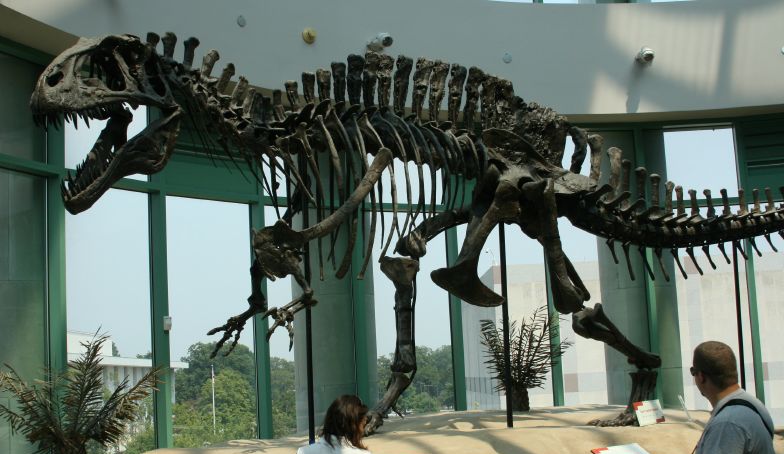
- Tall neural spines on vertebrae
- Long, low, and narrow skull
- Forelimbs with three clawed digits
- Hind limbs with four digits, the first being smaller
- Estimated skull length: 1.23–1.29 m
- Estimated body length: 11–11.5 m
- Estimated weight: 4.4–8.4 metric tons
Giganotosaurus, Carcharodontosaurus, Eocarcharia, Neovenator
North America
About Acrocanthosaurus
Acrocanthosaurus, meaning 'high-spined lizard,' is a genus of large theropod dinosaurs that inhabited North America during the Early and Late Cretaceous periods, specifically from about 125 to 99.6 million years ago. This dinosaur is most famously recognized for the prominent, elongated neural spines that ran along its vertebrae, particularly on its neck, back, and hips, which likely supported a substantial ridge of muscle.
Discovery and Naming
The genus and its sole species, Acrocanthosaurus atokensis, were formally named in 1950 by American paleontologists J. Willis Stovall and Wann Langston Jr. The type specimens were discovered in the Antlers Formation of Atoka County, Oklahoma, hence the species name. While early discoveries provided only partial remains, more complete skeletons, including one nicknamed 'Fran' with an intact skull and forelimb, have significantly advanced our understanding of its anatomy.
Physical Characteristics and Paleobiology
Acrocanthosaurus was one of the largest theropods of its time, with estimates for the largest individuals reaching lengths of 11–11.5 meters (36–38 feet) and weights between 4.4 and 8.4 metric tons (4.9–9.3 short tons). Its skull was long, low, and narrow, featuring serrated teeth. As a bipedal predator, Acrocanthosaurus was considered the largest theropod in its ecosystem and likely an apex predator, preying on large herbivores like sauropods and ornithopods. Studies on its forelimb function suggest they were used to hold prey, while biomechanical analyses indicate that it was not a fast runner, with speeds above 18 km/h potentially risking bone fractures.
Classification and Distribution
Classified within the superfamily Allosauroidea and family Carcharodontosauridae, Acrocanthosaurus is considered a basal member of this group, related to other large Southern Hemisphere carnivores like Giganotosaurus and Carcharodontosaurus. Its geographic distribution was remarkably wide for a large theropod, with fossils found across western North America (Oklahoma, Texas, Wyoming) and definitively identified in eastern North America (Maryland), indicating a continent-wide presence.
Source: Wikipedia ↗
Frequently Asked Questions
What does the name Acrocanthosaurus mean?
The name Acrocanthosaurus is derived from Greek words: 'ákros' meaning high, 'ákanthos' meaning thorn or spine, and 'saũros' meaning lizard. It directly refers to the characteristic tall neural spines found on its vertebrae.
How large was Acrocanthosaurus?
Acrocanthosaurus was a massive theropod dinosaur. The largest known specimen measured between 11 to 11.5 meters (36-38 feet) in length and weighed an estimated 4.4 to 8.4 metric tons (4.9 to 9.3 short tons).
What did Acrocanthosaurus eat?
As a large theropod and likely an apex predator, Acrocanthosaurus's diet probably included large herbivores. It is believed to have preyed upon sauropods, ornithopods, and ankylosaurs within its ecosystem.
Where were Acrocanthosaurus fossils found?
Fossil remains of Acrocanthosaurus have been discovered across a wide range in North America. Significant finds have been made in the U.S. states of Oklahoma, Texas, and Wyoming, as well as in Maryland on the east coast.
What was unique about Acrocanthosaurus's appearance?
The most distinctive feature of Acrocanthosaurus was the series of exceptionally tall neural spines on its vertebrae, particularly along its neck, back, and hips. These spines likely supported a prominent ridge of muscle.
How did Acrocanthosaurus use its forelimbs?
While not used for walking, Acrocanthosaurus's forelimbs served a predatory purpose. They were strong and could retract powerfully, likely used to hold struggling prey tightly against the body after it was seized by the jaws.
Was Acrocanthosaurus a fast runner?
Studies suggest that Acrocanthosaurus was not a fast runner. Its limb proportions, with the femur being longer than the tibia and metatarsals, indicate it was not built for speed, and exceeding certain speeds may have risked fracturing its leg bones.
Related Dinosaur species

Afromimus
Afromimus tenerensis is a genus of theropod dinosaur from the Early Cretaceous period, discovered in Niger. Initially classified as an ornithomimosaur, later analyses suggest it belongs to the Abelisauroidea superfamily, possibly within the Noasauridae family. Its fossils indicate an adult size of approximately 4.14 meters in length.
Alashansaurus
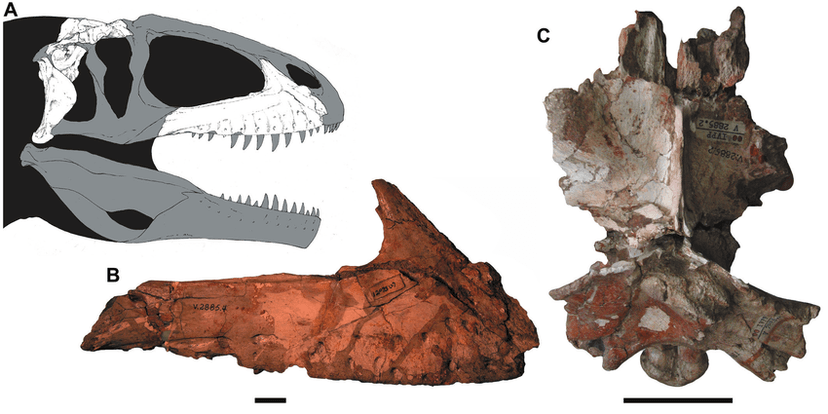
Shaočilong (meaning "shark toothed dragon") was an extinct genus of theropod dinosaur that lived during the Early Cretaceous period in what is now China. Initially classified as a carcharodontosaurid, its exact phylogenetic placement has been subject to debate, with some studies suggesting it may be a tyrannosauroid or a member of the polytomic allosauroid group. Shaochilong was a relatively small carnosaur, estimated to be around 5 to 6 meters in length and weighing approximately 500 kilograms.
Aniksosaurus
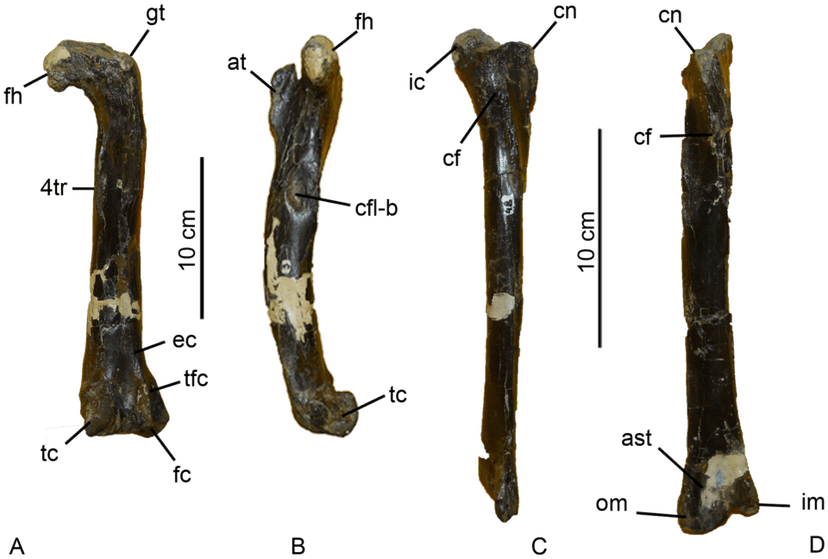
Aniksosaurus was a bipedal theropod dinosaur that lived in what is now Chubut Province, Argentina, during the Late Cretaceous period. Its name, meaning 'spring lizard,' refers to the time of its discovery. Fossil evidence suggests Aniksosaurus may have been gregarious, particularly during its sub-adult stages.