
Alashansaurus
Shaočilong (meaning "shark toothed dragon") was an extinct genus of theropod dinosaur that lived during the Early Cretaceous period in what is now China. Initially classified as a carcharodontosaurid, its exact phylogenetic placement has been subject to debate, with some studies suggesting it may be a tyrannosauroid or a member of the polytomic allosauroid group. Shaochilong was a relatively small carnosaur, estimated to be around 5 to 6 meters in length and weighing approximately 500 kilograms.
Key Facts
- ›Shaočilong lived during the Early Cretaceous period (Barremian to Albian stages).
- ›Its fossils were discovered in the Miaogou Formation of Inner Mongolia, China.
- ›The genus name Shaochilong means "shark toothed dragon".
- ›Its estimated length is 5 to 6 meters, with a weight of around 500 kilograms.
- ›Its classification has been debated, with suggestions of it being a carcharodontosaurid, tyrannosauroid, or polytomic allosauroid.
- ›It possessed a relatively short face and was notably smaller than many other carcharodontosaurids.
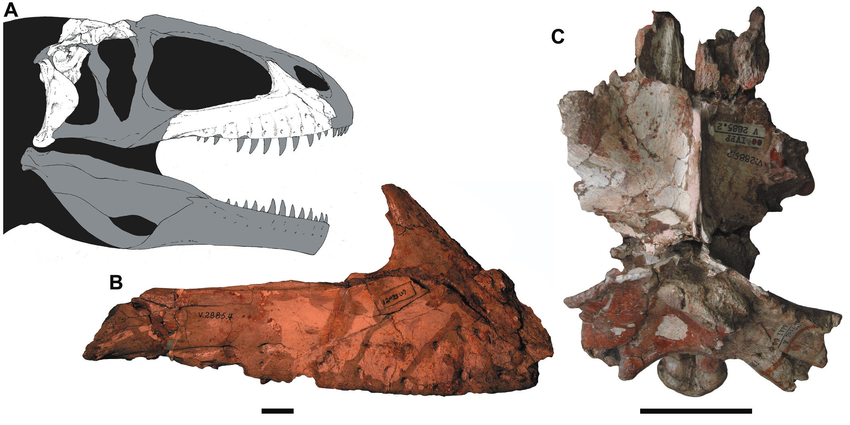
- Estimated length of 5 to 6 meters.
- Estimated weight of approximately 500 kilograms.
- Relatively short-faced, especially if it was a Carcharodontosaurid.
- Possessed sharp, serrated teeth.
Carcharodontosaurids, Tyrannosauroids, Allosauroids
Asia
About Alashansaurus
Shaochilong
Shaočilong is an extinct genus of theropod dinosaur that roamed the Earth during the Early Cretaceous period, approximately between the Barremian and Albian stages. Fossils of this dinosaur were unearthed in the Miaogou Formation in Inner Mongolia, China. The genus name, Shaochilong, translates to "shark toothed dragon," a moniker inspired by its distinctively sharp and serrated teeth.
History and Classification
The fossils attributed to Shaochilong, including skull fragments and vertebrae, were initially described in 1964 as a species of Chilantaisaurus. However, subsequent research has led to its reclassification. In 2009, a redescription proposed the new genus name Shaočilong. The exact phylogenetic placement of Shaochilong has been a subject of ongoing scientific debate. While initially considered a carcharodontosaurid, some studies suggest it may be more closely related to tyrannosauroids or belong to a polytomic allosauroid group. These differing interpretations highlight the complexities in reconstructing dinosaur evolutionary relationships based on limited fossil evidence.
Physical Characteristics and Ecology
Shaočilong is estimated to have been a moderately sized theropod, with an approximate length of 5 to 6 meters (16 to 20 feet) and a weight of around 500 kilograms (1,100 lb). This made it relatively small compared to many of its potential carcharodontosaurid relatives, which were among the largest carnivorous animals to have ever lived. Its skull proportions suggest it may have had a relatively short face. These characteristics, combined with its size, indicate that Shaochilong might have occupied a unique ecological niche within its ancient environment, distinct from its larger cousins.
Source: Wikipedia ↗
Frequently Asked Questions
What does the name Shaochilong mean?
The name Shaochilong translates to "shark toothed dragon" in English. This name reflects the dinosaur's sharp, serrated teeth, reminiscent of those found in sharks.
When did Shaochilong live?
Shaočilong lived during the Early Cretaceous period. More specifically, its fossils are found in rock layers dating from the Barremian to the Albian stages of this period.
Where were Shaochilong fossils found?
Fossils of Shaochilong have been discovered in Inner Mongolia, China. They originate from the Miaogou Formation, specifically the Maortu locality.
How big was Shaochilong?
Shaočilong is estimated to have been between 5 to 6 meters (16 to 20 feet) in length. Its weight is estimated to be around 500 kilograms (1,100 lb).
What kind of dinosaur was Shaochilong?
Shaočilong was a theropod dinosaur, a group that includes most carnivorous dinosaurs. Its exact classification has been a subject of scientific debate, with theories placing it as a carcharodontosaurid, tyrannosauroid, or within a broader polytomic allosauroid group.
Was Shaochilong a large predator?
While Shaochilong was a carnivore, it was considered uncharacteristically small for a carcharodontosaurid. In contrast to many of its relatives, which were among the largest terrestrial carnivores, Shaochilong was of moderate size for a theropod.
Related Dinosaur species

Chilantaisaurus
Chilantaisaurus was a large, extinct theropod dinosaur that inhabited what is now China during the Late Cretaceous period. Known primarily from an incomplete skeleton, it was characterized by its massive forelimbs, particularly its humerus, and robust hindlimbs. Its exact classification has been a subject of debate among paleontologists, with various studies placing it within or related to groups like Carcharodontosauria, Spinosauridae, or Coelurosauria.

Alxasaurus
Alxasaurus is a genus of therizinosauroid theropod dinosaur that lived during the Early Cretaceous period. Known from five specimens discovered in Inner Mongolia, it possessed features characteristic of later therizinosaurs, such as a short tail and long hand claws, and is believed to have been a bipedal herbivore. Its discovery helped solidify the understanding of therizinosaurs as derived theropods rather than basal sauropodomorphs.
Bannykus
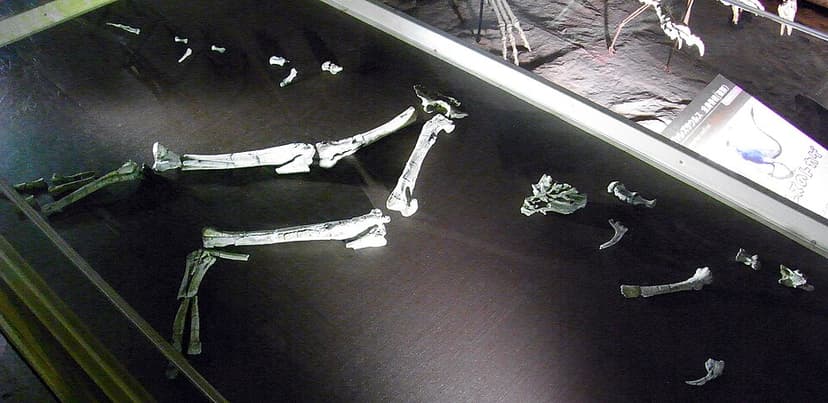
Bannykus is an extinct genus of alvarezsauroid dinosaur that lived during the Early Cretaceous period. Discovered in Inner Mongolia, China, this theropod is notable for its transitional forelimb morphology, which showed significant reduction but was less specialized than later alvarezsauroids. Evidence suggests Bannykus was a carnivore, likely using its forelimbs for digging.