
Aerosteon
Aerosteon was a megaraptoran dinosaur that lived in Argentina during the Late Cretaceous period. Its name, meaning "air bone," refers to the bird-like respiratory system evident in its fossilized remains, which included air-filled spaces in its bones. This unique feature suggests a sophisticated breathing mechanism similar to that of modern birds.
Key Facts
- ›Aerosteon lived during the Late Cretaceous period in what is now Argentina.
- ›Its name means "air bone," referencing its bird-like respiratory system.
- ›Fossils show pneumatization (air-filled spaces) in bones like the furcula and ilium.
- ›This pneumaticity is linked to an avian-like respiratory system, suggesting efficient breathing.
- ›It was initially difficult to classify, with later studies placing it within the Megaraptora group.
- ›The type species is Aerosteon riocoloradensis.

- Exhibited pneumatization in bones, including the furcula and ilium.
- Possessed a bird-like respiratory system.
- Estimated length varies from 6 to 10 meters.
- Estimated weight ranges from 500 kg to 1 metric ton.
Murusraptor
South America
About Aerosteon
Overview
Aerosteon is a genus of megaraptoran dinosaur that roamed the Earth during the Late Cretaceous period. Its remains were unearthed in Argentina, specifically within the Anacleto Formation, which dates to the late Campanian stage. The genus's name, Aerosteon, is derived from Greek words meaning "air bone," a direct reference to the remarkable bird-like respiratory system evidenced by its fossilized skeletal structure.
Discovery and Classification
First discovered in 1996, Aerosteon was formally described by Sereno et al. in 2008, though its validity as a scientific name was officially confirmed in 2009. The holotype specimen includes cranial bones, vertebrae, ribs, gastralia, a furcula (wishbone), and parts of the shoulder and hip. Initially, Aerosteon's place within the tree of dinosaur life was puzzling, as it did not fit neatly into the known large theropod groups of southern continents. Subsequent analyses placed it within the Megaraptora, a clade of advanced, lightly built theropods, with some studies suggesting a placement within Tyrannosauroidea.
Paleobiology and Physical Characteristics
The most striking feature of Aerosteon is the presence of pneumatization, or air-filled spaces, within many of its bones, including the furcula and ilium. This pneumaticity is a hallmark of the avian respiratory system, suggesting that Aerosteon possessed a highly efficient method of breathing, akin to modern birds. This system, theorized to have evolved for thermoregulation, likely involved air sacs acting as bellows to move air through relatively inflexible lungs. While initial size estimates varied, later research has provided ranges for its length and weight, with some estimates placing it at around 7.5 meters long and weighing up to a metric ton. Its close relative, Murusraptor, shares similar cranial and vertebral structures, though differs in the proportions of the ilium.
Source: Wikipedia ↗
Frequently Asked Questions
What does the name Aerosteon mean?
The name Aerosteon translates to "air bone." It is derived from the Greek words 'aer' (air) and 'osteon' (bone), highlighting the presence of air-filled spaces within its skeletal structure.
What period did Aerosteon live in?
Aerosteon lived during the Late Cretaceous period. Specifically, its remains were found in the Anacleto Formation, dating to the late Campanian stage.
Where were Aerosteon fossils discovered?
The fossils of Aerosteon were discovered in Argentina, specifically in Mendoza Province, about 1 kilometer north of the Río Colorado. The discovery was made in the Anacleto Formation.
What was unique about Aerosteon's respiratory system?
Aerosteon exhibited a bird-like respiratory system characterized by pneumatized bones, meaning they contained air-filled spaces. This suggests an advanced breathing mechanism similar to the air sacs found in modern birds, which aid in efficient respiration.
How large was Aerosteon?
Estimates for Aerosteon's size vary. Initial estimates suggested a length of 9 to 10 meters (30 to 33 ft). Later estimations by Gregory S. Paul placed it at 6 meters (20 ft) with a weight of 500 kilograms (1,100 lb), while Molina-Pérez and Larramendi in 2016 estimated it at 7.5 meters (25 ft) and 1 metric ton (1.1 short tons).
What group of dinosaurs does Aerosteon belong to?
Aerosteon is classified as a megaraptoran dinosaur. Initially, its classification was uncertain, but subsequent studies recognized it as part of the Megaraptora, a group of advanced allosauroids, with some analyses placing megaraptorans within Tyrannosauroidea.
Related Dinosaur species
Aucasaurus
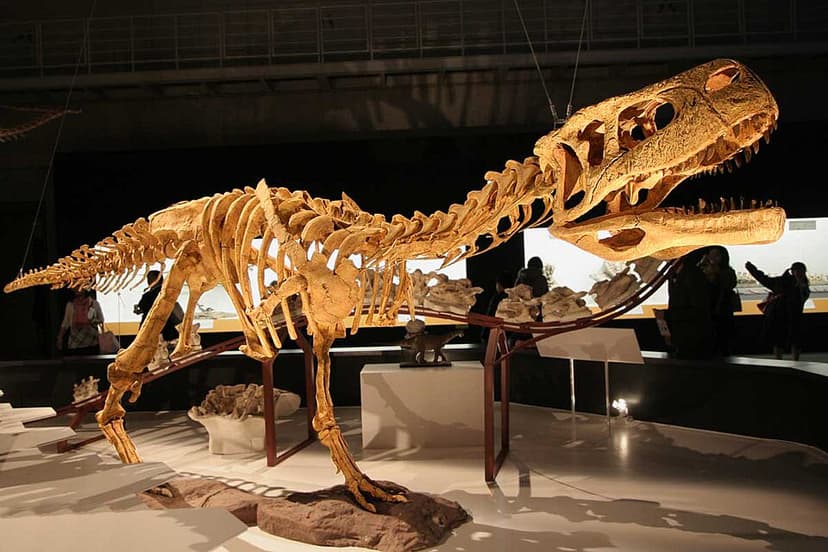
Aucasaurus is a genus of medium-sized abelisaurid theropod dinosaur that lived in Argentina during the Late Cretaceous period. It was characterized by its extremely reduced arms and lack of fingers, and possessed low ridges above its eyes instead of horns. The type specimen is well-preserved, offering significant insight into its anatomy.

Austroraptor
Austroraptor is a genus of dromaeosaurid theropod dinosaur that lived in Argentina during the Late Cretaceous period. It was a large, ground-dwelling carnivore, notable for its relatively short forelimbs and conical, non-serrated teeth. Its discovery provided insights into the diversity of dromaeosaurids in the Southern Hemisphere.
Bicentenaria
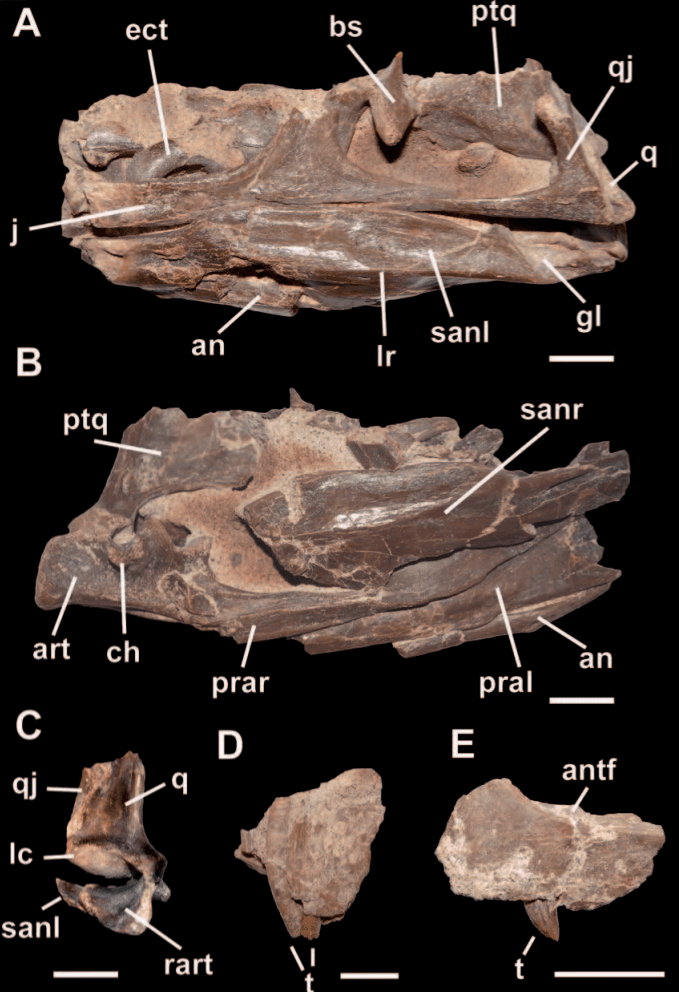
Bicentenaria argentina was a small, bipedal carnivorous dinosaur that lived during the early Late Cretaceous period in what is now Argentina. Its scientific name commemorates the 200th anniversary of Argentina's May Revolution. Discovered in the Candeleros Formation, its fossils include skull fragments, vertebrae, limb bones, and claws.