
Aucasaurus
Aucasaurus is a genus of medium-sized abelisaurid theropod dinosaur that lived in Argentina during the Late Cretaceous period. It was characterized by its extremely reduced arms and lack of fingers, and possessed low ridges above its eyes instead of horns. The type specimen is well-preserved, offering significant insight into its anatomy.
Key Facts
- ›Lived during the Late Cretaceous period (Santonian to Campanian stages).
- ›Discovered in the Anacleto Formation of Argentina.
- ›Measured approximately 5.5–6.2 meters (18–20 ft) in length.
- ›Estimated to have weighed around 700 kg (1,500 lb).
- ›Featured extremely reduced arms with almost no fingers.
- ›Possessed low ridges above the eyes instead of prominent horns.
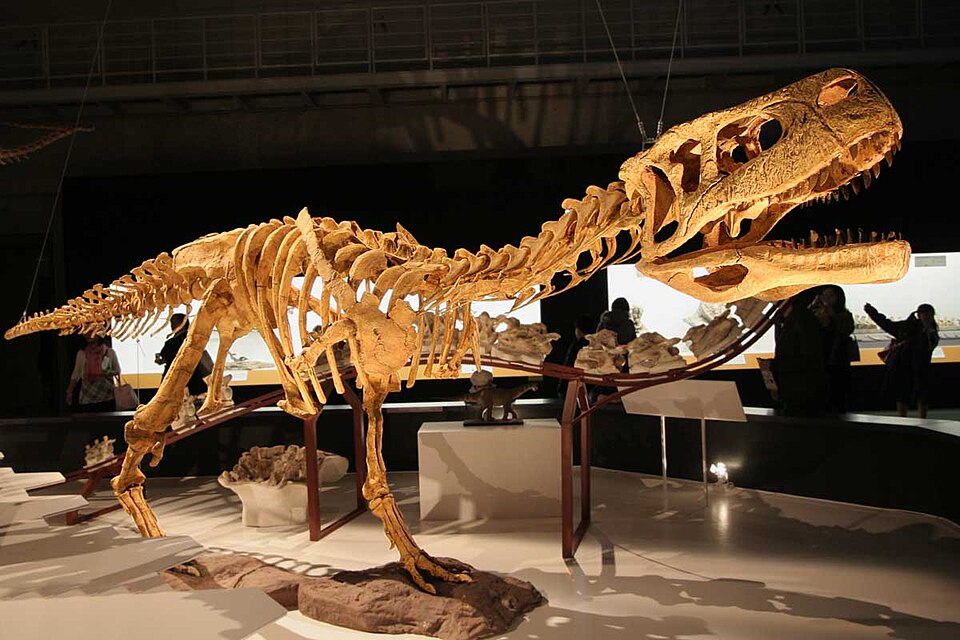
- Medium-sized abelisaurid theropod.
- Length: 5.5–6.2 meters.
- Weight: Approximately 700 kg.
- Skull not as short or deep-snouted as Carnotaurus.
- Possessed low ridges above each eye instead of horns.
- Extremely reduced arms with almost total lack of fingers.
- Hands had short fingers with no claws.
Carnotaurus, Abelisaurus, Majungasaurus, Indosaurus
Argentina
About Aucasaurus
Aucasaurus is a genus of medium-sized abelisaurid theropod dinosaurs that roamed the Earth during the Late Cretaceous period. Its fossils have been unearthed in Argentina, specifically within the Anacleto Formation of the Neuquén Basin. The genus name, meaning 'Auca Mahuevo lizard,' reflects both the significant fossil site where it was found and the Mapuche word for 'egg.'
Discovery and Anatomy
The type specimen of Aucasaurus, discovered in the Río Colorado Subgroup, is remarkably complete for an abelisaurid, providing substantial information about its anatomy. This individual was a mature animal, estimated to be at least eleven years old at the time of its death. Aucasaurus measured approximately 5.5 to 6.2 meters (18 to 20 feet) in length and weighed around 700 kilograms (1,500 pounds). Its skull was less robust than that of its famous relative, Carnotaurus, and instead of horns, it featured a pair of low, bony ridges above each eye.
Unique Features
One of the most striking characteristics of Aucasaurus is its extremely reduced forelimbs, which were proportionally longer than those of Carnotaurus due to its smaller size but lacked significant bony processes. The hand itself was unusual, with only two short fingers, the second and third, which were devoid of claws. Studies of its caudal vertebrae suggest strong musculature, potentially indicating it was a fast runner. Investigations into its braincase have revealed similarities to other abelisaurids like Majungasaurus, with a notable floccular process suggesting a greater range of head movement.
Paleontological Significance
The holotype specimen of Aucasaurus also exhibits pathology, specifically fused vertebrae in the tail, interpreted as a congenital disorder known as block vertebrae. This represents the earliest documented instance of this condition in non-avian theropods. While some debate has occurred regarding its taxonomic classification, with suggestions of it being a synonym of Abelisaurus, Aucasaurus is generally considered a distinct genus, often grouped within the Carnotaurini tribe alongside Carnotaurus, highlighting its place within the diverse abelisaurid family.
Source: Wikipedia ↗
Frequently Asked Questions
What does the name Aucasaurus mean?
The name Aucasaurus means 'Auca Mahuevo lizard'. 'Auca' refers to Auca Mahuevo, a significant site for dinosaur discoveries in Argentina, and 'Mahuevo' itself means 'egg' in the local Mapuche language.
Where were Aucasaurus fossils found?
Fossils of Aucasaurus have been discovered in the Anacleto Formation, part of the Río Colorado Subgroup in the Neuquén Basin of Argentina.
How large was Aucasaurus?
Aucasaurus was a medium-sized theropod, estimated to be between 5.5 and 6.2 meters (18 to 20 feet) long and weighing approximately 700 kilograms (1,500 pounds).
What were the most distinctive physical features of Aucasaurus?
Aucasaurus is notable for its extremely reduced arms with almost no fingers and the presence of low bony ridges above its eyes, rather than the prominent horns seen in its relative, Carnotaurus.
What is known about the Aucasaurus hand?
The hand of Aucasaurus was unusual, possessing four metacarpals but only two fingers (the second and third). These fingers were quite short and lacked claws.
What does the braincase study of Aucasaurus reveal?
A study of Aucasaurus's braincase, using CT scans, revealed that its forebrain, midbrain, and hindbrain morphology were similar to other abelisaurids. It also showed a relatively large floccular process, suggesting a potentially wider range of head movements.
Related Dinosaur species

Aerosteon
Aerosteon was a megaraptoran dinosaur that lived in Argentina during the Late Cretaceous period. Its name, meaning "air bone," refers to the bird-like respiratory system evident in its fossilized remains, which included air-filled spaces in its bones. This unique feature suggests a sophisticated breathing mechanism similar to that of modern birds.

Austroraptor
Austroraptor is a genus of dromaeosaurid theropod dinosaur that lived in Argentina during the Late Cretaceous period. It was a large, ground-dwelling carnivore, notable for its relatively short forelimbs and conical, non-serrated teeth. Its discovery provided insights into the diversity of dromaeosaurids in the Southern Hemisphere.
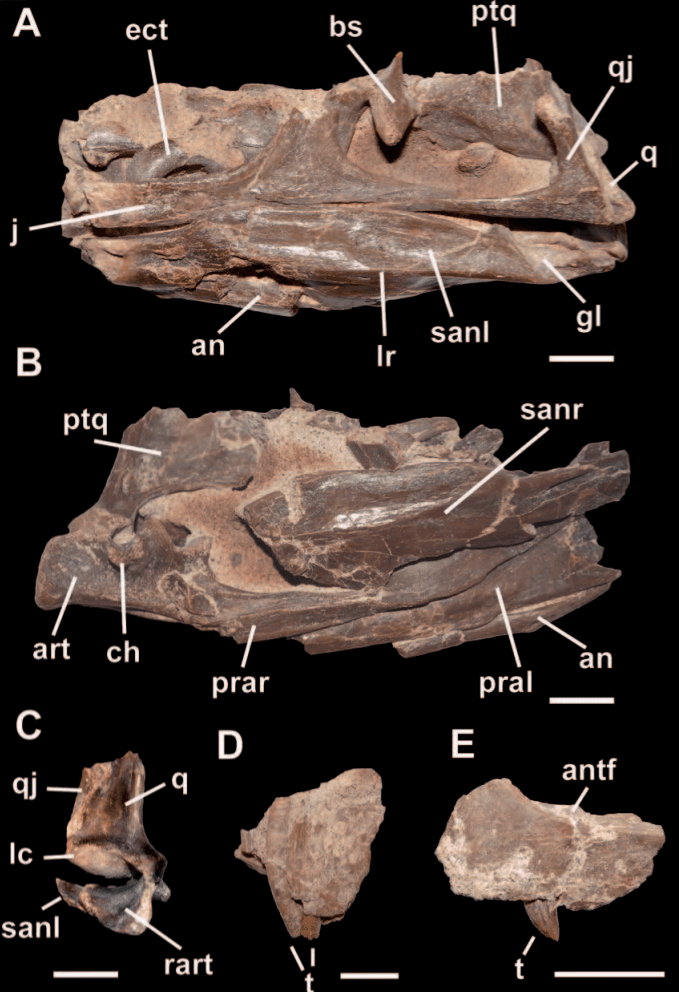
Bicentenaria
Bicentenaria argentina was a small, bipedal carnivorous dinosaur that lived during the early Late Cretaceous period in what is now Argentina. Its scientific name commemorates the 200th anniversary of Argentina's May Revolution. Discovered in the Candeleros Formation, its fossils include skull fragments, vertebrae, limb bones, and claws.