
Aetonyx
Carnivore (initially proposed, debated)·Early Jurassic·Fouriesburg, Free State Province, southern Africa·Unknown
Aetonyx is a dubious genus of sauropodomorph dinosaur from the Early Jurassic of southern Africa. Its only species, A. palustris, was named by Robert Broom in 1911 based on fragmentary remains. Initially considered a carnivorous dinosaur, its classification has been debated, with later reviews listing it as an indeterminate sauropodomorph.
Key Facts
- ›Aetonyx is a dubious genus, meaning its validity is questionable.
- ›It is known from fragmentary remains found in the upper Elliot Formation of southern Africa.
- ›The genus was originally described as a carnivorous dinosaur by Robert Broom.
- ›Its classification has been debated, with suggestions of it being a synonym of Massospondylus.
- ›Current consensus lists Aetonyx palustris as an indeterminate sauropodomorph.
- ›The name 'Aetonyx' translates to 'eagle claw', likely referring to a large claw on the second toe.

- Fragmentary skeleton including neck, back, and tail vertebrae.
- Parts of the shoulder girdle.
- Forelimb elements.
- Hind limb elements.
- Humerus measured 17.4 cm in length.
- Penultimate phalanges of the hand are elongated.
- Large claw on the second toe.
Massospondylus Harriesi, Massospondylus Carinatus, Thecodontosaurus Dubius
Southern Africa
About Aetonyx
Aetonyx: A Dubious Dinosaur from the Early Jurassic
Aetonyx is a genus of sauropodomorph dinosaur that lived during the Early Jurassic period in what is now southern Africa. The only known species, Aetonyx palustris, was named in 1911 by Robert Broom based on a fragmentary skeleton recovered near Fouriesburg, Free State Province. This specimen, housed at the Iziko South African Museum, includes vertebrae, parts of the shoulder girdle, forelimbs, and hind limbs. The genus name, derived from Greek for 'eagle claw,' likely refers to a prominent claw on the second toe, which Broom thought resembled those of birds and might have been used for grooming.
Taxonomic History and Status
Historically, dinosaurs like Aetonyx were often classified as theropods. Broom initially described Aetonyx as a 'carnivorous dinosaur.' However, its classification has been a subject of considerable debate. Over time, additional specimens were assigned to the genus, and it was considered by some paleontologists to be a synonym of Massospondylus harriesi or even Massospondylus carinatus. In a significant 2004 review, paleontologists Galton and Upchurch concluded that the remains were too indistinct to definitively classify, listing Aetonyx palustris as an indeterminate sauropodomorph, meaning its exact identity and placement within the dinosaur family tree remain uncertain. This makes Aetonyx a "dubious genus," a term used for taxa with insufficient or ambiguous evidence for validity.
Source: Wikipedia ↗
Frequently Asked Questions
What does the name Aetonyx mean?
The name Aetonyx is derived from Ancient Greek words: 'aetos' meaning 'eagle' and 'onyx' meaning 'claw'. This name likely refers to a large claw found on the second toe of the dinosaur.
Where were Aetonyx fossils found?
Fossils attributed to Aetonyx were discovered near Fouriesburg in the Free State Province of southern Africa. These remains were found in sediments of the upper Elliot Formation.
What period did Aetonyx live in?
Aetonyx lived during the Early Jurassic period. The sediments where its fossils were found date to the Hettangian and Sinemurian ages.
What was Aetonyx's diet?
Initially, Robert Broom considered Aetonyx to be a carnivorous dinosaur. However, due to its indeterminate classification, its exact diet is not definitively known.
Is Aetonyx a valid dinosaur genus?
The genus Aetonyx is considered dubious by paleontologists. While initially described as a distinct genus, it has been synonymized with other genera like Massospondylus and is now often listed as an indeterminate sauropodomorph.
Related Dinosaur species
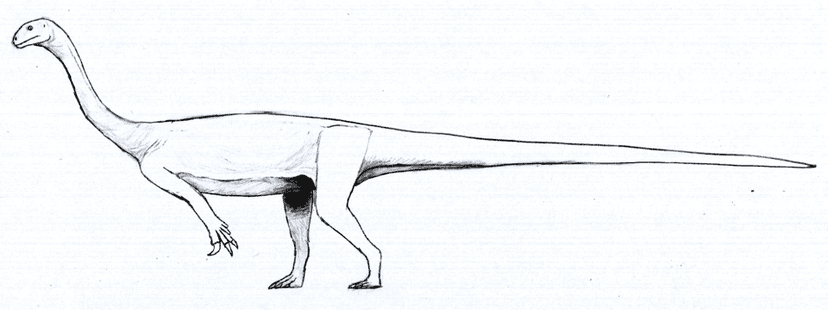
Arcusaurus
Arcusaurus is an extinct genus of sauropodomorph dinosaur that lived during the Early Jurassic period in what is now South Africa. Named for the "Rainbow Nation," Arcusaurus is known from fossil remains, including a partial skull and other skeletal elements, indicating it was a basal sauropodomorph.
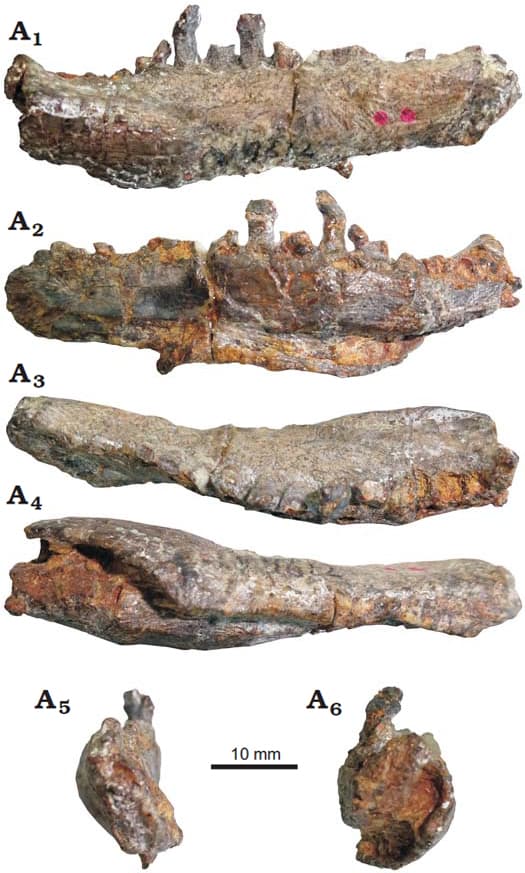
Bienosaurus
Bienosaurus is a genus of thyreophoran dinosaur from the Early Jurassic period, discovered in the Lufeng Formation of Yunnan Province, China. It is considered a dubious genus due to the incomplete and fragmentary nature of its fossil remains, making it difficult to distinguish from other early thyreophorans and potentially identical to Tatisaurus.
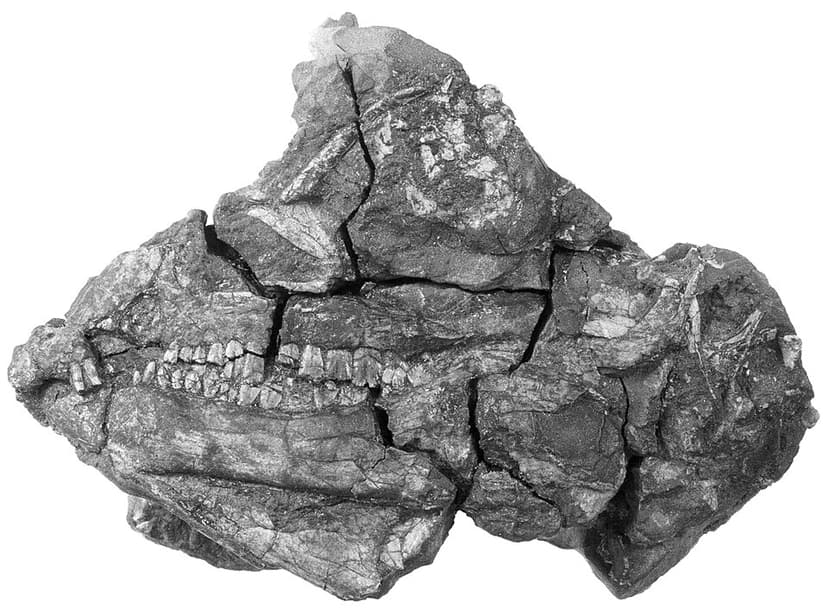
Abrictosaurus
Abrictosaurus is a genus of small, bipedal ornithischian dinosaur that lived during the Early Jurassic period in what is now southern Africa. Known for its distinctive heterodont dentition, including prominent tusks, it represents one of the most basal members of the Heterodontosauridae family. Fossil evidence suggests it was a herbivore or omnivore that inhabited a semiarid environment.