
Arcusaurus
Arcusaurus is an extinct genus of sauropodomorph dinosaur that lived during the Early Jurassic period in what is now South Africa. Named for the "Rainbow Nation," Arcusaurus is known from fossil remains, including a partial skull and other skeletal elements, indicating it was a basal sauropodomorph.
Key Facts
- ›Lived during the Early Jurassic period (Pliensbachian stage).
- ›Fossils discovered in the upper Elliot Formation of South Africa.
- ›Considered a basal sauropodomorph, closely related to Efraasia.
- ›Possesses unique features in its premaxilla not seen in more advanced sauropodomorphs.
- ›The holotype specimen is a partial skull, with additional bones suggesting at least two individuals were present.
- ›The individuals represented by the fossils were likely juveniles.
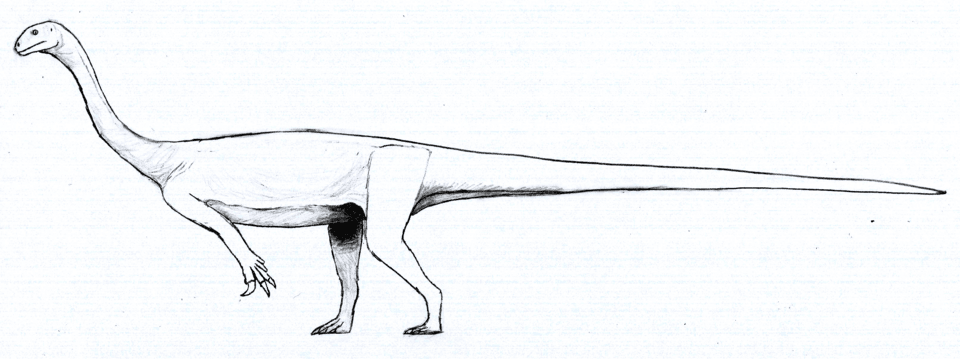
- Relatively deep snout.
- Proportionally large and circular orbit.
- Premaxilla with four teeth on each side and distinctive bony shelves.
- Plate-like nasal bone with four bony extensions.
- Postorbital bone with three large processes, the rearward one being bifurcated.
Efraasia
South Africa
About Arcusaurus
Arcusaurus is an extinct genus of sauropodomorph dinosaur that roamed the Earth during the Early Jurassic period, specifically the Pliensbachian stage. Its fossils were unearthed in South Africa, within the upper Elliot Formation in Senekal, Free State. The genus was formally named in 2011 by Adam Yates, Matthew Bonnan, and Johann Neveling, with the type species being Arcusaurus pereirabdalorum.
The generic name, Arcusaurus, is derived from the Latin word 'arcus,' meaning 'rainbow,' a symbolic reference to South Africa, often called the Rainbow Nation. The specific epithet, pereirabdalorum, honors Lucille Pereira and Fernando Abdala, who were instrumental in the discovery of the fossils.
Discovery and Anatomy
The fossil remains of Arcusaurus were discovered in 2006. The holotype specimen, a partial skull, was found disarticulated, along with other bones of comparable size. The presence of two right nasal bones suggests that at least two individuals were present in the discovery site, and these individuals were likely juveniles due to their small size and open bone sutures. Detailed analysis of the skull parts, including the premaxilla (front of the upper jaw), nasal bone, and postorbital bone (behind the eye socket), reveals several unique features.
The premaxilla of Arcusaurus featured four teeth on each side and possessed distinctive bony shelves that contacted each other in the middle, forming the front part of the palate. This palate is notable for a large elliptical opening. The nasal bone was plate-like and had four bony extensions, with variations in shape and orientation that distinguish it from related genera. The postorbital bone had three large processes, with the rearward-projecting process exhibiting a unique bifurcated tip, unlike in most other basal sauropodomorphs.
Classification and Significance
Phylogenetic studies have placed Arcusaurus as a basal sauropodomorph, suggesting it was the sister taxon to Efraasia and all more derived sauropodomorphs. This close relationship, despite Efraasia being known from the Late Triassic, implies a significant 'ghost lineage' of sauropodomorphs extending from the Late Triassic to Arcusaurus. However, Arcusaurus also exhibits characteristics found in more advanced groups within the clade Plateosauria, leading to ongoing discussions about its precise placement within the sauropodomorph family tree. The discovery of Arcusaurus contributes valuable information to our understanding of early sauropodomorph evolution in Gondwana.
Source: Wikipedia ↗
Frequently Asked Questions
When did Arcusaurus live?
Arcusaurus lived during the Early Jurassic period, specifically the Pliensbachian stage. This places it in a time frame approximately 200 million years ago.
Where were the fossils of Arcusaurus found?
Fossils of Arcusaurus were discovered in South Africa, specifically at the Spion Kop Heelbo site in the upper Elliot Formation in Senekal, Free State.
What kind of dinosaur was Arcusaurus?
Arcusaurus was a sauropodomorph dinosaur. Phylogenetic studies suggest it was a basal member of this group, meaning it was an early and relatively primitive form.
What does the name Arcusaurus mean?
The generic name Arcusaurus is derived from the Latin word 'arcus,' meaning 'rainbow.' This is a reference to the Rainbow Nation, a term for South Africa. The specific epithet honors Lucille Pereira and Fernando Abdala, who discovered the fossils.
What physical characteristics are known about Arcusaurus?
Known features include a relatively deep snout, a proportionally large and circular eye socket, and unique bony structures within the premaxilla. The nasal bone had four bony extensions, and the postorbital bone had three large processes with a unique bifurcated tip on the rearward projection.
Are the fossils of Arcusaurus complete?
The fossil record for Arcusaurus includes a partial skull and various other bones such as teeth, jaw bones, nasal bones, and limb elements. While not a complete skeleton, these remains provide significant information about its anatomy, though the individuals represented were likely juveniles.
Related Dinosaur species

Aristosaurus
Aristosaurus is a dubious genus of sauropodomorph dinosaur from the Early Jurassic of southern Africa, known from a single, nearly complete skeleton. Initially described as Aristosaurus erectus, it was later considered a synonym of Gyposaurus or a juvenile Massospondylus, but recent reviews classify it as an indeterminate sauropodomorph.

Antetonitrus
Antetonitrus is a genus of sauropodiform dinosaur that lived during the Early Jurassic period in what is now South Africa. It is considered a basal sauropod, providing important insights into the origin and early evolution of this group. While quadrupedal and herbivorous like its later relatives, Antetonitrus retained primitive adaptations in its forelimbs that allowed for grasping.
Blikanasaurus
Blikanasaurus is a genus of sauropodomorph dinosaur that lived in South Africa during the Late Triassic period. It is known only from partial hindlimb bones, which suggest it was a robust, quadrupedal animal. Due to the fragmentary nature of its fossils, much about its anatomy and classification remains uncertain.