
Bienosaurus
Unknown·Early Jurassic·Yunnan Province, China·Unknown
Bienosaurus is a genus of thyreophoran dinosaur from the Early Jurassic period, discovered in the Lufeng Formation of Yunnan Province, China. It is considered a dubious genus due to the incomplete and fragmentary nature of its fossil remains, making it difficult to distinguish from other early thyreophorans and potentially identical to Tatisaurus.
Key Facts
- ›Bienosaurus lived during the Early Jurassic, likely the Hettangian to Sinemurian stages.
- ›Fossils were discovered in the Lower Lufeng Formation of Yunnan Province, China.
- ›The genus is considered dubious due to insufficient and fragmentary fossil material.
- ›It is thought to be an early thyreophoran dinosaur, possibly related to Scelidosaurus.
- ›Bienosaurus may be synonymous with another dinosaur from the same formation, Tatisaurus.
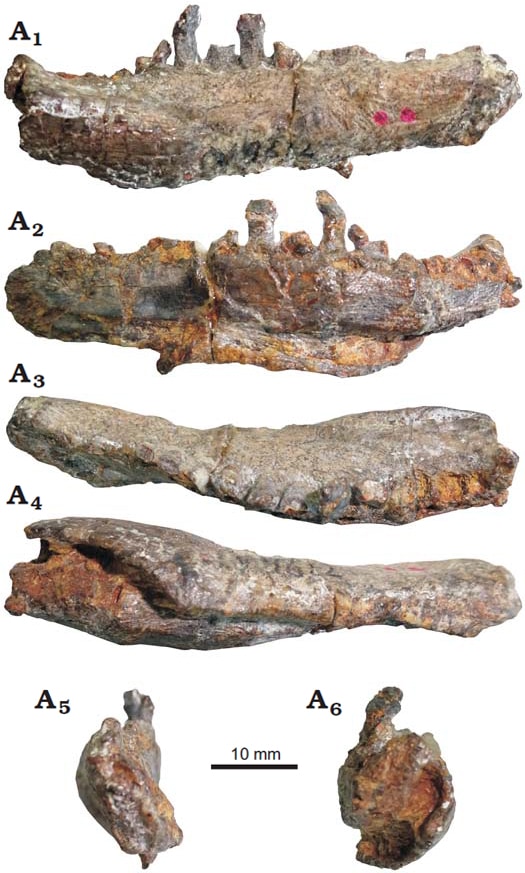
- Nearly Complete Jaw and Partial Skull Discovered.
- Shows Anatomy Typical of An Early Thyreophoran.
Scelidosaurus, Tatisaurus
China
About Bienosaurus
Bienosaurus is a genus of thyreophoran dinosaur that roamed the Earth during the Early Jurassic period. Its fossils were unearthed in the Lower Lufeng Formation of Yunnan Province, China, a region known for its rich Early Jurassic dinosaur discoveries. The genus, however, is considered dubious by paleontologists due to the incomplete and fragmentary nature of the fossil material recovered.
Discovery and Classification
The nearly complete jaw and partial skull of what would become Bienosaurus were collected in the 1930s and later described in 2001 by paleontologist Dong Zhiming. He initially placed Bienosaurus within the family Scelidosauridae, considering it a relative of the armored dinosaur Scelidosaurus. The genus name, "Bienosaurus," honors the collector Mei Nien Bien, with "sauros" being Greek for "lizard." The species name, lufengensis, refers to the Lufeng Basin where the holotype specimen was found. Research has since suggested a position more basal within the Thyreophora, and some studies propose that Bienosaurus may be indistinguishable from another dinosaur from the same formation, Tatisaurus.
Significance and Status
If Bienosaurus is indeed a distinct genus, it would represent one of the earliest known ornithischian dinosaurs, living approximately between the Hettangian and Sinemurian stages of the Early Jurassic. Its anatomy shows characteristics typical of early thyreophorans. However, the lack of unique features and the limited fossil evidence have led to its classification as a nomen dubium, meaning its validity as a separate genus is uncertain. Further discoveries would be needed to clarify its precise taxonomic position and distinctiveness among early armored dinosaurs.
Source: Wikipedia ↗
Frequently Asked Questions
What does the name Bienosaurus mean?
The name Bienosaurus means "Boien's lizard." It honors Mei Nien Bien, the paleontologist who collected the fossils, and combines his name with the Ancient Greek word "sauros" meaning "lizard."
When did Bienosaurus live?
Bienosaurus lived during the Early Jurassic period. Specifically, it is believed to have existed from the Hettangian to the Sinemurian stages of this period.
Where were Bienosaurus fossils found?
Fossils of Bienosaurus were discovered in the Lower Lufeng Formation, located in Yunnan Province, China. This region has been a significant site for collecting Early Jurassic dinosaurs.
Is Bienosaurus a valid dinosaur genus?
Bienosaurus is considered a dubious genus. This is because the fossil material is incomplete and fragmentary, making it difficult to definitively identify unique characteristics and distinguish it from other similar dinosaurs.
What kind of dinosaur was Bienosaurus?
Bienosaurus was a thyreophoran dinosaur, a group known for having bony armor or plates. It is considered an early member of this group and shows some anatomical similarities to dinosaurs like Scelidosaurus.
Could Bienosaurus be the same dinosaur as Tatisaurus?
Some studies suggest that Bienosaurus might be identical to Tatisaurus, another dinosaur found in the same formation. The inconclusive nature of the fossil evidence makes it difficult to rule out this possibility.
Related Dinosaur species
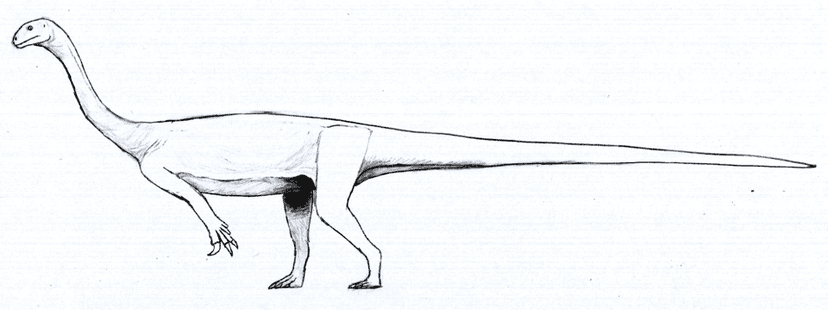
Arcusaurus
Arcusaurus is an extinct genus of sauropodomorph dinosaur that lived during the Early Jurassic period in what is now South Africa. Named for the "Rainbow Nation," Arcusaurus is known from fossil remains, including a partial skull and other skeletal elements, indicating it was a basal sauropodomorph.

Aetonyx
Aetonyx is a dubious genus of sauropodomorph dinosaur from the Early Jurassic of southern Africa. Its only species, A. palustris, was named by Robert Broom in 1911 based on fragmentary remains. Initially considered a carnivorous dinosaur, its classification has been debated, with later reviews listing it as an indeterminate sauropodomorph.

Archaeocursor
Archaeocursor is an extinct genus of basal ornithischian dinosaurs discovered in China and dating to the Early Jurassic period. Known from a single, nearly complete femur, it is the oldest and most basal ornithischian described from Asia. The genus name translates to "old runner," reflecting its likely locomotion and ancient lineage.