
Ajancingenia
Unknown·Late Cretaceous·China and Mongolia·Bipedal
Heyuannia was a genus of oviraptorid dinosaur that inhabited Asia during the Late Cretaceous period, with fossils found in China and Mongolia. It is notable as the first oviraptorid discovered in China. Two species are recognized: Heyuannia huangi and Heyuannia yanshini (formerly Ingenia yanshini).
Key Facts
- ›Lived in Asia during the Late Cretaceous epoch.
- ›Fossils discovered in China and Mongolia.
- ›First oviraptorid found in China.
- ›Possessed a toothless skull with a short, steep snout.
- ›Had very short arms and reduced first digit.
- ›Eggshells preserved pigments indicating blue-green coloration.
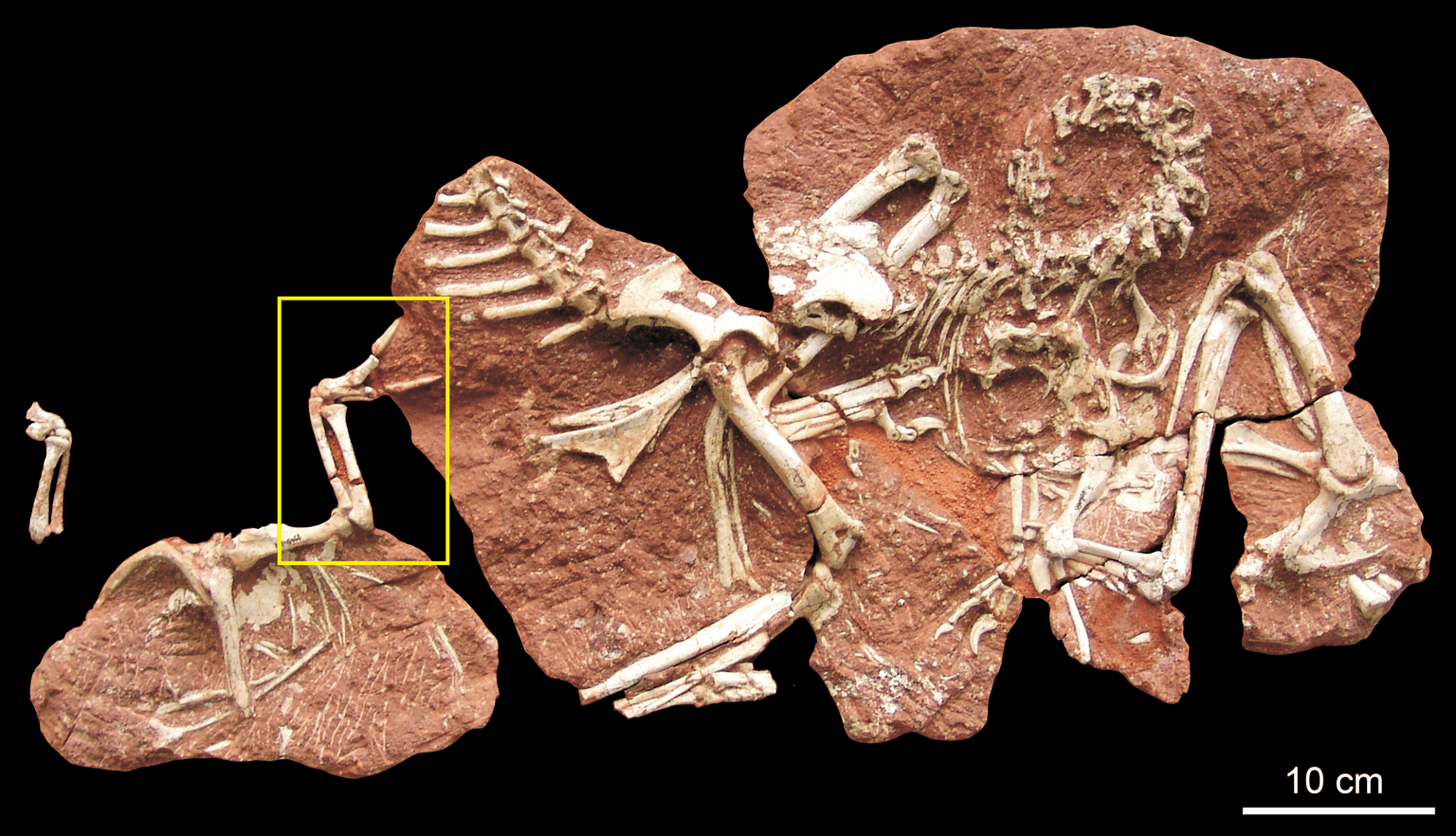
Medium-Sized Oviraptorid, Toothless Skull, Short Skull With A Steep Snout, Very Short Arms, Reduced First Digit
Ingenia Yanshini, Nemegtomaia, Conchoraptor
China, Mongolia
About Ajancingenia
Heyuannia
Heyuannia is a genus of oviraptorid dinosaur that lived in Asia during the Late Cretaceous epoch. Fossils have been unearthed in what is now China and Mongolia, making it the first oviraptorid species discovered in China. Two species are recognized within this genus: Heyuannia huangi and Heyuannia yanshini.
Discovery and Naming
The type species, Heyuannia huangi, was described by Lü Junchang in 2002. Its generic name references the city of Heyuan, and its specific name honors Huang Dong, director of the Heyuan Museum. The holotype was discovered in Guangdong, China, and consists of a partial skeleton, including the skull. Several other skeletons have also been assigned to this species, with one possibly containing reproductive organs. Thousands of eggs found at the site are likely attributable to Heyuannia.
The species Heyuannia yanshini was initially described by Rinchen Barsbold in 1981 as Ingenia yanshini. The name 'Ingenia' was derived from the Ingen Khoboor Depression in Mongolia, where it was found. However, 'Ingenia' was found to be preoccupied by a nematode genus. An alternative name, Ajancingenia, was proposed in 2013. Later research reclassified it as a species of Heyuannia, creating the new combination Heyuannia yanshini to address ethical concerns surrounding the proposed replacement name.
Physical Characteristics and Paleobiology
Heyuannia is characterized as a medium-sized oviraptorid. Estimates suggest a length of around 1.5 meters and a weight of approximately 20 kilograms. It possessed a toothless skull that was relatively short with a steep snout. Anatomical features include very short arms and digits, with a reduction in the first digit. The shoulder girdle morphology of Heyuannia has been cited in support of the hypothesis that oviraptorosaurians were secondarily flightless birds.
Analysis of preserved pigments in Heyuannia eggshells indicates they were blue-green in color, potentially serving roles in camouflage and sexual signaling. The arrangement of eggshells suggests a partially open nest and points to the occurrence of parental care. Research into the incubation behavior of oviraptorids, including Heyuannia, suggests that they likely co-regulated incubation with environmental heat, rather than relying solely on body heat for embryonic development. This method, combined with solar input, helped stabilize clutch temperatures and influence asynchronous hatching patterns. The significant differences in incubation temperatures between different oviraptorids suggest they did not possess temperature-dependent sex determination.
Source: Wikipedia ↗
Frequently Asked Questions
What does the name Heyuannia mean?
The genus name Heyuannia means 'from Heyuan', referring to the city of Heyuan in China. The specific name 'huangi' honors Huang Dong, the director of the Heyuan Museum.
Which species are known for Heyuannia?
Two species are recognized: Heyuannia huangi, named in 2002, and Heyuannia yanshini. Heyuannia yanshini was originally described as Ingenia yanshini but was later renamed Ajancingenia and then reclassified as a species of Heyuannia.
Where were Heyuannia fossils found?
Fossils of Heyuannia have been discovered in what is now China and Mongolia. Specifically, Heyuannia huangi comes from the Dalangshan Formation in Guangdong, China, while Heyuannia yanshini is from the Barun Goyot Formation in Mongolia.
What did Heyuannia look like?
Heyuannia was a medium-sized oviraptorid, estimated to be about 1.5 meters long and weighing around twenty kilograms. It had a toothless skull with a short, steep snout, very short arms, and a reduced first digit.
What do we know about Heyuannia's eggs and nesting behavior?
Heyuannia eggshells showed evidence of blue-green coloration, possibly for camouflage and signaling. The arrangement of eggshells suggests a partially open nest and indicates that Heyuannia likely engaged in parental care. Experiments suggest they may have co-regulated incubation with environmental heat rather than relying solely on body heat.
Related Dinosaur species

Aepyornithomimus
Aepyornithomimus is a genus of ornithomimid theropod dinosaur that lived during the Late Cretaceous period, approximately 75 million years ago. Its fossils were discovered in the Djadochta Formation of Mongolia, an area believed to have been a desert at the time. The genus name "Aepyornithomimus" means "Aepyornis mimic," referencing its foot structure, and the species name "tugrikinensis" refers to its discovery location.

Caenagnathus
Caenagnathus was a large oviraptorosaurian dinosaur that lived during the Late Cretaceous period in what is now Alberta, Canada. Known from partial remains, it possessed a toothless beak and likely had a coat of feathers. Its classification has been complex, with debates about its relationship to other caenagnathids like Chirostenotes and Anzu.
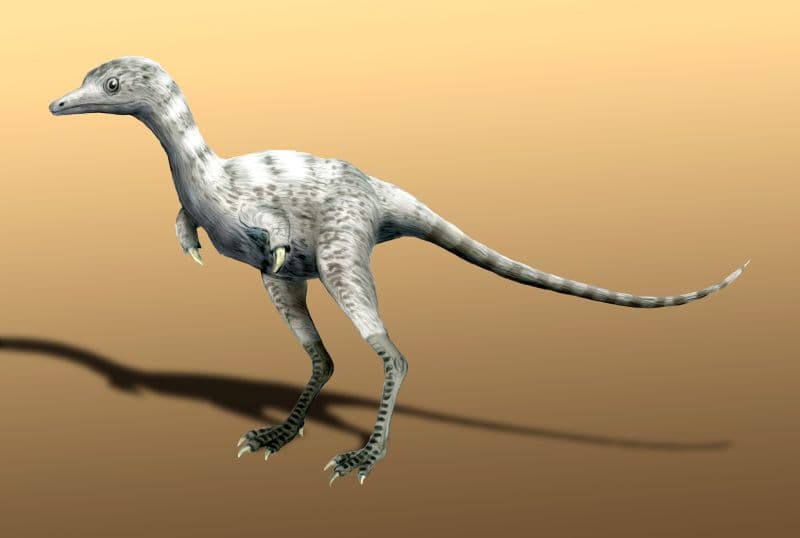
Ceratonykus
Ceratonykus is a genus of alvarezsaurid dinosaur from the Late Cretaceous period of Mongolia. Known from fragmentary remains, it is characterized by its small size, estimated to be around 75 centimeters in length and weighing less than a kilogram. Its scientific name, "horned claw," refers to its presumed sharp claws, and "big-eyed" points to its large orbits.