
Caenagnathus
Caenagnathus was a large oviraptorosaurian dinosaur that lived during the Late Cretaceous period in what is now Alberta, Canada. Known from partial remains, it possessed a toothless beak and likely had a coat of feathers. Its classification has been complex, with debates about its relationship to other caenagnathids like Chirostenotes and Anzu.
Key Facts
- ›Lived during the Campanian stage of the Late Cretaceous period, approximately 75 million years ago.
- ›Fossils were discovered in the Dinosaur Park Formation of Alberta, Canada.
- ›Estimated to be about 2.5 meters (8.2 feet) long and weigh 85–100 kg (187–220 lb).
- ›Had a toothless lower beak, shallower than that of elmisaurines.
- ›Likely possessed a coat of feathers.
- ›Its classification has been historically complex, with confusion surrounding its relationship to Chirostenotes and Anzu.

- Toothless Lower Beak
- Less Gracile Proportions Compared To Elmisaurines
- Likely Possessed A Coat of Feathers
Anzu, Chirostenotes, Elmisaurus
North America
About Caenagnathus
Caenagnathus is a genus of caenagnathid oviraptorosaurian dinosaur that roamed the Earth during the Late Cretaceous period, specifically the Campanian stage, around 75 million years ago. Its fossil remains, consisting of partial jaws, tail vertebrae, hand bones, hind limbs, and pelvis, have been unearthed in the Dinosaur Park Formation of Alberta, Canada, establishing its presence in what is now North America.
Description and Characteristics
Caenagnathus was a substantial oviraptorosaurian, with estimates placing its length at approximately 2.5 meters (8.2 feet) and its weight between 85 to 100 kilograms (187 to 220 pounds). It shared notable features with its relative, Anzu, including a toothless lower beak that was shallower in depth compared to those of elmisaurines. Its proportions were also described as less gracile than those found in elmisaurines. As with other oviraptorosaurs, it is highly probable that Caenagnathus was adorned with a covering of feathers.
Classification History
The taxonomic history of Caenagnathus is marked by considerable complexity and debate. The genus was first named in 1936 from a set of jaw fragments, initially believed to be from a bird. Over time, discoveries and reinterpretations led to the assignment of various fragmentary oviraptorosaurian species to the genus Chirostenotes. However, in 2005, researchers questioned the synonymy of Caenagnathus with Chirostenotes, citing differences in fossil material. Subsequent phylogenetic analyses, particularly following the discovery of more complete caenagnathid specimens like Anzu wyliei in 2014, have helped to clarify relationships. These studies suggest that Caenagnathus collinsi is more closely related to Anzu than to Chirostenotes, and that Caenagnathus is a distinct genus from Chirostenotes, although both are members of the Caenagnathidae family.
Source: Wikipedia ↗
Frequently Asked Questions
What does the name Caenagnathus mean?
The name Caenagnathus means 'recent jaw'. This name was given based on the discovery of its lower jaw fossils.
Where were Caenagnathus fossils found?
Fossils of Caenagnathus have been discovered in the Dinosaur Park Formation of Alberta, Canada. This formation is known for yielding a rich assemblage of Late Cretaceous dinosaur remains.
What did Caenagnathus look like?
Caenagnathus was a large oviraptorosaurian with a toothless beak. It had proportions described as less gracile than elmisaurines and likely sported a feathery covering.
How large was Caenagnathus?
Caenagnathus is estimated to have been around 2.5 meters (8.2 feet) in length and weighed between 85 to 100 kilograms (187 to 220 pounds).
What is the relationship between Caenagnathus and Chirostenotes?
The relationship between Caenagnathus and Chirostenotes has been a subject of debate among paleontologists. While once thought to be the same genus, newer analyses suggest they are distinct, though both belong to the Caenagnathidae family.
Was Caenagnathus a bird?
Initially, the jaws of Caenagnathus were thought to belong to a bird. However, it is now classified as a caenagnathid oviraptorosaurian dinosaur, a group closely related to birds.
Related Dinosaur species

Apatoraptor
Apatoraptor is a genus of caenagnathid dinosaur known from a single species, A. pennatus. Its name, "deceptive thief," reflects how its true identity was hidden for years. Discovered in Alberta, Canada, this dinosaur is notable for evidence of feathers.

Colepiocephale
Colepiocephale, meaning "knucklehead," was a genus of pachycephalosaurid dinosaur that lived during the Late Cretaceous period in what is now Alberta, Canada. This dome-headed dinosaur is distinguished by specific cranial features, including a steeply down-turned parietal bone and the absence of certain bony shelves.
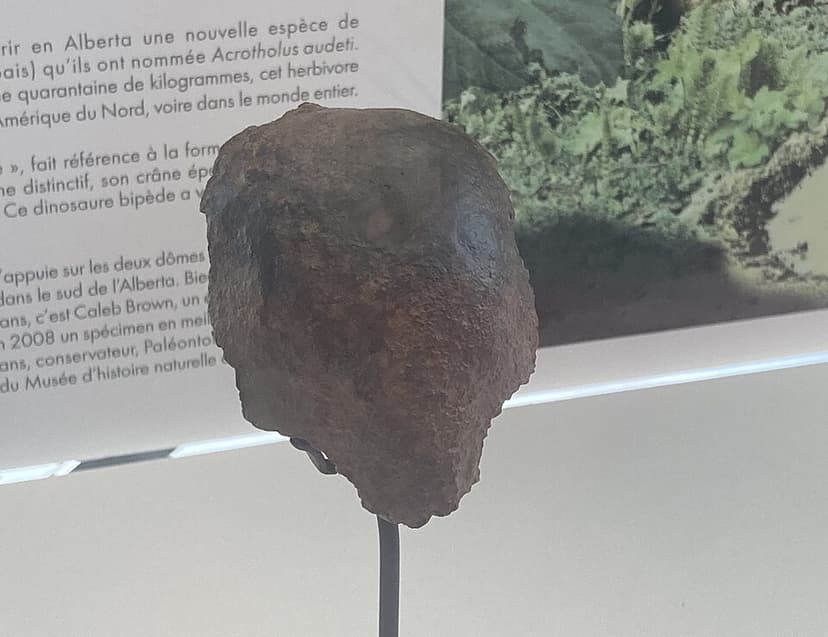
Acrotholus
Acrotholus is an extinct genus of pachycephalosaurian dinosaur that lived during the Santonian stage of the Late Cretaceous period in what is now Canada. It is notable for being one of the earliest known members of the pachycephalosaur family with a well-developed, dome-shaped skull. Acrotholus was a bipedal herbivore whose cranial dome has been theorized to have been used for intraspecies combat or display.