
Alxasaurus
Alxasaurus is a genus of therizinosauroid theropod dinosaur that lived during the Early Cretaceous period. Known from five specimens discovered in Inner Mongolia, it possessed features characteristic of later therizinosaurs, such as a short tail and long hand claws, and is believed to have been a bipedal herbivore. Its discovery helped solidify the understanding of therizinosaurs as derived theropods rather than basal sauropodomorphs.
Key Facts
- ›Lived during the Early Cretaceous (Albian age).
- ›Discovered in the Bayin-Gobi Formation of Inner Mongolia, China.
- ›Possessed long, recurved hand claws and a beak.
- ›Likely had a large gut, indicating a herbivorous diet.
- ›Estimated to be around 3.8 to 4 meters long and weigh 380-400 kg.
- ›Its discovery provided evidence that therizinosaurs were derived theropods.

Long Neck, Short Tail, Long, Recurved Hand Claws, Broad Feet, Likely Had A Beak, Large Gut
Segnosaurus, Erlikosaurus, Therizinosaurus, Beipiaosaurus, Falcarius
Asia
About Alxasaurus
Alxasaurus is a genus of therizinosauroid theropod dinosaur that roamed the Earth during the Early Cretaceous period, specifically the Albian age. Its fossils were unearthed in the Bayin-Gobi Formation of Inner Mongolia, China, as part of the collaborative China-Canada Dinosaur Project. The genus name, Alxasaurus, translates to 'Alxa lizard,' a nod to the Alxa Desert region where it was discovered, while the species name, elesitaiensis, honors the nearby village of Elesitai.
Discovery and Classification
Five specimens of Alxasaurus were recovered in 1988. During their preparation, paleontologists Dong Zhiming and Dale Russell observed striking similarities to Segnosaurus. This observation, detailed in their 1993 description, provided crucial evidence supporting the then-developing theory that therizinosaurs were not primitive sauropodomorphs but rather highly specialized theropods. This classification is now widely accepted, with Alxasaurus considered an early member of the Therizinosauroidea, occupying a position between more primitive forms like Beipiaosaurus and later, more derived therizinosaurids.
Physical Characteristics and Diet
Alxasaurus shared many traits with later therizinosaurs, including a long neck, an abbreviated tail, and notably long, recurved hand claws. It is believed to have possessed a beak and a substantial gut, adaptations strongly suggesting a herbivorous diet. Initial estimates placed its body length at around 3.8 meters (12 feet) and its weight at approximately 380 kilograms (840 pounds). Later estimates suggest a slightly larger size, with lengths up to 4 meters (13 feet) and weights around 400 kilograms (880 pounds). The skeletal remains indicate it was a bipedal animal, with broad feet that showed convergent evolution with those of basal sauropodomorphs.
Fossil Evidence
The fossil record of Alxasaurus is substantial, with five specimens contributing to our understanding of its anatomy. While the skull is not fully preserved, with only a dentary (lower jaw bone) being well-documented, the postcranial skeleton provides considerable detail. Features in the wrist, such as the semilunate carpal bone, are characteristic of maniraptoran theropods, further solidifying its placement within the theropod lineage. Despite its early position within the therizinosaur group, Alxasaurus already displayed the characteristic body plan that would become more pronounced in its descendants.
Source: Wikipedia ↗
Frequently Asked Questions
What does the name Alxasaurus mean?
The name Alxasaurus means 'Alxa lizard'. The genus name refers to the Alxa Desert in Inner Mongolia, where its fossils were found. 'Sauros' is Greek for 'lizard'.
When did Alxasaurus live?
Alxasaurus lived during the Early Cretaceous period, specifically during the Albian age.
What did Alxasaurus eat?
Alxasaurus is believed to have been a herbivore. Adaptations like a likely beak and a large gut suggest it processed plant material.
How large was Alxasaurus?
Estimates for Alxasaurus's length range from 3.8 to 4 meters (about 12-13 feet). Its estimated body mass is around 380 to 400 kilograms (840-880 pounds).
Where were Alxasaurus fossils found?
Fossils of Alxasaurus were discovered in the Bayin-Gobi Formation in Inner Mongolia, China, as part of the China-Canada Dinosaur Project.
What is significant about Alxasaurus's discovery?
The discovery of Alxasaurus, with its blend of theropod and therizinosaur features, was significant in demonstrating that the therizinosaur group were not basal sauropodomorphs, but rather highly derived theropods.
Related Dinosaur species
Alashansaurus
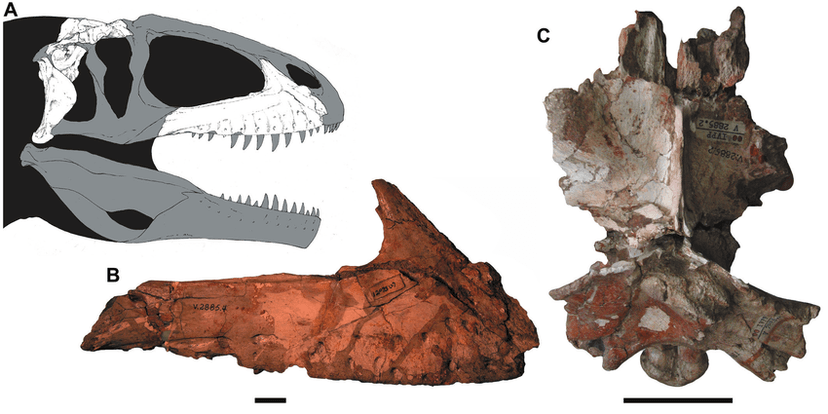
Shaočilong (meaning "shark toothed dragon") was an extinct genus of theropod dinosaur that lived during the Early Cretaceous period in what is now China. Initially classified as a carcharodontosaurid, its exact phylogenetic placement has been subject to debate, with some studies suggesting it may be a tyrannosauroid or a member of the polytomic allosauroid group. Shaochilong was a relatively small carnosaur, estimated to be around 5 to 6 meters in length and weighing approximately 500 kilograms.

Archaeornithomimus
Archaeornithomimus was a medium-sized ornithomimosaurian theropod dinosaur that lived in what is now Inner Mongolia, China, during the Late Cretaceous period, approximately 96 million years ago. Named "ancient bird mimic," this dinosaur is thought to have been an omnivore, potentially feeding on plants, fruits, eggs, and small animals, and it likely possessed feathers and a keratinous beak.

Chilantaisaurus
Chilantaisaurus was a large, extinct theropod dinosaur that inhabited what is now China during the Late Cretaceous period. Known primarily from an incomplete skeleton, it was characterized by its massive forelimbs, particularly its humerus, and robust hindlimbs. Its exact classification has been a subject of debate among paleontologists, with various studies placing it within or related to groups like Carcharodontosauria, Spinosauridae, or Coelurosauria.