
Algoasaurus
Unknown·Early Cretaceous·Cape Province, South Africa·Unknown
Algoasaurus is a genus of sauropod dinosaur that lived during the Early Cretaceous period in what is now South Africa. Only one species, A. bauri, is known. Due to the fragmentary nature of its fossil remains, its exact classification and physical characteristics remain uncertain, though it is generally considered a eusauropod.
Key Facts
- ›Lived during the Early Cretaceous period (Berriasian to early Valanginian ages).
- ›Fossils were discovered near Despatch in Cape Province, South Africa.
- ›Known from fragmentary remains, including a cervical vertebra and a femur.
- ›Its exact classification is debated, but it is considered a eusauropod.
- ›The holotype was partially destroyed during quarrying and used in brick-making.
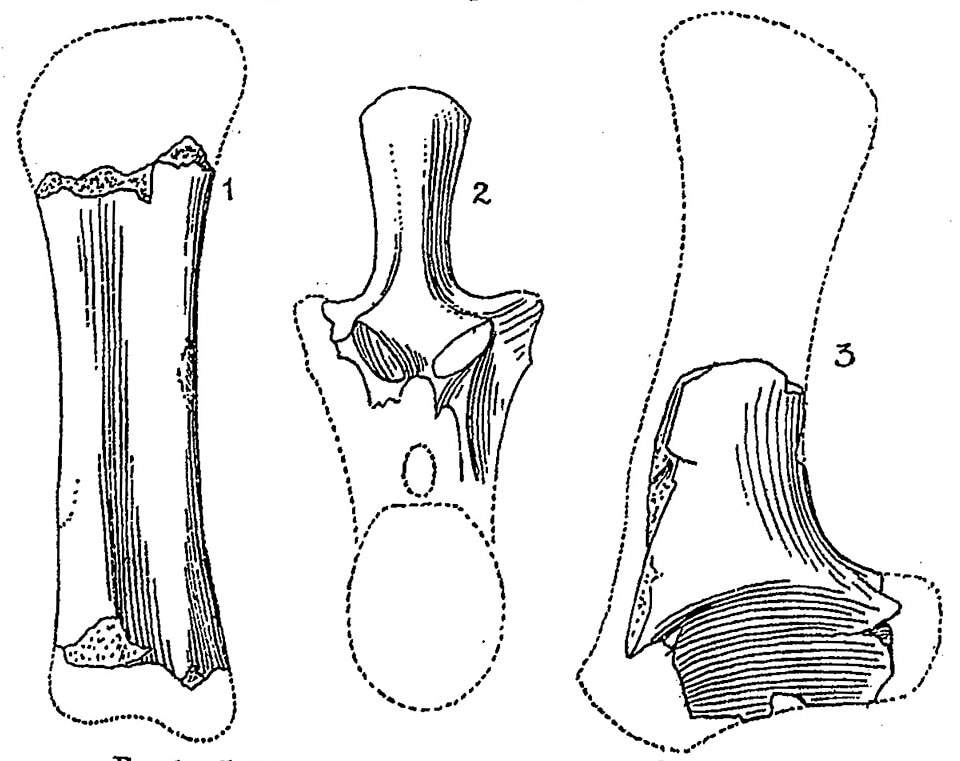
- Estimated length of around 9 meters.
- Femur estimated to be up to 50 centimeters when complete.
- Known from fragmentary remains including vertebrae, femur, ungual phalanx, and scapula.
South Africa
About Algoasaurus
Algoasaurus (; "Algoa Bay reptile") is a genus of sauropod dinosaur from the Early Cretaceous epoch, specifically the Berriasian to early Valanginian ages. Its fossils were unearthed in the Upper Kirkwood Formation of Cape Province, South Africa, near the town of Despatch. The only known species is A. bauri.
Discovery and Naming
The holotype specimen, consisting of a cervical vertebra, femur, an ungual phalanx, and a scapula, was recovered in 1903. Workmen at a quarry in Despatch, Eastern Cape, unearthed these bones from a layer of the Upper Kirkwood Formation. Unfortunately, many of the bones, possibly including the rest of the once nearly complete holotype, were destroyed and used in the manufacture of bricks. It is even suggested that bricks within the Nelson Mandela Bay Metropolitan Municipality might still contain fragments of the Algoasaurus holotype. Robert Broom officially named the type species, A. bauri, in 1904, comparing Algoasaurus to well-known sauropods like Brontosaurus and Diplodocus. Broom later donated much of his fossil collection, including the ungual phalanx from the holotype, to the American Museum of Natural History.
Classification and Description
The classification of Algoasaurus has been subject to debate. While it was once assigned to Titanosauridae, there is no direct evidence to support this. More recent reviews have considered it an indeterminate sauropod. For a time, it was believed to be a member of Rebbachisauridae, based on the shape of its cervical vertebra's neural arch. However, in 2016, this classification was challenged, with the shape of the scapula suggesting otherwise. Consequently, Algoasaurus is now generally classified as an indeterminate eusauropod. Due to the fragmentary nature of its fossil remains, precise physical characteristics are difficult to ascertain. The animal may have been around 9 meters (30 ft) in length at the time of its death, though this cannot be confirmed. The complete femur was estimated to have been up to 50 centimeters (20 in) long.
Paleoenvironment
Sedimentological analysis of the fossil assemblage indicates that Algoasaurus inhabited an environment that was transitioning to a drier climate. Other dinosaurs found in the Kirkwood Formation include the iguanodontian Iyuku, the stegosaur Paranthodon, and the ornithomimosaur Nqwebasaurus, alongside other unnamed dinosaur species.
Source: Wikipedia ↗
Frequently Asked Questions
What does the name Algoasaurus mean?
The name Algoasaurus translates to 'Algoa Bay reptile'. This name refers to the Algoa Bay region of South Africa where its fossils were found.
When did Algoasaurus live?
Algoasaurus lived during the Early Cretaceous period. Specifically, its fossils date to the Berriasian to early Valanginian ages.
Where were Algoasaurus fossils found?
Fossils of Algoasaurus were discovered in the Upper Kirkwood Formation near the town of Despatch in Cape Province, South Africa.
What is known about the physical characteristics of Algoasaurus?
The fossil remains of Algoasaurus are very fragmentary. The animal may have been around 9 meters (30 ft) long, and its complete femur was estimated to be up to 50 centimeters (20 in).
What group of dinosaurs did Algoasaurus belong to?
Algoasaurus is classified as a eusauropod. While it has been assigned to groups like Titanosauridae and Rebbachisauridae, recent reviews consider it an indeterminate sauropod.
What happened to the holotype of Algoasaurus?
The holotype of Algoasaurus was recovered from a quarry in 1903. Tragically, many of its bones were destroyed and used to make bricks, with some possibly still contained within bricks in the Nelson Mandela Bay Metropolitan Municipality.
Related Dinosaur species
Albalophosaurus
Albalophosaurus was a genus of ornithischian dinosaur that inhabited Japan during the Early Cretaceous period. Its name, meaning "white crest lizard," refers to a snow-covered mountain near its discovery site. The classification of Albalophosaurus has been debated, with various analyses suggesting it could be a basal ceratopsian, a pachycephalosaurian, or a sister taxon to Marginocephalia.

Bayannurosaurus
Bayannurosaurus perfectus is an extinct species of ornithopod dinosaur that lived during the Early Aptian period. Discovered in China, this large iguanodontian is known for its remarkably complete fossil remains, which have provided significant insights into its anatomy and evolutionary placement within the Ankylopollexia group.

Chondrosteosaurus
Chondrosteosaurus was a dubious genus of sauropod dinosaur from the Early Cretaceous Wessex Formation of England. Named for its "cartilage and bone" vertebrae, the genus is now considered a nomen dubium due to a lack of diagnostic features in its fossil remains.