
Chondrosteosaurus
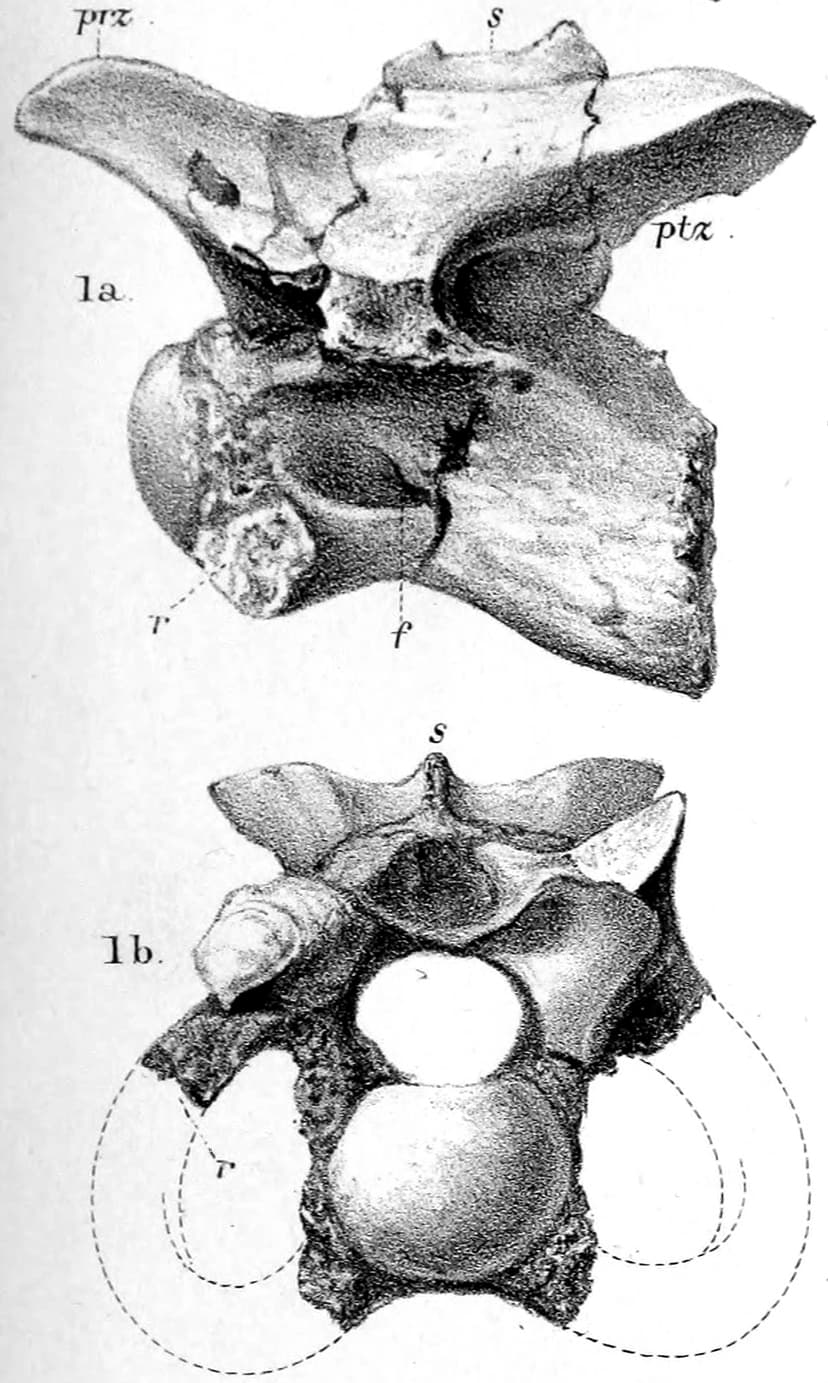
Chondrosteosaurus was a dubious genus of sauropod dinosaur from the Early Cretaceous Wessex Formation of England. Named for its "cartilage and bone" vertebrae, the genus is now considered a nomen dubium due to a lack of diagnostic features in its fossil remains.
Key Facts
- ›Chondrosteosaurus means "cartilage and bone lizard".
- ›It is known from two cervical (neck) vertebrae.
- ›The fossils were discovered in the Wessex Formation on the Isle of Wight, England.
- ›The genus is considered dubious (nomen dubium) by paleontologists.
- ›It is tentatively suggested that Chondrosteosaurus may have been a camarasaurid or an indeterminate titanosauriform.

- Known from two cervical vertebrae.
- Vertebrae possess distinctive hollows and internal passages, interpreted as evidence of pneumatic air sacs.
Ornithopsis, Pelorosaurus Conybeari
England
About Chondrosteosaurus
Chondrosteosaurus is a genus of sauropod dinosaur that lived during the Early Cretaceous period. The name, meaning "cartilage and bone lizard," was given by Richard Owen in 1876, reflecting his interpretation of the internal structures of its fossilized neck vertebrae. The genus is known only from two cervical vertebrae discovered in the Wessex Formation on the Isle of Wight, England.
Taxonomic Uncertainty
The validity of Chondrosteosaurus as a distinct genus has been subject to considerable debate among paleontologists. The cervical vertebrae, while exhibiting distinctive hollows and internal passages suggestive of pneumatic air sacs, lack sufficient diagnostic features to definitively identify it as a unique taxon. Consequently, it has been declared a nomen dubium (dubious name) by several researchers. While Owen initially believed the internal passages were filled with cartilage, later interpretations suggest they were part of an air sac system connected to the lungs. Some paleontologists have tentatively suggested it may have been a camarasaurid or an indeterminate titanosauriform, but its precise phylogenetic placement remains uncertain due to the fragmentary nature of the fossil record.
Source: Wikipedia ↗
Frequently Asked Questions
What does the name Chondrosteosaurus mean?
The name Chondrosteosaurus means "cartilage and bone lizard." This name was given by Richard Owen due to his interpretation of the internal structures within the cervical vertebrae.
Where were the fossils of Chondrosteosaurus found?
Fossils attributed to Chondrosteosaurus were discovered in the Wessex Formation on the Isle of Wight, England. Specific locations mentioned include Brighstone or Brook.
What is the current scientific status of Chondrosteosaurus?
Chondrosteosaurus is currently considered a dubious genus, or nomen dubium. This means its validity as a distinct dinosaur taxon is uncertain due to a lack of unique diagnostic features in the fossil material.
What kind of dinosaur was Chondrosteosaurus thought to be?
Chondrosteosaurus is classified as a sauropod dinosaur. Some paleontologists have tentatively suggested it might have belonged to the Camarasauridae family or be an indeterminate titanosauriform.
What fossils are known for Chondrosteosaurus?
The known fossil material for Chondrosteosaurus consists of only two cervical (neck) vertebrae. These specimens exhibit distinctive hollows and internal passages.
Related Dinosaur species

Aristosuchus
Aristosuchus was a small, bipedal, carnivorous theropod dinosaur that lived during the Early Cretaceous period. Its fossils were discovered on the Isle of Wight, England. Initially misidentified, it was later recognized as a distinct genus and is now generally placed within the Compsognathidae family.

Brighstoneus
Brighstoneus is a genus of hadrosauriform dinosaur that lived during the Early Cretaceous period. Fossils of Brighstoneus have been discovered on the Isle of Wight, England, within the Wessex Formation. This dinosaur is known from a partial skeleton and is notable for its unique skull morphology, including a bulging nasal bone.
Calamosaurus
Calamosaurus is a genus of small theropod dinosaur that lived during the Early Cretaceous period on the Isle of Wight, England. Based on two cervical vertebrae, its exact classification has been debated, with suggestions ranging from Compsognathidae and Ornithomimosauria to Tyrannosauroidea and Alvarezsauroidea. Its name, meaning "reed lizard," reflects the slender nature of its discovered remains.