
Bayannurosaurus
Unknown·Early Cretaceous·Bayannur, China·Unknown
Bayannurosaurus perfectus is an extinct species of ornithopod dinosaur that lived during the Early Aptian period. Discovered in China, this large iguanodontian is known for its remarkably complete fossil remains, which have provided significant insights into its anatomy and evolutionary placement within the Ankylopollexia group.
Key Facts
- ›Lived during the early Aptian geological period.
- ›Fossils discovered in the Bayin-Gobi Formation of China.
- ›Named Bayannurosaurus perfectus by Xu Xing and colleagues in 2018.
- ›Estimated to reach up to 9 meters (30 ft) in length.
- ›Represents an intermediate form within Ankylopollexia, between Hypselospinus and Ouranosaurus.
- ›Known from a nearly complete, partially articulated holotype skeleton.

Large iguanodontian, Estimated total body length up to 9 meters
Hypselospinus, Ouranosaurus, Lanzhousaurus
China
About Bayannurosaurus
Bayannurosaurus perfectus is a species of ornithopod dinosaur that roamed the Earth during the early Aptian stage of the Early Cretaceous period. Its fossils were unearthed in the Bayin-Gobi Formation in the Bayannur region of China, a discovery that significantly contributed to our understanding of ornithopod evolution in Asia.
Discovery and Naming
The genus and species were formally described in 2018 by paleontologist Xu Xing and his colleagues. The discovery stemmed from a well-preserved, nearly complete, and partially articulated skeleton found during a 2013 expedition. The genus name, Bayannurosaurus, honors the Bayannur region of its discovery, while the species epithet, perfectus, reflects the exceptional condition of the holotype specimen. This specimen, designated IMMNH PV00001, is currently housed at the Inner Mongolia Museum of Natural History.
Classification and Significance
Bayannurosaurus is classified within the Ankylopollexia, a group of ornithischian dinosaurs that includes hadrosaurs and their closest relatives. Phylogenetic analyses place it as an intermediate form, positioned evolutionarily between earlier members like Hypselospinus and more derived forms such as Ouranosaurus. It is considered one of the few early ankylopollexians identified from Asia, suggesting a complex dispersal and evolutionary history for this group. The nearly complete nature of its fossil remains provides invaluable anatomical data for researchers studying the transition towards the highly successful hadrosauriforms.
Source: Wikipedia ↗
Frequently Asked Questions
What does Bayannurosaurus mean?
The genus name Bayannurosaurus is derived from "Bayannur," the region in China where it was discovered, combined with the Ancient Greek word "sauros," meaning "lizard." The species name, perfectus, refers to the exceptional preservation of its holotype specimen.
When did Bayannurosaurus live?
Bayannurosaurus lived during the early Aptian stage of the Early Cretaceous period. This places its existence in a specific timeframe within the broader Cretaceous era.
Where were the fossils of Bayannurosaurus found?
The fossils of Bayannurosaurus were discovered in the Bayin-Gobi Formation, located in the Bayannur region of China. This discovery site is crucial for understanding its geographic distribution.
How large was Bayannurosaurus?
Bayannurosaurus was a large iguanodontian dinosaur, estimated to have reached a total body length of up to 9 meters (approximately 30 feet).
What is significant about the Bayannurosaurus holotype specimen?
The holotype specimen of Bayannurosaurus is notable for its "perfect" preservation. It is a nearly complete, partially articulated skeleton that includes all regions of the anatomy, offering a detailed view of the dinosaur.
What is the evolutionary classification of Bayannurosaurus?
Phylogenetic analyses place Bayannurosaurus as an intermediate form of Ankylopollexia. It is considered more derived than Hypselospinus but less derived than Ouranosaurus, and it falls just outside the Hadrosauriformes group.
Related Dinosaur species
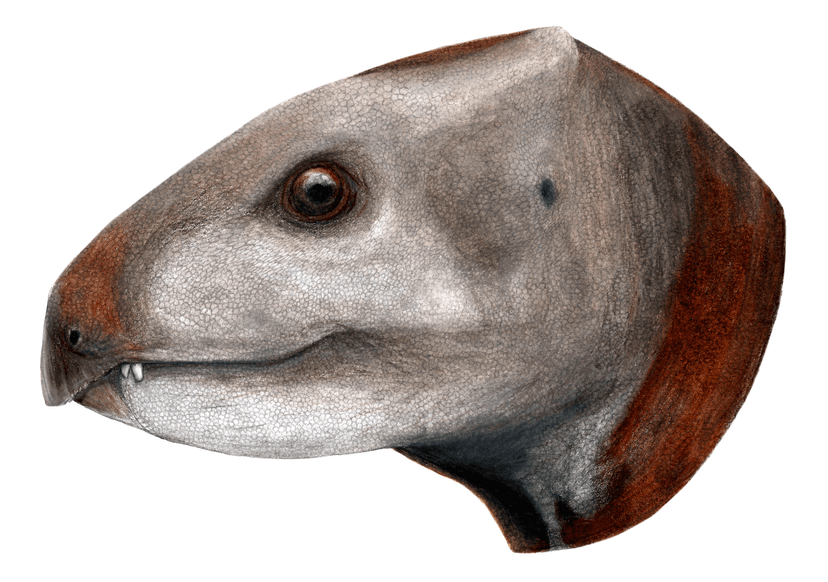
Albalophosaurus
Albalophosaurus was a genus of ornithischian dinosaur that inhabited Japan during the Early Cretaceous period. Its name, meaning "white crest lizard," refers to a snow-covered mountain near its discovery site. The classification of Albalophosaurus has been debated, with various analyses suggesting it could be a basal ceratopsian, a pachycephalosaurian, or a sister taxon to Marginocephalia.
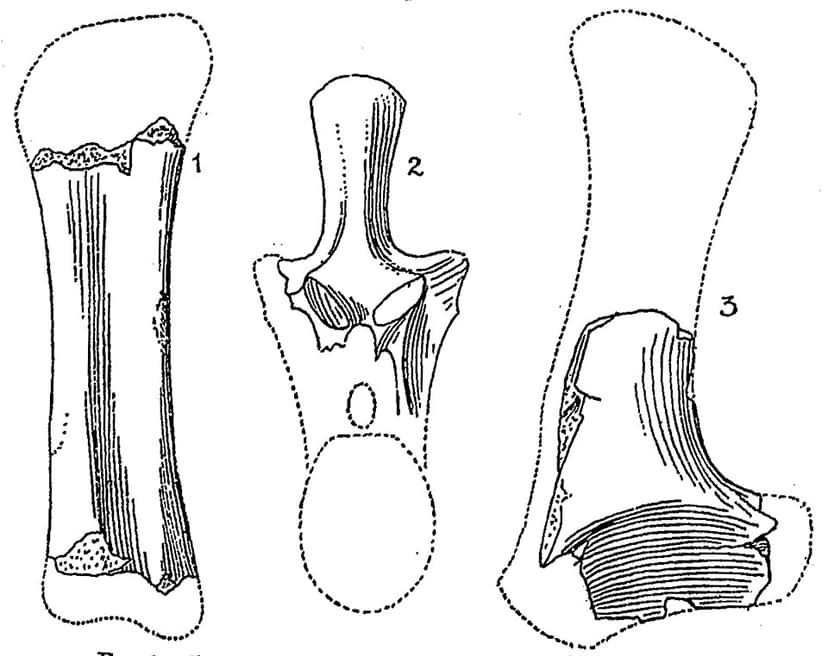
Algoasaurus
Algoasaurus is a genus of sauropod dinosaur that lived during the Early Cretaceous period in what is now South Africa. Only one species, A. bauri, is known. Due to the fragmentary nature of its fossil remains, its exact classification and physical characteristics remain uncertain, though it is generally considered a eusauropod.

Chondrosteosaurus
Chondrosteosaurus was a dubious genus of sauropod dinosaur from the Early Cretaceous Wessex Formation of England. Named for its "cartilage and bone" vertebrae, the genus is now considered a nomen dubium due to a lack of diagnostic features in its fossil remains.