
Alpkarakush
Alpkarakush is an extinct genus of theropod dinosaur that lived during the Jurassic period in what is now Kyrgyzstan. Known from a partial skeleton, this large predator is characterized by its high, arched skull and slender hindlimbs, with a prominent bony structure over its eyes.
Key Facts
- ›Alpkarakush was a large theropod dinosaur from the Jurassic period.
- ›Its fossils were discovered in the Balabansai Formation of Kyrgyzstan.
- ›The genus name, Alpkarakush, refers to a mythical powerful bird.
- ›It is characterized by a high, arched skull and a pronounced orbital brow.
- ›Estimated body length is between 7 and 8 meters (23-26 feet).

High, Arched Skull, Pronounced, Rugose Orbital Brow, Slender Hindlimbs, Estimated Length of 7–8 Meters
Kyrgyzstan
About Alpkarakush
Alpkarakush is an extinct genus of theropod dinosaur that roamed the Earth during the Jurassic period. Its fossilized remains were discovered in Kyrgyzstan, specifically within the Balabansai Formation. The genus is represented by a single species, Alpkarakush kyrgyzicus, known from an incomplete skeleton.
Discovery and Naming
The fossils of Alpkarakush were unearthed in the Uurusai Valley near Tashkumyr, Jalal-Abad Oblast, Kyrgyzstan. Initial excavations took place between 2005 and 2007, with further discoveries made in subsequent years, including expeditions in 2014, 2016, 2017, and 2023. The collected material represents at least two individual animals. The genus was formally described in 2024 by Rauhut and colleagues. The name "Alpkarakush" is inspired by a powerful mythical bird from the Epic of Manas, while the species name "kyrgzicus" denotes its origin in the Kyrgyz Republic.
Description and Classification
Alpkarakush belonged to the Metriacanthosauridae family of theropod dinosaurs. It is characterized by a notably high, arched skull and relatively slender hindlimbs. A distinctive feature is its pronounced orbital brow, a bony structure above the eye that is particularly prominent and rugose in this genus. The estimated body length of Alpkarakush ranges from 7 to 8 meters (23 to 26 feet). Histological analysis of the holotype specimen's femur indicates it was at least 17 years old and likely still growing slowly at the time of its death.
Source: Wikipedia ↗
Frequently Asked Questions
Where were the fossils of Alpkarakush found?
The fossil material of Alpkarakush was discovered in the Balabansai Formation, specifically at the 'FTU-1' locality in the Uurusai Valley near Tashkumyr, Kyrgyzstan. This region is located in Jalal-Abad Oblast.
What does the name Alpkarakush mean?
The generic name, Alpkarakush, is derived from the name of a powerful mythical bird featured in the Epic of Manas, a significant epic poem. The specific name, kyrgyzicus, directly references the country of its discovery, the Kyrgyz Republic.
What period did Alpkarakush live in?
Alpkarakush lived during the Jurassic period. Its fossils are found in sediments of the Balabansai Formation, which dates to this geological era.
What were the physical characteristics of Alpkarakush?
As a metriacanthosaurid theropod, Alpkarakush was a relatively large predator. It possessed a high, arched skull and generally slender hindlimbs, with a distinctive and rugose bony structure protruding over its eyes.
How large was Alpkarakush?
Alpkarakush is estimated to have had a body length of 7 to 8 meters (23 to 26 feet). The holotype specimen, representing a larger individual, was likely still growing when it died at around 17 years of age.
What is known about the fossil remains of Alpkarakush?
The fossil remains include a partial skeleton with skull bones, vertebrae, parts of the pelvic girdle, and most of the hindlimbs. A smaller, younger individual is also represented by a partial pelvis and tibia. Isolated teeth and a furcula have also been attributed to the genus.
Related Dinosaur species

Afrovenator
Afrovenator, meaning "African hunter," was a large theropod dinosaur that roamed Africa during the Middle to Late Jurassic period. Known from a single, relatively complete skeleton, it is distinguished by several unique anatomical features and is considered the only definitive Gondwanan megalosaur.
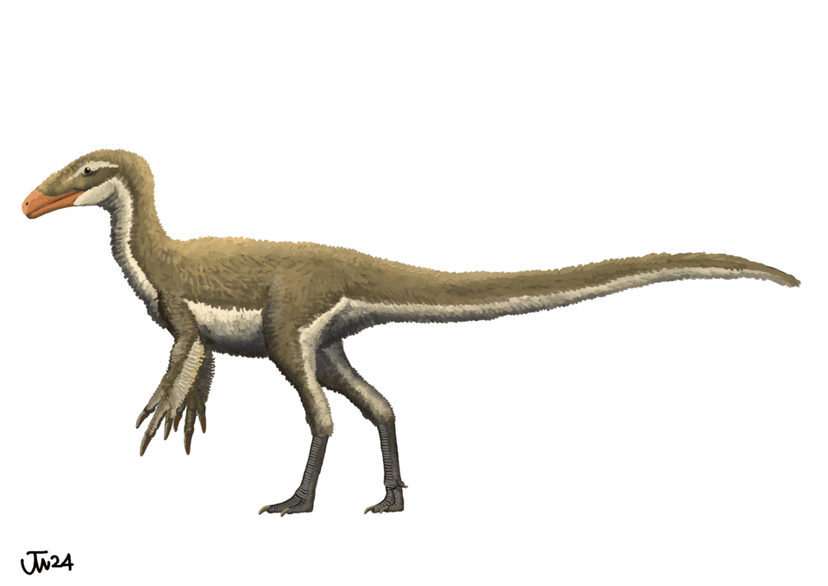
Aorun
Aorun is a genus of carnivorous theropod dinosaur that lived approximately 161.6 million years ago during the Late Jurassic Period. Discovered in China, it is considered one of the oldest known coelurosaurs and is characterized by its small size and distinctive dentition. The only known species is Aorun zhaoi.

Asfaltovenator
Asfaltovenator vialidadi was a large theropod dinosaur that lived during the Early Jurassic period in what is now Argentina. Its classification has been a subject of debate, with some studies placing it as a basal allosauroid and others suggesting it belongs within the Allosauridae family. The discovery of its partial skeleton has provided valuable insights into the evolution of tetanuran theropods during a period of significant environmental change.