
Asfaltovenator
Asfaltovenator vialidadi was a large theropod dinosaur that lived during the Early Jurassic period in what is now Argentina. Its classification has been a subject of debate, with some studies placing it as a basal allosauroid and others suggesting it belongs within the Allosauridae family. The discovery of its partial skeleton has provided valuable insights into the evolution of tetanuran theropods during a period of significant environmental change.
Key Facts
- ›Asfaltovenator lived during the Middle Toarcian stage of the Early Jurassic, approximately 179-178 million years ago.
- ›Its fossils were discovered in the CañADón Asfalto Formation in Chubut Province, Argentina.
- ›The holotype specimen includes a partial skeleton with a well-preserved skull, neck vertebrae, shoulder girdle, and forelimbs.
- ›Estimated to be 7-8 meters (23-26 ft) in length, it was comparable in size to Allosaurus.
- ›Its classification is complex, showing traits of both primitive and derived tetanurans, leading to varied phylogenetic placements.
- ›The discovery of Asfaltovenator sheds light on the diversification of theropod dinosaurs following the Toarcian Oceanic Anoxic Event.

- Estimated total body length of 7-8 meters.
- Holotype skull length of 75–80 cm.
- Possesses distinctive features such as serrations and foramina on premaxillary teeth, and unique ridges on the exoccipital bone.
- Neck vertebrae exhibit triangular and backward-swept neural spines.
- Dorsal vertebrae have an additional forward ridge on the underside of the diapophysis.
Allosaurus, Dilophosaurus, Dracovenator, Proceratosaurus, Sciurumimus
South America
About Asfaltovenator
Asfaltovenator vialidadi is a genus of theropod dinosaur that roamed the Earth during the Early Jurassic period. Its name, meaning "Cañadón Asfalto Formation hunter," reflects the geological site in Chubut Province, Argentina, where its fossils were unearthed. This dinosaur lived approximately 179 to 178 million years ago, during the Middle Toarcian stage.
Discovery and Description
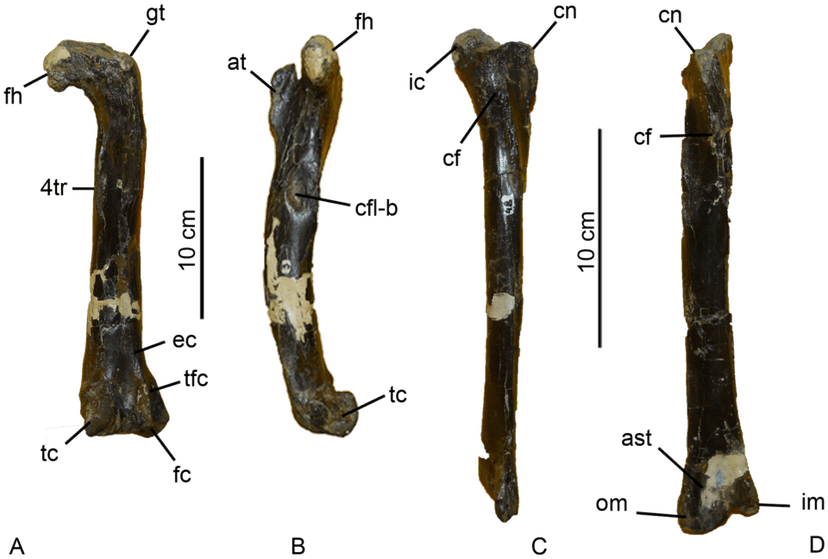
The holotype specimen of Asfaltovenator, a partial skeleton designated MPEF PV 3440, was discovered in 2002 and fully excavated by 2007. The preparation of the fossil was a lengthy process due to the extreme hardness of the surrounding rock. The skeleton includes a largely complete skull, neck and back vertebrae, the shoulder girdle, forelimbs, and parts of the hindlimbs. Asfaltovenator was a sizable predator, estimated to be around 7 to 8 meters (23 to 26 feet) in length, comparable to the well-known Allosaurus.
Classification and Paleoecology
The classification of Asfaltovenator has been a subject of scientific discussion. Due to its mosaic of primitive and derived characteristics within the Tetanurae group, its presence has influenced phylogenetic analyses. Some studies have placed it as a basal allosauroid, situated between piatnitzkysaurids and metriacanthosaurids, suggesting a shared ancestry between megalosauroids and allosauroids. Other research has proposed it belongs to the Allosauridae family. Asfaltovenator inhabited lacustrine and fluvial environments, part of a complex ecosystem that experienced significant change, including the Toarcian Oceanic Anoxic Event.
Significance
The discovery and study of Asfaltovenator are important for understanding the evolutionary history of theropod dinosaurs. Its unique combination of features provides insights into the diversification of tetanuran theropods during the Early Jurassic, a period that saw rapid morphological evolution potentially driven by environmental events. The ongoing research into its precise phylogenetic position continues to refine our understanding of dinosaur evolution in South America during this crucial time.
Source: Wikipedia ↗
Frequently Asked Questions
When did Asfaltovenator live?
Asfaltovenator lived during the Middle Toarcian stage of the Early Jurassic period. This is dated to approximately 179-178 million years ago.
Where were the fossils of Asfaltovenator found?
The fossils of Asfaltovenator were discovered in the Cañadón Asfalto Formation, located in Chubut Province, Argentina.
How big was Asfaltovenator?
Asfaltovenator was a fairly large theropod, estimated to be about 7 to 8 meters (23 to 26 feet) in total body length. Its skull alone measured between 75 and 80 centimeters (2.46 to 2.62 feet) long.
What is the scientific name of Asfaltovenator?
The scientific name of the species is Asfaltovenator vialidadi. The genus name, Asfaltovenator, means 'Cañadón Asfalto Formation hunter', and the specific name vialidadi honors the Dirección Nacional de Vialidad for their assistance in fossil recovery.
What group of dinosaurs does Asfaltovenator belong to?
Asfaltovenator is considered a theropod dinosaur. Its exact placement within theropod phylogeny is debated, with some analyses suggesting it was a basal allosauroid and others placing it within Allosauridae.
What does the name Asfaltovenator mean?
The name Asfaltovenator combines the name of the Cañadón Asfalto Formation, where its fossils were found, with the Latin word 'venator', meaning 'hunter'. Thus, it translates to 'Cañadón Asfalto Formation hunter'.
Related Dinosaur species
Aniksosaurus
Aniksosaurus was a bipedal theropod dinosaur that lived in what is now Chubut Province, Argentina, during the Late Cretaceous period. Its name, meaning 'spring lizard,' refers to the time of its discovery. Fossil evidence suggests Aniksosaurus may have been gregarious, particularly during its sub-adult stages.

Carnotaurus
Carnotaurus was a large, lightly built theropod dinosaur that roamed South America during the Late Cretaceous period. It is distinguished by a pair of prominent horns above its eyes and a very deep skull. Known from a single, well-preserved skeleton, Carnotaurus is one of the most thoroughly understood theropods from the Southern Hemisphere.

Bicharracosaurus
Bicharracosaurus was a large macronarian sauropod dinosaur that lived during the Late Jurassic period in what is now Argentina. Its name, meaning "big animal lizard," reflects its immense size. The genus is known from a partial skeleton, including vertebrae and ribs, discovered in Chubut Province.