
Archaeornithomimus
Archaeornithomimus was a medium-sized ornithomimosaurian theropod dinosaur that lived in what is now Inner Mongolia, China, during the Late Cretaceous period, approximately 96 million years ago. Named "ancient bird mimic," this dinosaur is thought to have been an omnivore, potentially feeding on plants, fruits, eggs, and small animals, and it likely possessed feathers and a keratinous beak.
Key Facts
- ›Lived approximately 96 million years ago during the Late Cretaceous period.
- ›Fossils discovered in the Iren Dabasu Formation of Inner Mongolia, China.
- ›Estimated to be about 3.4 meters (11 ft) long and weigh over 71.5 kilograms (158 lb).
- ›Likely an omnivore, consuming plants, fruits, eggs, and small animals.
- ›Believed to have possessed feathers and a keratinous beak.
- ›Hindlimbs were robustly built, with a non-arctometatarsalian foot.

- Medium-sized ornithomimosaur
- Estimated length of 3.4 meters
- Estimated weight over 71.5 kilograms
- Likely feathered with ratite-like feathers
- Equipped with a keratinous beak
- Robustly built hindlimbs
- Non-arctometatarsalian foot
- Pneumatized cervical vertebrae with complex internal chambers
Ornithomimus, Arkansaurus, Kinnareemimus, Paraxenisaurus
Asia
About Archaeornithomimus
Archaeornithomimus, meaning "ancient bird mimic," is a genus of ornithomimosaurian theropod dinosaur that lived during the Late Cretaceous period, approximately 96 million years ago. Fossils of this medium-sized dinosaur have been discovered in the Iren Dabasu Formation of Inner Mongolia, China. It is estimated to have reached about 3.4 meters (11 ft) in length and weighed over 71.5 kilograms (158 lb).
Discovery and Naming
The remains of Archaeornithomimus were first discovered in 1923 during an expedition led by Roy Chapman Andrews. Charles Whitney Gilmore initially described these fossils in 1933 as a new species of Ornithomimus, naming it Ornithomimus asiaticus due to its Asian origin. In 1972, Dale Russell established the new genus Archaeornithomimus for this species, believing the fossil layers to be among the oldest for ornithomimids. The type species is Archaeornithomimus asiaticus.
Description and Paleoecology
Archaeornithomimus is characterized by its robust hindlimbs and a foot that was not arctometatarsalian. Its cervical vertebrae were highly pneumatized, suggesting the presence of air sacs in the neck. Like other ornithomimosaurs, it is believed to have been feathered, possibly with ratite-like feathers, and possessed a keratinous beak. Paleontological studies suggest that Archaeornithomimus was an omnivore, with a diet likely consisting of plants, fruits, eggs, and small animals.
The Iren Dabasu Formation, where Archaeornithomimus was found, indicates an environment of large floodplains with extensive river systems, supporting a variety of vegetation and other dinosaur species. These contemporaries included other theropods such as Alectrosaurus and Gigantoraptor, as well as herbivorous dinosaurs like Bactrosaurus and Gilmoreosaurus. No signs of stress fractures were found in studied foot bones, suggesting robust locomotion.
Source: Wikipedia ↗
Frequently Asked Questions
What does the name Archaeornithomimus mean?
The name Archaeornithomimus means "ancient bird mimic." It was chosen because the dinosaur was believed at the time of its naming to be one of the oldest known ornithomimids, and it resembled a bird.
When and where did Archaeornithomimus live?
Archaeornithomimus lived during the Late Cretaceous period, around 96 million years ago. Its fossils have been found in the Iren Dabasu Formation in Inner Mongolia, China.
What did Archaeornithomimus eat?
Archaeornithomimus was likely an omnivore. Its diet probably included plants, fruits, eggs, and small animals such as hatchlings of other dinosaurs.
What were the physical characteristics of Archaeornithomimus?
This dinosaur was medium-sized, reaching about 3.4 meters (11 ft) in length and weighing over 71.5 kilograms (158 lb). It is thought to have had feathers and a beak, with robust hindlimbs.
What other dinosaurs lived alongside Archaeornithomimus?
Archaeornithomimus shared its environment with other theropods like Alectrosaurus and Gigantoraptor, as well as herbivorous dinosaurs such as Bactrosaurus and Gilmoreosaurus.
Related Dinosaur species

Chilantaisaurus
Chilantaisaurus was a large, extinct theropod dinosaur that inhabited what is now China during the Late Cretaceous period. Known primarily from an incomplete skeleton, it was characterized by its massive forelimbs, particularly its humerus, and robust hindlimbs. Its exact classification has been a subject of debate among paleontologists, with various studies placing it within or related to groups like Carcharodontosauria, Spinosauridae, or Coelurosauria.
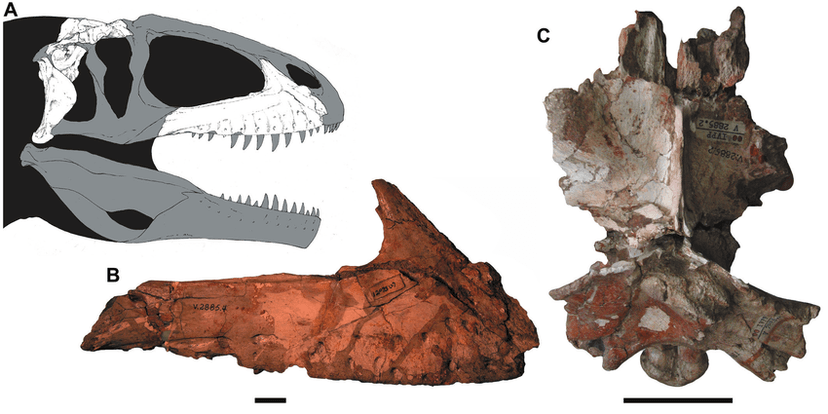
Alashansaurus
Shaočilong (meaning "shark toothed dragon") was an extinct genus of theropod dinosaur that lived during the Early Cretaceous period in what is now China. Initially classified as a carcharodontosaurid, its exact phylogenetic placement has been subject to debate, with some studies suggesting it may be a tyrannosauroid or a member of the polytomic allosauroid group. Shaochilong was a relatively small carnosaur, estimated to be around 5 to 6 meters in length and weighing approximately 500 kilograms.

Alxasaurus
Alxasaurus is a genus of therizinosauroid theropod dinosaur that lived during the Early Cretaceous period. Known from five specimens discovered in Inner Mongolia, it possessed features characteristic of later therizinosaurs, such as a short tail and long hand claws, and is believed to have been a bipedal herbivore. Its discovery helped solidify the understanding of therizinosaurs as derived theropods rather than basal sauropodomorphs.