
Amazonsaurus
Herbivore·Cretaceous·Maranhão Province, Brazil·Quadrupedal
Amazonsaurus is a genus of diplodocoid sauropod dinosaur that lived in South America during the Early Cretaceous Period. This large-bodied, quadrupedal herbivore was characterized by a long neck and a whiplash tail. While related diplodocoids were among the longest animals ever to exist, Amazonsaurus was likely no more than 12 meters in length.
Key Facts
- ›Fossils of Amazonsaurus are the only dinosaur remains identifiable at the generic level from the Itapecuru Formation in Brazil.
- ›It lived during the Aptian through Albian epochs of the Early Cretaceous, approximately 125 to 100 million years ago.
- ›The sediments where Amazonsaurus was found suggest a floodplain environment near a river delta.
- ›Estimates for its length range from 10 to 12 meters, with an estimated weight of 5,000 kg.
- ›Its unique anatomical features include straight, posteriorly inclined neural spines on caudal vertebrae and specific laminae structures.
- ›Amazonsaurus represents the first discovery of dinosaur fossils in the Amazon Basin and the first record of a Lower Cretaceous sauropod from Brazil.

- Large-bodied quadrupedal herbivore
- Long neck
- Whiplash tail
- Relatively small for a diplodocoid
- Straight, posteriorly inclined neural spines on caudal vertebrae
- Dorsal vertebrae with slightly opisthocoelus, wide, and low centra
- Deep pleurocoels on the lateral faces of dorsal centra
- Distinct chevrons with open haemal canals and elongated, laterally thin shafts
Rebbachisaurus, Limaysaurus
South America
About Amazonsaurus
Amazonsaurus (meaning 'Amazon lizard') is a genus of diplodocoid sauropod dinosaur that roamed South America during the Early Cretaceous Period. This herbivorous dinosaur was a large, quadrupedal animal characterized by a long neck and a distinctively long, whiplike tail. While its relatives, the more derived diplodocoids, are known for being among the longest animals to have ever lived, Amazonsaurus itself was likely more modest in size, with estimates suggesting a maximum length of around 12 meters (40 ft) and a weight of approximately 5,000 kg.
Discovery and Significance
Fossils of Amazonsaurus were first discovered in the Mata locality of Itapecuru-Mirim County, Maranhão Province, within the Brazilian Amazon. These remains, unearthed from the Itapecuru Formation, represent the only dinosaur fossils identifiable at the generic level from this geological unit. The strata date to the Aptian through Albian epochs of the Early Cretaceous, roughly 125 to 100 million years ago. The sediments indicate that Amazonsaurus inhabited floodplain environments situated near a river delta. The discovery of Amazonsaurus is particularly noteworthy as it marked the first dinosaur fossils found in the Amazon Basin and the first identification of a sauropod from Brazil's Lower Cretaceous period.
Anatomy and Characteristics
Amazonsaurus possessed several unique anatomical features. Its caudal vertebrae, found at both the front and rear of the tail, exhibit straight neural spines that are inclined posteriorly. Unlike other rebbachisaurids, the laminae on these vertebrae display a specific anteriorly-oriented bend, resulting in a concave anterior surface and a convex posterior surface. The dorsal vertebrae are notable for their wide, low centra with flat ventral sides, giving them a squared appearance. These centra also feature deep pleurocoels, large cavities for air sacs. The chevrons are distinguished by their open haemal canals and relatively elongated, thin shafts. While only pelvic fragments, including parts of the ilium and pubis, have been recovered, they indicate pneumatic adaptations and a transversely wide ilium.
Source: Wikipedia ↗
Frequently Asked Questions
What does the name Amazonsaurus mean?
The generic name Amazonsaurus combines 'Amazon,' referencing the region where its fossils were discovered, with the Greek word 'sauros,' meaning 'lizard.' The species name, maranhensis, refers to Maranhão Province in Brazil.
When did Amazonsaurus live?
Amazonsaurus lived during the Early Cretaceous Period, specifically within the Aptian through Albian epochs. This timeframe is estimated to be between 125 and 100 million years ago.
Where were Amazonsaurus fossils found?
Fossils of Amazonsaurus were first discovered in the Mata locality in Itapecuru-Mirim County, Maranhão Province, in the Brazilian Amazon. These remains were found within the Itapecuru Formation.
What was the estimated size of Amazonsaurus?
Estimates for the length of Amazonsaurus vary, with some suggesting around 10 meters (33 ft) and others placing it at 12 meters (39 ft) long. Its weight was estimated at approximately 5,000 kilograms (11,000 lb).
What type of dinosaur was Amazonsaurus?
Amazonsaurus was a diplodocoid sauropod dinosaur. It was a large-bodied, quadrupedal herbivore known for its long neck and tail.
What is significant about the discovery of Amazonsaurus?
The discovery of Amazonsaurus is significant as it was the first dinosaur fossils found in the Amazon Basin. It also marks the first identified dinosaur genus from the Itapecuru Formation and the first sauropod from the Lower Cretaceous of Brazil.
Related Dinosaur species
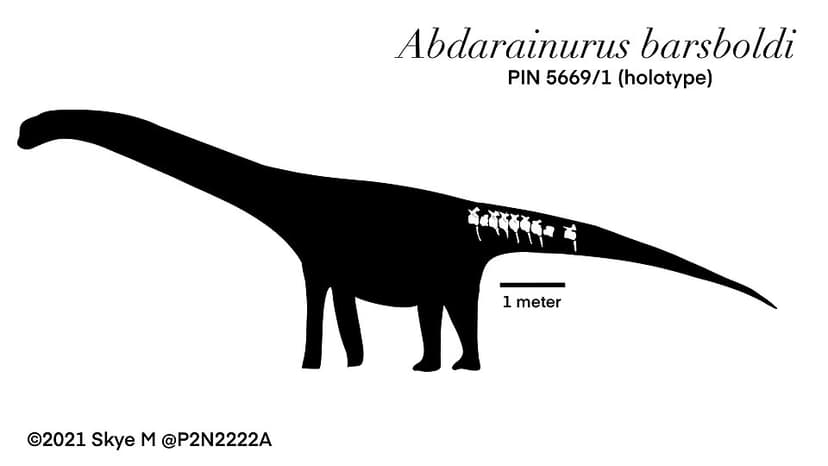
Abdarainurus
Abdarainurus is a genus of titanosaur dinosaur known from the Alagteeg Formation in Mongolia. The only known species, A. barsboldi, is currently considered an indeterminate titanosaur and might represent a previously undocumented lineage of Asian macronarians. Its existence is primarily evidenced by a limited number of tail vertebrae.
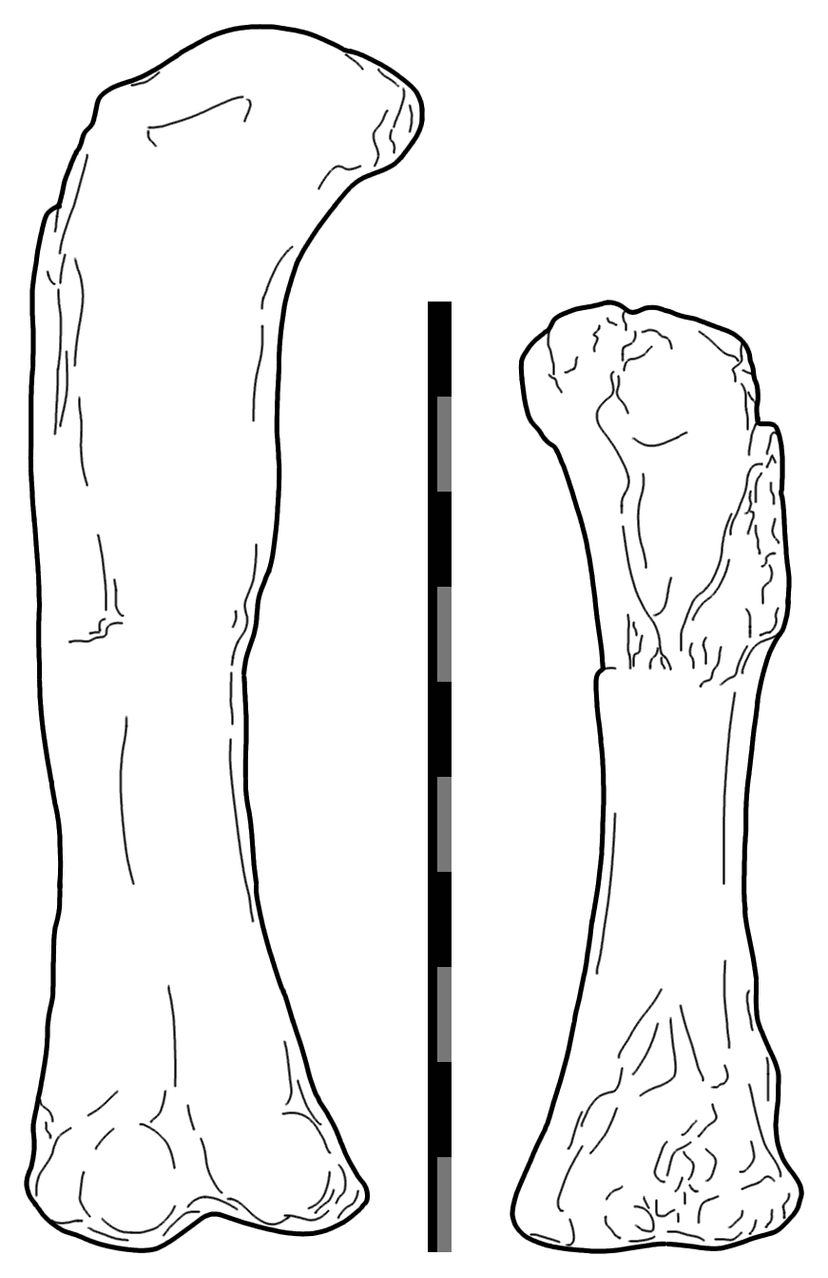
Aegyptosaurus
Aegyptosaurus was a genus of sauropod dinosaur that lived in Africa approximately 95 million years ago during the Late Cretaceous Period. Its fossils, though largely destroyed during World War II, were first discovered in Egypt and have also been found in Niger. The dinosaur is estimated to have been around 15 meters long and weighed about 7 tonnes.

Aepisaurus
Aepisaurus was a genus of sauropod dinosaur that lived in France during the Early Cretaceous period, approximately 100.5 million years ago. It is considered an obscure and poorly understood dinosaur, known only from a single humerus, which is now partially lost. Due to the limited fossil evidence, its exact taxonomic placement remains uncertain.