
Ampelognathus
Ampelognathus is an extinct genus of ornithopod dinosaur that lived during the Late Cretaceous period in what is now Texas, USA. Its name, meaning "grapevine jaw," refers to its discovery location near Grapevine Lake. While its exact placement is debated, it is considered a basal member of the Ornithopoda, possibly related to rhabdodontomorphs.
Key Facts
- ›Lived during the Cenomanian age of the Late Cretaceous period.
- ›Fossils were discovered in the Lewisville Formation of Texas, USA.
- ›The name Ampelognathus means "grapevine jaw."
- ›The type species is Ampelognathus coheni.
- ›Considered a basal ornithopod, potentially a rhabdodontomorph.
- ›Known from a nearly complete left dentary (lower jaw bone).

- Possessed a dentary with a morphology that led to its "grapevine jaw" name.
- Estimated size and weight are not detailed in available descriptions.
Thescelosaurus, Iguanodontia, Rhabdodontomorpha
North America
About Ampelognathus
Ampelognathus is an extinct genus of ornithopod dinosaur that roamed the Earth during the Late Cretaceous period. The type species, Ampelognathus coheni, was formally described in 2023. Its name, meaning "grapevine jaw," is a direct nod to its discovery location near Grapevine Lake in Texas, United States.
Discovery and Classification
The fossils of Ampelognathus were unearthed in the Lewisville Formation of Texas, dating back to the Cenomanian age. The primary specimen recovered is a nearly complete left dentary, or lower jaw bone. Initial phylogenetic analyses placed Ampelognathus as a basal member of the Ornithopoda, suggesting it was more closely related to iguanodontians than to the group commonly referred to as "hypsilophodonts." Later studies have further refined its position, indicating it is a basal member of the Rhabdodontomorpha, meaning it predates or is related to groups like Tenontosauridae and Rhabdodontoidea.
Physical Characteristics and Lifestyle
While the recovered fossil material is limited, consisting mainly of the dentary, it provides clues about the dinosaur's anatomy and diet. As an ornithopod, Ampelognathus was likely a herbivore that moved on two legs. The specific characteristics of its jaw structure informed its scientific name. Further fossil discoveries would be needed to provide a more complete picture of its size, weight, and other physical traits.
Source: Wikipedia ↗
Frequently Asked Questions
What does the name Ampelognathus mean?
The name Ampelognathus combines the Greek words "ampelos" (grapevine) and "gnathos" (jaw). This name was chosen in reference to the type locality, which was near Grapevine Lake in Texas.
When did Ampelognathus live?
Ampelognathus lived during the Cenomanian age of the Late Cretaceous period. This places its existence approximately 93 to 100 million years ago.
Where were the fossils of Ampelognathus found?
The holotype specimen of Ampelognathus was discovered in the Lewisville Formation of Texas, United States. Specifically, it was found in the Grapevine Lake emergency spillway in Tarrant County.
What kind of dinosaur was Ampelognathus?
Ampelognathus was an ornithopod dinosaur. Phylogenetic analyses suggest it was a basal member of this group, potentially related to rhabdodontomorphs.
What part of the Ampelognathus dinosaur was found?
The fossil record for Ampelognathus consists primarily of a single, nearly complete left dentary. This means the lower jaw bone on the left side of the animal has been recovered.
Related Dinosaur species

Aquilarhinus
Aquilarhinus is a genus of hadrosaurid ornithopod dinosaur that lived in what is now Texas, United States. Its most distinctive feature is its unusual beak morphology, which has been interpreted as shovel-like, differing from other hadrosaurs. Originally classified as a species of Kritosaurus, it was reclassified into its own genus in 2019.
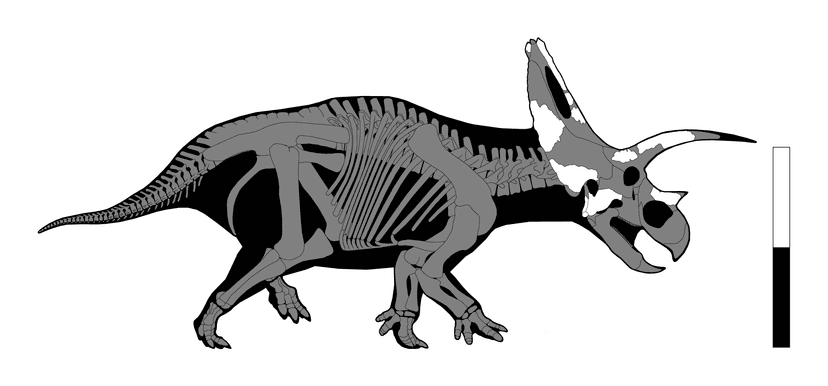
Bravoceratops
Bravoceratops was a large ceratopsid dinosaur that roamed what is now Texas, United States, approximately 70 million years ago during the Late Cretaceous period. Known primarily from a fragmented skull, its distinctive features and classification have been subject to scientific debate regarding its unique characteristics and evolutionary placement within the Chasmosaurinae subfamily.

Astrophocaudia
Astrophocaudia is an extinct genus of sauropod dinosaur that lived during the latter part of the Early Cretaceous period, specifically the Albian stage. Its fossils were discovered in the Paluxy Formation of Texas, United States. The type species, Astrophocaudia slaughteri, was formally described in 2012.