
Aquilarhinus
Aquilarhinus is a genus of hadrosaurid ornithopod dinosaur that lived in what is now Texas, United States. Its most distinctive feature is its unusual beak morphology, which has been interpreted as shovel-like, differing from other hadrosaurs. Originally classified as a species of Kritosaurus, it was reclassified into its own genus in 2019.
Key Facts
- ›Aquilarhinus means 'eagle snout' in reference to its unique beak.
- ›It is known from fossils discovered in the Aguja Formation of Texas.
- ›The type species is Aquilarhinus palimentus.
- ›Its beak morphology suggests a specialized diet, possibly for shoveling vegetation.
- ›It was first described as a species of Kritosaurus before being moved to its own genus.

- Possessed an unusual, shovel-like beak morphology.
- Dentary bone indicates a specialized beak form different from other hadrosaurs.
Kritosaurus Notabilis
North America
About Aquilarhinus
Aquilarhinus is a genus of hadrosaurid ornithopod dinosaur that roamed the Earth during the Late Cretaceous period. Its name, meaning "eagle snout," was inspired by the distinctive morphology of its beak. The sole species, Aquilarhinus palimentus, is known from fossils unearthed in the Aguja Formation of Texas, United States.
Discovery and Classification
The holotype fossil of Aquilarhinus was discovered in Big Bend National Park, Texas. Initially unearthed in 1983 with additional elements found in 1999, the specimen was first described in 2001. At that time, it was classified as a new species of Kritosaurus due to its overall similarity to Kritosaurus notabilis, with the exception of its unusual rostrum. This rostrum was interpreted as an adaptation for "shoveling out and scooping up vegetation," suggesting a specialized feeding strategy. However, its precise phylogenetic placement remained uncertain within the Kritosaurus genus.
In 2019, a reclassification led to the establishment of Aquilarhinus as a distinct genus. The scientific name reflects its unique features: 'aquila' (eagle) and 'rhinos' (nose) for the rostrum, and 'palimentus,' derived from 'pala' (shovel) and 'mentus' (chin), for the spade-like appearance of its predentary. This renaming solidified its recognition as a unique lineage within the hadrosaurids, highlighting its specialized adaptations for feeding during the Early Campanian stage of the Late Cretaceous.
Source: Wikipedia ↗
Frequently Asked Questions
What does the name Aquilarhinus mean?
The name Aquilarhinus is derived from Latin 'aquila' meaning 'eagle' and Greek 'rhinos' meaning 'nose'. This name refers to the distinctive shape of the dinosaur's snout.
Where were Aquilarhinus fossils found?
Fossils of Aquilarhinus were discovered in the Aguja Formation in Big Bend National Park, Texas, United States.
What is unique about Aquilarhinus' beak?
Aquilarhinus possessed an unusual beak morphology, described as shovel-like. This shape is different from the beaks of other known hadrosaurs and suggests a specialized feeding method.
When was Aquilarhinus first described?
The species was initially described in 2001 as a new species of Kritosaurus. It was later reclassified into its own genus, Aquilarhinus, in 2019.
What is the specific meaning of Aquilarhinus palimentus?
The specific epithet 'palimentus' comes from the Latin words 'pala' (shovel) and 'mentus' (chin). This further emphasizes the shovel-like appearance of the predentary, resembling a spade.
Related Dinosaur species

Ampelognathus
Ampelognathus is an extinct genus of ornithopod dinosaur that lived during the Late Cretaceous period in what is now Texas, USA. Its name, meaning "grapevine jaw," refers to its discovery location near Grapevine Lake. While its exact placement is debated, it is considered a basal member of the Ornithopoda, possibly related to rhabdodontomorphs.
Bravoceratops
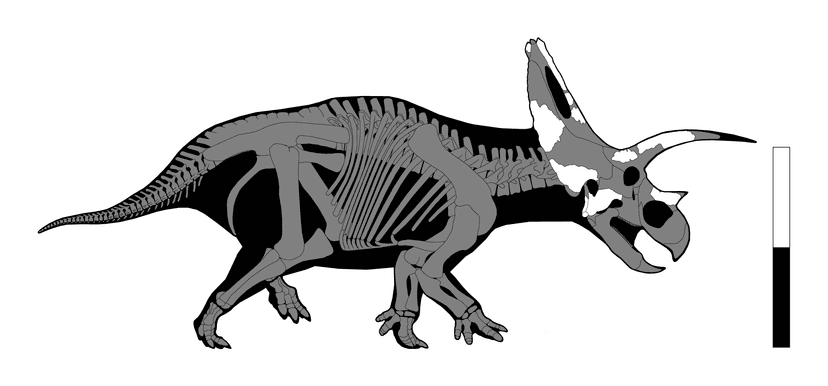
Bravoceratops was a large ceratopsid dinosaur that roamed what is now Texas, United States, approximately 70 million years ago during the Late Cretaceous period. Known primarily from a fragmented skull, its distinctive features and classification have been subject to scientific debate regarding its unique characteristics and evolutionary placement within the Chasmosaurinae subfamily.

Astrophocaudia
Astrophocaudia is an extinct genus of sauropod dinosaur that lived during the latter part of the Early Cretaceous period, specifically the Albian stage. Its fossils were discovered in the Paluxy Formation of Texas, United States. The type species, Astrophocaudia slaughteri, was formally described in 2012.