
Bravoceratops
Bravoceratops was a large ceratopsid dinosaur that roamed what is now Texas, United States, approximately 70 million years ago during the Late Cretaceous period. Known primarily from a fragmented skull, its distinctive features and classification have been subject to scientific debate regarding its unique characteristics and evolutionary placement within the Chasmosaurinae subfamily.
Key Facts
- ›Lived approximately 70 million years ago during the Late Cretaceous period.
- ›Fossils discovered in the Javelina Formation of Texas, United States.
- ›Its scientific name, Bravoceratops polyphemus, refers to its 'wild horn-face' and a cyclops-like feature.
- ›Classified as a chasmosaurine ceratopsid, an 'intermediate' form within the subfamily.
- ›Debates exist regarding its unique derived traits, with some suggesting it might be a nomen dubium.
- ›Considered part of a southwestern United States clade of chasmosaurines, alongside genera like Coahuilaceratops and Sierraceratops.
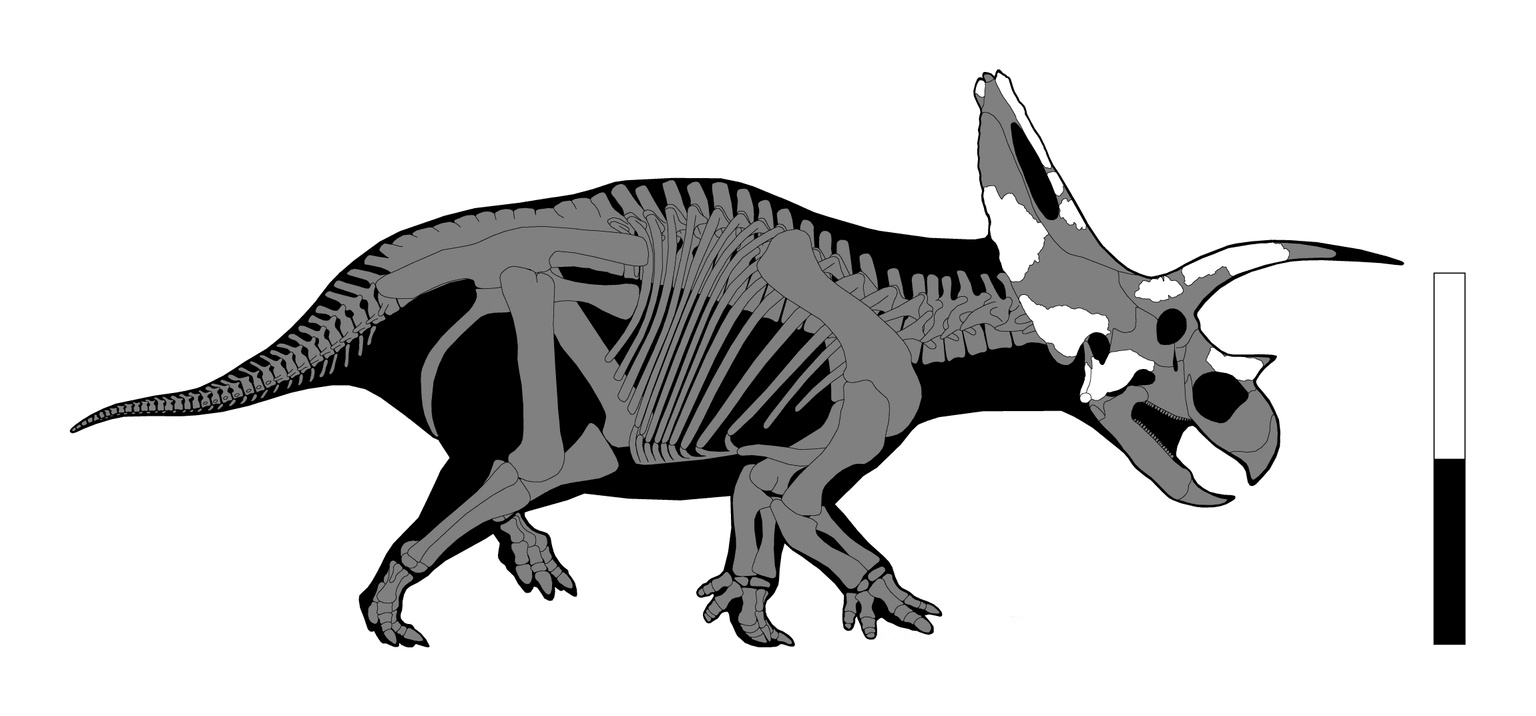
- Large ceratopsid dinosaur.
- Possessed brow horns that were compressed, being taller than wide.
- Had a flange in front of its quadrate near the jugal bones.
- Featured an epijugal that was longer than tall and sharp.
Coahuilaceratops, Sierraceratops, Pentaceratops, Anchiceratops, Chasmosaurus, Triceratops, Arrhinoceratops, Judiceratops
North America
About Bravoceratops
Bravoceratops was a dinosaur genus belonging to the large, horned ceratopsid group, specifically within the Chasmosaurinae subfamily. This creature lived approximately 70 million years ago, during the Late Cretaceous period, and its fossil remains have been discovered in what is now Texas, United States. The genus is known primarily from a single holotype specimen, a fragmented skull.
Discovery and Naming
The holotype specimen of Bravoceratops, TMM 46015-1, was recovered from the Javelina Formation in Big Bend National Park. The discovery is significant as ceratopsid fossils are relatively uncommon in this formation, providing valuable insight into the diversity of these dinosaurs. The skull fragments were found in a sandy conglomerate, suggesting the remains were preserved in a river lag deposit where only the most durable parts survived.
The genus name, Bravoceratops, translates to 'wild horn-face', combining the Mexican name for the Rio Grande ('Rio Bravo del Norte') with Greek words for 'horn' (keras) and 'face' (ops). The specific name, polyphemus, references the cyclops from Greek mythology, an allusion to the perceived resemblance of a unique depression on the frill to a single eye. The genus and species were formally described and named by Steven L. Wick and Thomas M. Lehman in 2013.
Description and Classification
Bravoceratops is characterized by several proposed unique derived traits (autapomorphies), including a distinctive median parietal bar on its frill that splays out like a fan and features a symmetrical depression. This depression was initially interpreted as the base for a small horn and the reason for its cyclops-like specific name. However, some paleontologists have suggested that this feature may have been reconstructed incorrectly, leading to debates about the genus's validity.
Despite these debates, many researchers consider Bravoceratops to be a valid genus. It is classified as an 'intermediate' chasmosaurine, positioned evolutionarily between more primitive forms like Chasmosaurus and more derived ones like Triceratops. It shares certain traits with other ceratopsids from the southwestern United States, suggesting it was part of a regional clade that included genera like Coahuilaceratops and Sierraceratops. Distinctive features include compressed brow horns and a prominent flange in front of the quadrate bone.
Source: Wikipedia ↗
Frequently Asked Questions
When did Bravoceratops live?
Bravoceratops lived approximately 70 million years ago. This places it in the Late Cretaceous period, specifically during the late Campanian or early Maastrichtian stages.
Where were Bravoceratops fossils found?
The fossils of Bravoceratops were discovered in the Javelina Formation, located in Big Bend National Park, Texas, United States. This region is known for its Late Cretaceous rock layers.
What does the name Bravoceratops mean?
The genus name Bravoceratops means 'wild horn-face'. It is derived from 'Rio Bravo del Norte', the Mexican name for the Rio Grande, and Greek words for 'horn' and 'face'. The specific name, polyphemus, refers to the mythical cyclops Polyphemus.
What are the distinguishing features of Bravoceratops?
Originally, two unique traits were proposed: a median parietal bar that splays out like a fan and has a symmetrical depression, resembling a cyclops' eye. However, some research suggests this bar may have been reconstructed upside down.
What group of dinosaurs does Bravoceratops belong to?
Bravoceratops is assigned to the Chasmosaurinae, a subfamily of ceratopsid dinosaurs. It is considered an 'intermediate' form within this group, more derived than some but less so than others.
Is Bravoceratops considered a valid genus?
The validity of Bravoceratops has been debated. While initially described with unique features, some researchers have questioned these, suggesting it might be an invalid genus (nomen dubium). However, other paleontologists consider it valid and part of a southwestern United States clade.
Related Dinosaur species

Astrophocaudia
Astrophocaudia is an extinct genus of sauropod dinosaur that lived during the latter part of the Early Cretaceous period, specifically the Albian stage. Its fossils were discovered in the Paluxy Formation of Texas, United States. The type species, Astrophocaudia slaughteri, was formally described in 2012.

Ampelognathus
Ampelognathus is an extinct genus of ornithopod dinosaur that lived during the Late Cretaceous period in what is now Texas, USA. Its name, meaning "grapevine jaw," refers to its discovery location near Grapevine Lake. While its exact placement is debated, it is considered a basal member of the Ornithopoda, possibly related to rhabdodontomorphs.

Aquilarhinus
Aquilarhinus is a genus of hadrosaurid ornithopod dinosaur that lived in what is now Texas, United States. Its most distinctive feature is its unusual beak morphology, which has been interpreted as shovel-like, differing from other hadrosaurs. Originally classified as a species of Kritosaurus, it was reclassified into its own genus in 2019.