
Astrophocaudia
Astrophocaudia is an extinct genus of sauropod dinosaur that lived during the latter part of the Early Cretaceous period, specifically the Albian stage. Its fossils were discovered in the Paluxy Formation of Texas, United States. The type species, Astrophocaudia slaughteri, was formally described in 2012.
Key Facts
- ›Lived during the Albian stage of the Early Cretaceous.
- ›Fossils were found in the Paluxy Formation of Texas, USA.
- ›Named Astrophocaudia slaughteri in honor of its discoverer, Robert Slaughter.
- ›Distinguished by unique features of its caudal vertebrae, including a planar hyposphene-hypantrum articulation.
- ›Estimated to be between 10.9 and 18.3 meters long.
- ›Classified within the Somphospondyli group, outside of Titanosauria.

- Possesses caudal vertebrae with planar hyposphene-hypantrum articulations and a unique lamina structure.
- Estimated length varies between 10.9 meters and 18.3 meters.
- Estimated weight varies between 2.85 tonnes and 20 tonnes.
- Has a preacetabular process that is slightly curved when viewed from above.
Astrodon, Pleurocoelus, Cedarosaurus, Venenosaurus, Sauroposeidon, Sonorasaurus
North America
About Astrophocaudia
Astrophocaudia is an extinct genus of sauropod dinosaur that roamed the Earth during the late stages of the Early Cretaceous period, specifically the Albian age. Its fossils were unearthed in the Paluxy Formation of Texas, United States. The type species of this genus is Astrophocaudia slaughteri, which was formally described in 2012.
Discovery and Naming
The remains that would eventually be classified as Astrophocaudia were discovered by paleontologist Robert Slaughter in the 1960s in Texas. These fragmentary sauropod specimens, initially assigned to "Pleurocoelus sp.", remained undescribed for several decades. Doctoral student Michael D. D’Emic re-examined these fossils and, in his 2012 description, established the new genus and species Astrophocaudia slaughteri. The genus name is derived from Ancient Greek, carrying meanings such as "non-twisting tail" or "star tail," referencing the unique articulation and appearance of its caudal vertebrae. The species epithet "slaughteri" is a direct honor to Robert Slaughter, the original discoverer of the remains.
Description and Classification
The holotype of Astrophocaudia includes a single tooth and a partial postcranial skeleton. This skeleton comprises cervical and dorsal vertebrae fragments, numerous caudal vertebrae, rib fragments, chevrons, and parts of the scapula and ilium. While precise full-body size estimates vary among researchers, some suggest lengths between 10.9 and 18.3 meters, with weights ranging from 2.85 to 20 tonnes. Astrophocaudia is distinguished from other sauropods by autapomorphies in its caudal vertebrae, including the planar orientation of the hyposphene-hypantrum articulations. Phylogenetic analyses place Astrophocaudia within the Somphospondyli, a group of sauropods that falls outside of Titanosauria.
Source: Wikipedia ↗
Frequently Asked Questions
What does the name Astrophocaudia mean?
The genus name Astrophocaudia has a dual meaning derived from Ancient Greek. It can translate to 'non-twisting tail' due to the closely connected caudal vertebrae, or 'star tail' referencing the star-like shape of these vertebrae when viewed from behind. The name also pays homage to Astrodon, an early North American sauropod.
Where were Astrophocaudia fossils found?
The fossils of Astrophocaudia were discovered in the Paluxy Formation, located in Texas, United States. This region has yielded numerous important dinosaur discoveries.
When did Astrophocaudia live?
Astrophocaudia lived during the later part of the Early Cretaceous period. Specifically, it is known from the Albian stage of this geological period.
What are the key physical characteristics of Astrophocaudia?
Astrophocaudia is distinguished by specific features of its caudal vertebrae, including a planar orientation of the hyposphene-hypantrum articulations and a unique lamina arrangement. While complete size estimates vary, it is thought to have ranged from approximately 10.9 to 18.3 meters in length.
What type of dinosaur was Astrophocaudia?
Astrophocaudia was a sauropod, a group of large, long-necked, herbivorous dinosaurs. It is classified within the Somphospondyli, a clade of sauropods that excludes Titanosauria.
Related Dinosaur species
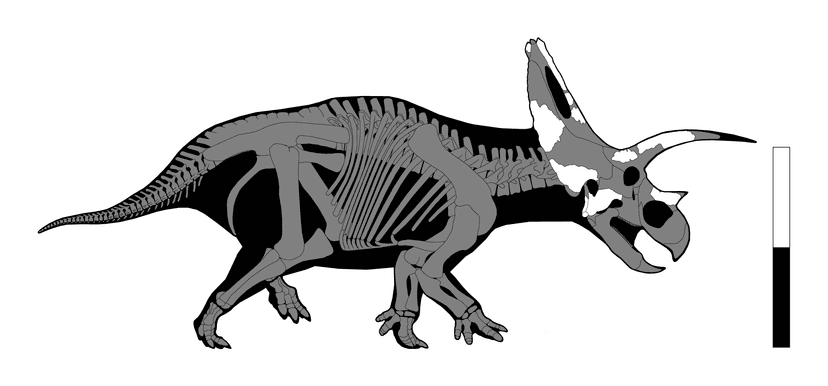
Bravoceratops
Bravoceratops was a large ceratopsid dinosaur that roamed what is now Texas, United States, approximately 70 million years ago during the Late Cretaceous period. Known primarily from a fragmented skull, its distinctive features and classification have been subject to scientific debate regarding its unique characteristics and evolutionary placement within the Chasmosaurinae subfamily.

Ampelognathus
Ampelognathus is an extinct genus of ornithopod dinosaur that lived during the Late Cretaceous period in what is now Texas, USA. Its name, meaning "grapevine jaw," refers to its discovery location near Grapevine Lake. While its exact placement is debated, it is considered a basal member of the Ornithopoda, possibly related to rhabdodontomorphs.

Aquilarhinus
Aquilarhinus is a genus of hadrosaurid ornithopod dinosaur that lived in what is now Texas, United States. Its most distinctive feature is its unusual beak morphology, which has been interpreted as shovel-like, differing from other hadrosaurs. Originally classified as a species of Kritosaurus, it was reclassified into its own genus in 2019.