
Anabisetia
Anabisetia is a genus of small, bipedal herbivorous dinosaurs that lived during the Late Cretaceous Period in Patagonia, South America. Discovered in Argentina, this dinosaur is estimated to have been around two meters long and weighed approximately twenty kilograms. Its classification suggests a close relationship with other South American and Antarctic ornithopods.
Key Facts
- ›Lived during the Late Cretaceous Period.
- ›A small, bipedal herbivore.
- ›Estimated length of 2 meters and weight of 20 kilograms.
- ›Fossils discovered in Patagonia, Argentina.
- ›Closely related to other South American and Antarctic ornithopods.
- ›Named in honor of archaeologist Ana Maria Biset and discoverer Roberto Saldivia Blanco.
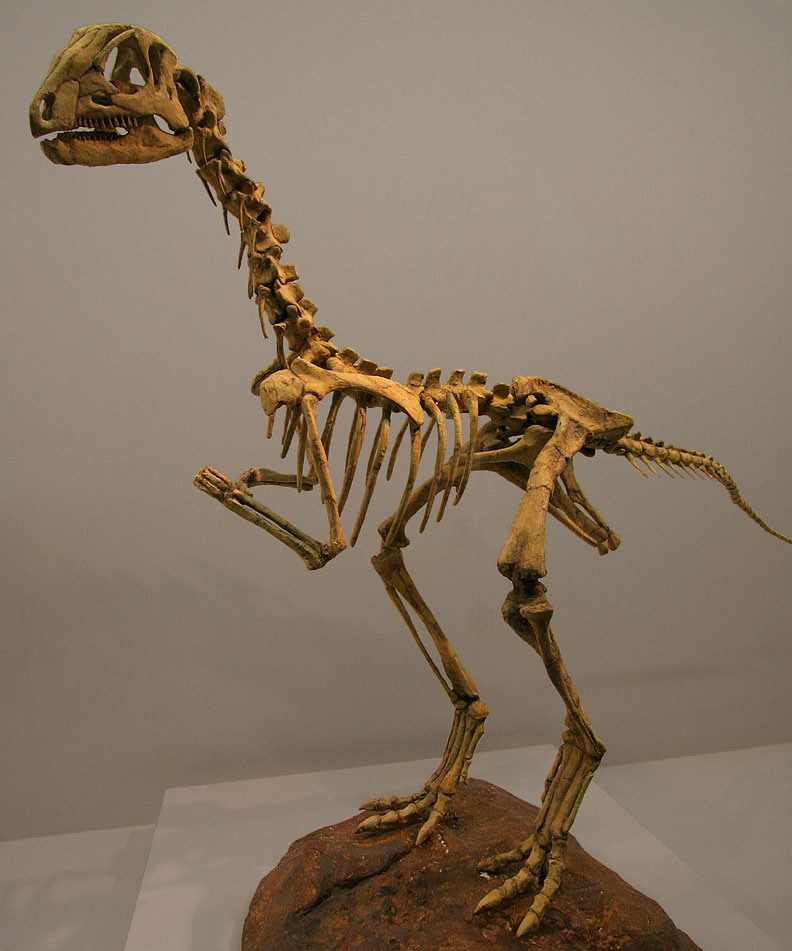
- Small bipedal herbivore.
- Estimated length of 2 meters.
- Estimated weight of 20 kilograms.
- Occipital condyle pointed rather downwards.
- Relatively large acromial process on the shoulder blade.
- Flattened fifth metatarsal in the hand.
- Ilium with a front blade accounting for over half of its length.
- Ischium with a triangular upper shaft and quadrangular lower shaft.
- Fibula touched the astragalus in the ankle.
Gasparinisaura
South America
About Anabisetia
Anabisetia is a genus of small, bipedal herbivorous dinosaurs that inhabited Patagonia, South America, during the Late Cretaceous Period. Estimated to be around two meters in length and weighing approximately twenty kilograms, this dinosaur adds to our understanding of ornithopod diversity in the Southern Hemisphere.
Discovery and Naming
The genus Anabisetia was formally named in 2002 by Argentine paleontologists Rodolfo Coria and Jorge Orlando Calvo. The generic name, Anabisetia, serves as an honorific for the late Ana Maria Biset, a significant archaeologist from Neuquén Province, Argentina, which is the region where the dinosaur's remains were unearthed. The single named species, A. saldiviai, commemorates Roberto Saldivia Blanco, a local farmer who discovered the fossils in 1985 and subsequently brought them to the attention of the scientific community in 1993. The findings had been noted in scientific literature as early as 1996.
Fossil Evidence
Four specimens of Anabisetia are currently known, all detailed in the original 2002 description. The holotype specimen, MCF-PVPH 74, is the most complete. It includes fragmentary skull material, a complete forelimb and hindlimb, and vertebral elements from across the spinal column. Other specimens, while less complete, provide additional anatomical information, such as a complete pelvis and an articulated tail. Collectively, these specimens offer a nearly complete skeletal reconstruction, with the exception of the skull.
Paleontological Context
All four Anabisetia specimens were recovered from the Cerro Bayo Mesa locality in Neuquén Province, Argentina. This area is part of the Cerro Lisandro Formation, which preserves evidence of a swamp environment that existed from the late Cenomanian to the early Turonian stages of the Late Cretaceous, approximately 95 to 92 million years ago.
Description and Classification
Anabisetia is characterized as a small, bipedal herbivore. Distinctive anatomical features include the occipital condyle at the back of the skull, which pointed downwards, and a notably large acromial process on the shoulder blade among euornithopods. In the hand, the fifth metatarsal was flattened with straight edges, unlike the rounded cross-section seen in many other dinosaurs. The pelvis features an ilium with a front blade exceeding half its total length, extending forward of the prepubis, and an ischium with a triangular upper shaft and a quadrangular lower shaft. In the ankle, the fibula made contact with the astragalus. Phylogenetically, Anabisetia is considered closely related to other ornithopods from Patagonia and Antarctica, belonging to the clade Elasmaria. Its exact placement within Iguanodontia remains a subject of discussion, with some analyses suggesting it lies just outside the clade.
Source: Wikipedia ↗
Frequently Asked Questions
When did Anabisetia live?
Anabisetia lived during the Late Cretaceous Period, specifically from the late Cenomanian through early Turonian stages. This period is estimated to be between 95 and 92 million years ago.
What does the name Anabisetia mean?
The genus name Anabisetia honors Ana Maria Biset, an influential archaeologist from Neuquén Province, Argentina. The species name, A. saldiviai, is in recognition of Roberto Saldivia Blanco, the local farmer who discovered the fossils.
Where were the fossils of Anabisetia found?
The fossils of Anabisetia were discovered at a locality called Cerro Bayo Mesa, located thirty kilometers south of Plaza Huincul in the Neuquén province of Argentina. This site is part of the Cerro Lisandro Formation.
What are the key physical characteristics of Anabisetia?
Anabisetia was a small, bipedal herbivore. Unique traits include a downward-pointing occipital condyle, a large acromial process on the shoulder blade, a flattened fifth metatarsal in the hand, and a distinctively shaped ilium and ischium in the pelvis.
How complete is the fossil record for Anabisetia?
The fossil record for Anabisetia is considered quite good, with four specimens known. While skull material is fragmentary, elements such as forelimbs, hindlimbs, pelvis, tail, and vertebrae are well-represented, allowing for a substantial understanding of its anatomy.
What is Anabisetia related to?
Anabisetia is thought to be closely related to other Patagonian and Antarctic ornithopods. Analyses suggest it may fall in a similar position to Gasparinisaura and is part of the clade Elasmaria.
Related Dinosaur species

Buitreraptor
Buitreraptor is a genus of small, bird-like theropod dinosaurs that lived during the Late Cretaceous period in what is now Argentina. Known for its distinctive elongated skull and numerous small teeth, Buitreraptor likely hunted small prey like lizards and mammals rather than large animals. Its discovery in South America provided valuable insights into the global distribution and evolution of dromaeosaurids.

Bajadasaurus
Bajadasaurus was a herbivorous sauropod dinosaur from the Early Cretaceous period of Patagonia, Argentina. It is notable for its extremely elongated, bifurcated neural spines on its neck vertebrae, which likely served a defensive purpose. The creature possessed a slender skull with pencil-shaped teeth concentrated at the front of its jaws.
Acrotholus
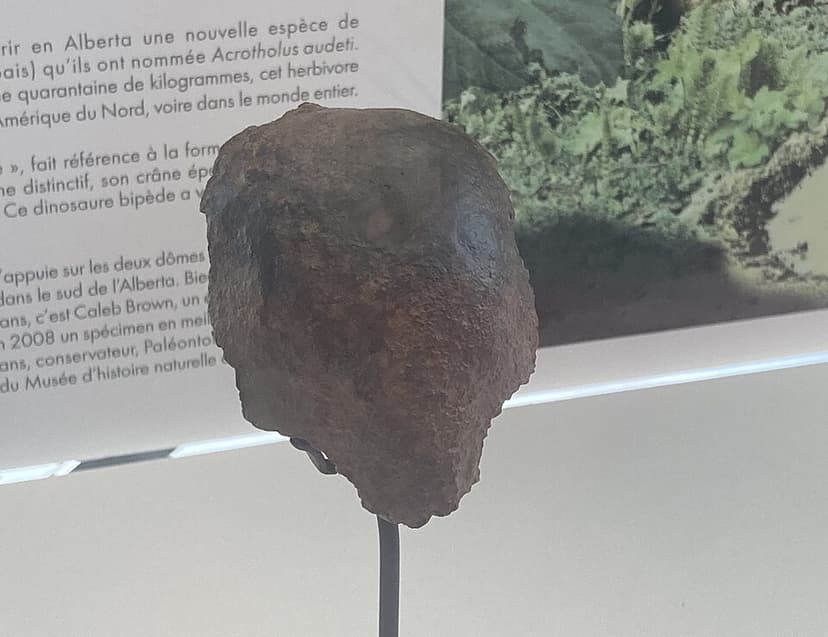
Acrotholus is an extinct genus of pachycephalosaurian dinosaur that lived during the Santonian stage of the Late Cretaceous period in what is now Canada. It is notable for being one of the earliest known members of the pachycephalosaur family with a well-developed, dome-shaped skull. Acrotholus was a bipedal herbivore whose cranial dome has been theorized to have been used for intraspecies combat or display.