
Buitreraptor
Buitreraptor is a genus of small, bird-like theropod dinosaurs that lived during the Late Cretaceous period in what is now Argentina. Known for its distinctive elongated skull and numerous small teeth, Buitreraptor likely hunted small prey like lizards and mammals rather than large animals. Its discovery in South America provided valuable insights into the global distribution and evolution of dromaeosaurids.
Key Facts
- ›Lived during the Late Cretaceous period in Argentina.
- ›Possessed a long, slender skull with many small, grooved teeth.
- ›Estimated to be about 1.5 meters long and weigh 3 kilograms.
- ›Likely hunted small prey such as lizards and mammals.
- ›Belonged to the unenlagiine subfamily of dromaeosaurids.
- ›Fossils were discovered at the La Buitrera fossil site in Patagonia.

- Rooster-sized
- Very elongated head
- Many small, grooved, flattened, and strongly recurved teeth lacking meat-tearing serrations
- Slender, flat snout
- Long forelimbs with long, thin three-fingered hands
- Proportionally longer hand bones than in Velociraptor and Deinonychus
- Proportionally smaller ungual bones than in Velociraptor and Deinonychus
- Elongated body with a shallow ribcage
- Enlarged sickle claw on the second toe
Neuquenraptor, Austroraptor, Unenlagia, Rahonavis, Microraptor, Sinornithosaurus, Velociraptor, Deinonychus
South America
About Buitreraptor
Buitreraptor is a genus of unenlagiine theropod dinosaurs that roamed the Earth during the Late Cretaceous period in what is now Argentina. Described in 2005, the type species is Buitreraptor gonzalezorum. This dinosaur was relatively small, often described as rooster-sized, and is notable for its distinctively elongated head adorned with numerous small teeth. These teeth, characterized by their grooved, recurved, and flattened shape without meat-tearing serrations, suggest a diet focused on smaller prey rather than large animals.
Discovery and Naming
Four specimens of Buitreraptor were unearthed in 2004 from sandstone deposits in Patagonia, Argentina, at a renowned fossil site known as La Buitrera, meaning "vulture roost." The excavation was led by paleontologists Sebastián Apesteguia and Peter Makovicky. The genus name, "Buitreraptor," translates to "vulture raider," a nod to its discovery location and predatory nature. The species name, "gonzalezorum," honors the González brothers for their significant contributions to the excavation and preparation of the fossils. The holotype specimen includes a partial skeleton with a skull, with further detailed descriptions of its anatomy published in subsequent years.
Physical Characteristics and Paleobiology
Buitreraptor presented a unique mosaic of traits. Its slender, elongated snout housed many small teeth, which likely served to hold prey rather than tear flesh, indicating it swallowed its food whole. This contrasts with the more robust teeth of some other dromaeosaurs. Its forelimbs were long and featured slender, three-fingered hands, proportionally longer than those of Velociraptor and Deinonychus. The enlarged sickle claw on its second toe was present but less pronounced than in those northern relatives. The overall body was elongated with a shallow ribcage. While no direct fossil evidence of feathers has been found for Buitreraptor, its close relatives like Microraptor and Sinornithosaurus are known to have been feathered, leading scientists to infer that Buitreraptor likely also possessed feathers. Paleobiological studies suggest that unenlagiines like Buitreraptor were cursorial, adapted for running and pursuit, likely preying on small, fast-moving animals over large distances. Some research has also explored the possibility that Buitreraptor may have been capable of powered flight, though this remains a subject of scientific discussion.
Classification and Evolutionary Significance
Buitreraptor was initially assigned to the Dromaeosauridae family and later identified as part of the unenlagiine subfamily. Its discovery in the Southern Hemisphere contributed significantly to understanding the global distribution of dromaeosaurs, suggesting they were more widespread than previously thought. The presence of unenlagiines in South America, alongside other southern dromaeosaurs and relatives like Rahonavis from Madagascar, has fueled debates about the origins and dispersal of this dinosaur family. Scientists propose that dromaeosaurs may have originated around 180 to 160 million years ago, either in the northern supercontinent Laurasia and migrating south, or originating in the south before the breakup of Pangaea.
Source: Wikipedia ↗
Frequently Asked Questions
What does the name Buitreraptor mean?
The name Buitreraptor means 'La Buitrera seizer.' It comes from 'buitre,' the Spanish word for vulture, referencing the La Buitrera fossil site, and 'raptor,' the Latin word for 'seizer.'
When did Buitreraptor live?
Buitreraptor lived during the early Late Cretaceous period, specifically the Cenomanian-Turonian ages, approximately 98 to 97 million years ago.
Where were Buitreraptor fossils found?
Fossils of Buitreraptor were discovered in sandstone in Patagonia, Argentina, at a fossil site known as La Buitrera, which translates to 'the vulture roost.'
What did Buitreraptor eat?
Based on its small, non-serrated teeth and elongated snout, scientists believe Buitreraptor was not a hunter of large animals. It likely preyed on smaller animals, such as lizards and mammals, holding them with its teeth and possibly using its forelimbs and sickle claw.
What are the key physical characteristics of Buitreraptor?
Buitreraptor was relatively small, about rooster-sized, with a very elongated and slender head. It had many small teeth that lacked serrations, long forelimbs with thin, three-fingered hands, and an enlarged sickle claw on its second toe.
Is Buitreraptor related to Velociraptor?
While both are dromaeosaurids, Buitreraptor belongs to the unenlagiine subfamily and possesses different physical features than typical northern dromaeosaurs like Velociraptor. For example, its snout is much more elongated, and its teeth are smaller and lack cutting edges.
Related Dinosaur species
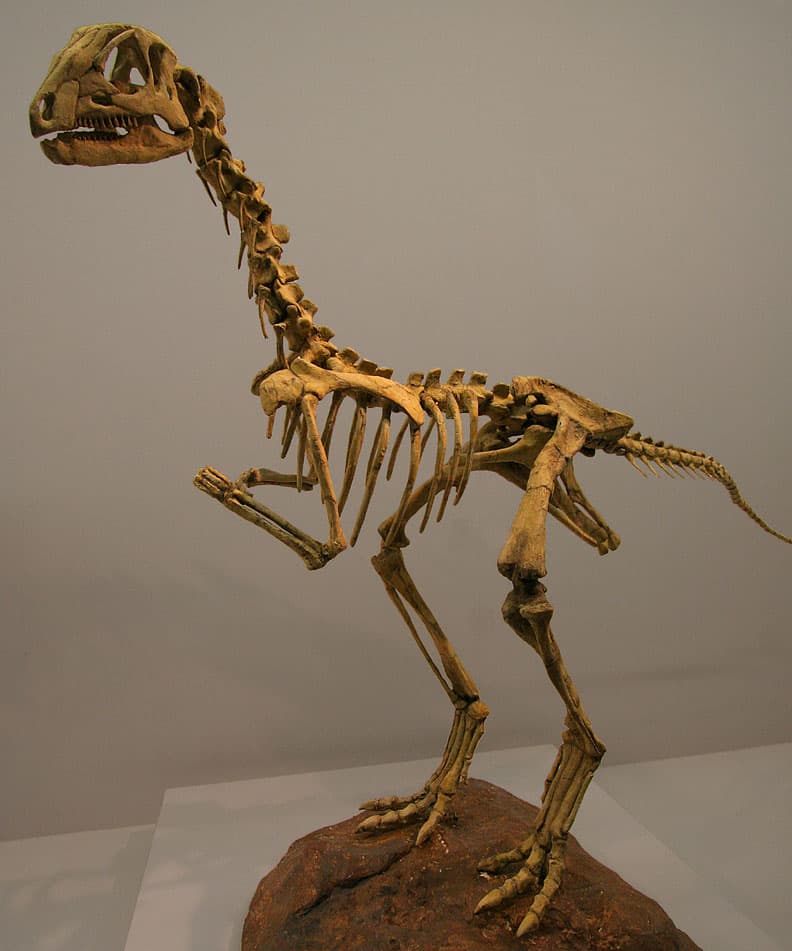
Anabisetia
Anabisetia is a genus of small, bipedal herbivorous dinosaurs that lived during the Late Cretaceous Period in Patagonia, South America. Discovered in Argentina, this dinosaur is estimated to have been around two meters long and weighed approximately twenty kilograms. Its classification suggests a close relationship with other South American and Antarctic ornithopods.

Bajadasaurus
Bajadasaurus was a herbivorous sauropod dinosaur from the Early Cretaceous period of Patagonia, Argentina. It is notable for its extremely elongated, bifurcated neural spines on its neck vertebrae, which likely served a defensive purpose. The creature possessed a slender skull with pencil-shaped teeth concentrated at the front of its jaws.
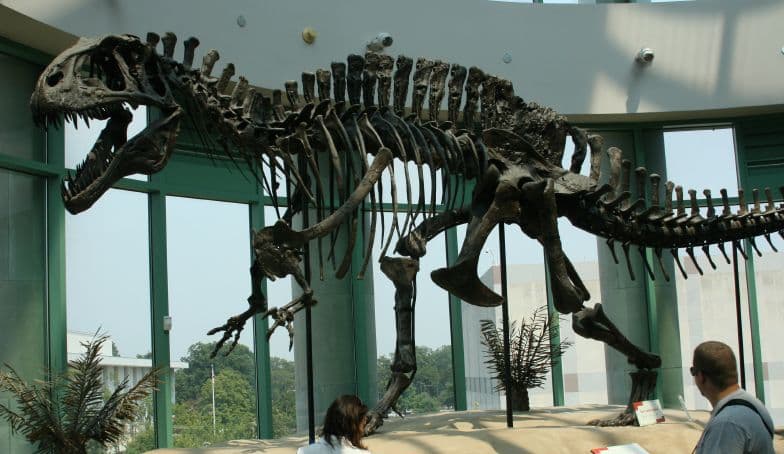
Acrocanthosaurus
Acrocanthosaurus is a genus of large theropod dinosaurs that roamed North America during the Early and Late Cretaceous periods. Known for its distinctive high neural spines along its back, it was one of the largest predators in its ecosystem, likely preying on large herbivores.