
Anchisaurus
Herbivore (with possible omnivorous tendencies)·Early Jurassic·Northeastern United States·Facultative Biped
Anchisaurus was a genus of basal sauropodomorph dinosaur that lived during the Early Jurassic Period. Its fossils were discovered in the Northeastern United States, and it is known for its primitive appearance, previously being classified as a prosauropod. The name Anchisaurus means "near lizard," reflecting its evolutionary position.
Key Facts
- ›Lived during the Early Jurassic Period, approximately 200 to 192 million years ago.
- ›Fossils found in the red sandstone of the Upper Portland Formation in the Northeastern United States.
- ›Initially mistaken for human bones due to its relatively small size.
- ›Swallowed gastroliths (gizzard stones) to aid in digesting plant matter.
- ›Considered a facultative biped, capable of moving on both two and four legs.
- ›Possible burrowing lifestyle has been speculated based on fossil preservation.
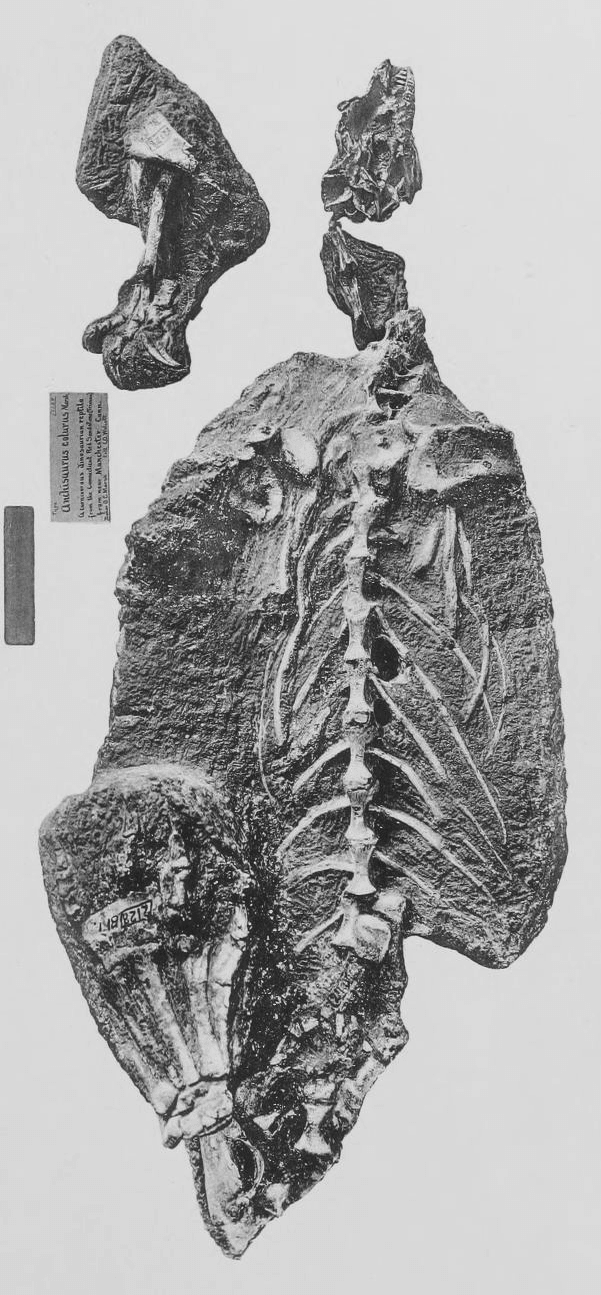
- Estimated length of 2 to 4 meters, with potential for up to 6 meters in exceptional individuals.
- Estimated weight of 20 to 32 kilograms.
- Spoon-shaped teeth for ripping food.
- Multi-purpose front legs with grasping capabilities and a simple reversible first 'finger'.
- Five-toed feet capable of being placed flat on the ground.
Ammosaurus, Massospondylus, Gyposaurus
North America, United States, Canada
About Anchisaurus
Anchisaurus is a genus of basal sauropodomorph dinosaur that inhabited Earth during the Early Jurassic Period. Its fossils have been unearthed in the red sandstone formations of the Upper Portland Formation in the Northeastern United States, dating back to the Hettangian and Sinemurian ages, roughly 200 to 192 million years ago. Initially, due to its relatively small size, Anchisaurus fossils were sometimes mistaken for those of humans, a confusion that was eventually dispelled by further paleontological study.
Discovery and Naming
The history of Anchisaurus's discovery is marked by several name changes. The first North American sauropodomorph remains were found in 1818 in Connecticut. Later, in 1855, William Smith discovered the type specimen of Anchisaurus polyzelus in Springfield, Massachusetts. These early finds were significantly damaged by blasting during their discovery, leading to incomplete fossil records. The genus was named by Othniel Charles Marsh in 1885, after earlier names like Megadactylus and Amphisaurus were found to be preoccupied. Marsh's later designations, such as Ammosaurus and Yaleosaurus, have since been recognized as synonyms of Anchisaurus polyzelus.
Description and Paleobiology
Anchisaurus was a relatively small dinosaur, typically measuring around 2 to 4 meters (6.6 to 13.1 ft) in length and weighing between 20 to 32 kilograms (44 to 70 lb). Some estimates suggest exceptionally large individuals could have reached up to 6 meters (20 ft). As a herbivore, Anchisaurus swallowed gastroliths, or gizzard stones, to help grind tough plant material in its stomach, a common adaptation among herbivorous dinosaurs. Its teeth were spoon-shaped, suitable for ripping vegetation. Anchisaurus was a facultative biped, capable of moving on both its hind legs and all fours, a characteristic that reflects its position as an intermediate form between early bipedal herbivores and the later, giant quadrupedal sauropods.
Interestingly, multiple partially articulated skeletons have been found in high-energy riverine environments, leading some paleontologists to speculate that Anchisaurus may have had a burrowing lifestyle. This behavior could explain the preservation of articulated skeletons, as burrowing could lead to the animals being entombed within their burrows, minimizing bone disarticulation. This hypothesis is supported by the similarity in size and proportions between Anchisaurus and confirmed burrowing dinosaurs like Oryctodromeus.
Source: Wikipedia ↗
Frequently Asked Questions
What does the name Anchisaurus mean?
The name Anchisaurus is derived from the Greek words 'agkhi' (near, close) and 'sauros' (lizard). It was chosen to reflect its evolutionary position, being considered close to or ancestral to sauropods.
Where were Anchisaurus fossils found?
Fossils of Anchisaurus have been discovered in the red sandstone of the Upper Portland Formation in the Northeastern United States, specifically in locations like East Windsor and Manchester, Connecticut, and Springfield, Massachusetts.
What was the diet of Anchisaurus?
Anchisaurus was primarily a herbivore, evidenced by the presence of gastroliths (swallowed stones) found with its fossils, used to grind plant material. However, some evidence from Nova Scotia suggests a possible omnivorous diet, including occasional consumption of small animals.
How big was Anchisaurus?
Anchisaurus was a rather small dinosaur, with estimated lengths typically around 2 to 4 meters (6.6 to 13.1 ft) and weighing around 20 to 32 kilograms (44 to 70 lb). Exceptionally large individuals might have reached up to 6 meters (20 ft) in length.
How did Anchisaurus move?
Anchisaurus is considered a facultative biped, meaning it could walk on both two and four legs. It likely spent most of its time on four legs but could rear up on its hind legs to reach higher vegetation.
Why was Anchisaurus once mistaken for human bones?
The initial fossils discovered were relatively small, with lengths of about 1.8 meters (6 ft), leading to initial misidentification as human bones. The presence of tail vertebrae later disproved this theory.
Related Dinosaur species
Abrictosaurus
Abrictosaurus is a genus of small, bipedal ornithischian dinosaur that lived during the Early Jurassic period in what is now southern Africa. Known for its distinctive heterodont dentition, including prominent tusks, it represents one of the most basal members of the Heterodontosauridae family. Fossil evidence suggests it was a herbivore or omnivore that inhabited a semiarid environment.

Archaeocursor
Archaeocursor is an extinct genus of basal ornithischian dinosaurs discovered in China and dating to the Early Jurassic period. Known from a single, nearly complete femur, it is the oldest and most basal ornithischian described from Asia. The genus name translates to "old runner," reflecting its likely locomotion and ancient lineage.

Aristosaurus
Aristosaurus is a dubious genus of sauropodomorph dinosaur from the Early Jurassic of southern Africa, known from a single, nearly complete skeleton. Initially described as Aristosaurus erectus, it was later considered a synonym of Gyposaurus or a juvenile Massospondylus, but recent reviews classify it as an indeterminate sauropodomorph.