
Angolatitan
Angolatitan is a genus of titanosauriform sauropod dinosaur that lived during the Upper Cretaceous period. It holds the distinction of being the first non-avian dinosaur discovered in Angola. The single known species, Angolatitan adamastor, is represented by a partial right forelimb, indicating it was a basal titanosauriform, a relict form during a time when more advanced titanosaurs were prevalent.
Key Facts
- ›Angolatitan means "Angolan giant".
- ›It is the first non-avian dinosaur found in Angola.
- ›Known from a partial right forelimb.
- ›It was a basal titanosauriform, a more primitive form compared to later titanosaurs.
- ›Fossils were discovered in the Itombe Formation, likely dating to the Coniacian stage of the Late Cretaceous.

- Forelimb was less robust than in more derived titanosaurs.
- Metacarpals were slender and equal in length.
- Olecranon was absent.
- First metacarpal was not bowed.
Angola
About Angolatitan
Angolatitan is a genus of titanosauriform sauropod dinosaur that roamed the Earth during the Upper Cretaceous period. It holds significant scientific importance as the first non-avian dinosaur ever discovered in Angola. The genus is currently represented by a single species, Angolatitan adamastor, known from a partial right forelimb.
Discovery and Naming
Following the end of the Angolan Civil War in 2002, palaeontological research resumed in Angola. The PaleoAngola project led to expeditions that, in 2005, began exploring the fossil-rich Upper Cretaceous rocks. On May 25, 2005, palaeontologist Octávio Mateus discovered the specimen that would become Angolatitan near Iembe in the Bengo province. Excavations were subsequently conducted in May and August of 2006. The genus was formally described by Octávio Mateus and colleagues in 2011. The generic name, Angolatitan, translates to "Angolan giant," reflecting its discovery location and probable size. The species name, adamastor, references Adamastor, a mythological sea monster embodying the perils of the southern Atlantic, a region historically significant to Angola during its time as a Portuguese colony.
Description and Classification
The only known specimen of Angolatitan consists of a partial right forelimb, including the shoulder blade, humerus, ulna, radius, and three metacarpals. These fossils are housed at the Museu de Geologia of the Universidade Agostinho Neto in Luanda. The humerus measures 110 cm (43 in) and the ulna measures 69 cm (27 in) in length. Compared to more derived titanosaurs, Angolatitan's forelimb was less robust. Its metacarpals were slender and of equal length, differing from the more robust and variably lengthed metacarpals found in many titanosaurs. Anatomical distinctions also include the absence of an olecranon and a non-bowed first metacarpal.
Phylogenetic analyses place Angolatitan as a basal titanosauriform. This means it was more derived than early sauropods like Brachiosaurus but less derived than later groups such as Euhelopus and the Titanosauria. This classification is noteworthy given its relatively late appearance in the sauropod fossil record. Recent studies have consistently recovered Angolatitan as a non-titanosaurian titanosauriform.
Palaeoecology
The Angolatitan specimen was unearthed from a 50-meter thick subsection of the Itombe Formation, known as the Tadi Beds. Initially considered Turonian in age, newer data suggests these rocks date to the Coniacian stage of the Late Cretaceous. The environment indicated by these rock layers is one of marginal marine conditions, with fossil evidence including ammonites, echinoderms, and fish such as sharks. Other tetrapod fossils found in association include the turtle Angolachelys mbaxi, the mosasaurs Angolasaurus bocagei and Tylosaurus iembeensis, and several plesiosaur remains. The ecosystem Angolatitan inhabited is inferred to have been desert-like, suggesting this sauropod was well-adapted to arid conditions, potentially similar to how modern desert elephants survive.
Source: Wikipedia ↗
Frequently Asked Questions
What does the name Angolatitan mean?
The name Angolatitan means "Angolan giant". This name reflects both its origin in Angola and its likely large size as a sauropod.
Where was Angolatitan discovered?
Angolatitan fossils were discovered in Angola, specifically near Iembe in the province of Bengo. This discovery marked the first non-avian dinosaur found in the country.
What period did Angolatitan live in?
Angolatitan lived during the Upper Cretaceous period. More specifically, the rocks it was found in are believed to date to the Coniacian stage.
What kind of dinosaur was Angolatitan?
Angolatitan was a titanosauriform sauropod. It is classified as a basal titanosauriform, meaning it was more primitive than many later titanosaurs.
What fossils have been found of Angolatitan?
The only known specimen of Angolatitan consists of a partial right forelimb. This includes parts of the shoulder blade, upper arm bone, lower arm bones (ulna and radius), and three metacarpals.
Related Dinosaur species
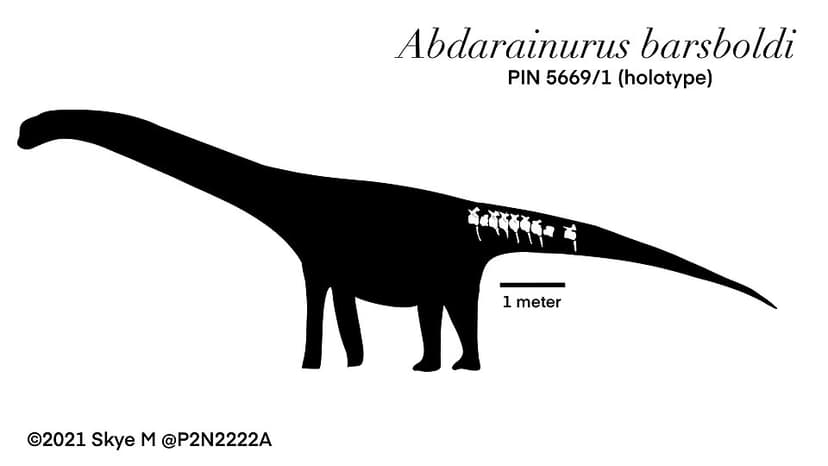
Abdarainurus
Abdarainurus is a genus of titanosaur dinosaur known from the Alagteeg Formation in Mongolia. The only known species, A. barsboldi, is currently considered an indeterminate titanosaur and might represent a previously undocumented lineage of Asian macronarians. Its existence is primarily evidenced by a limited number of tail vertebrae.
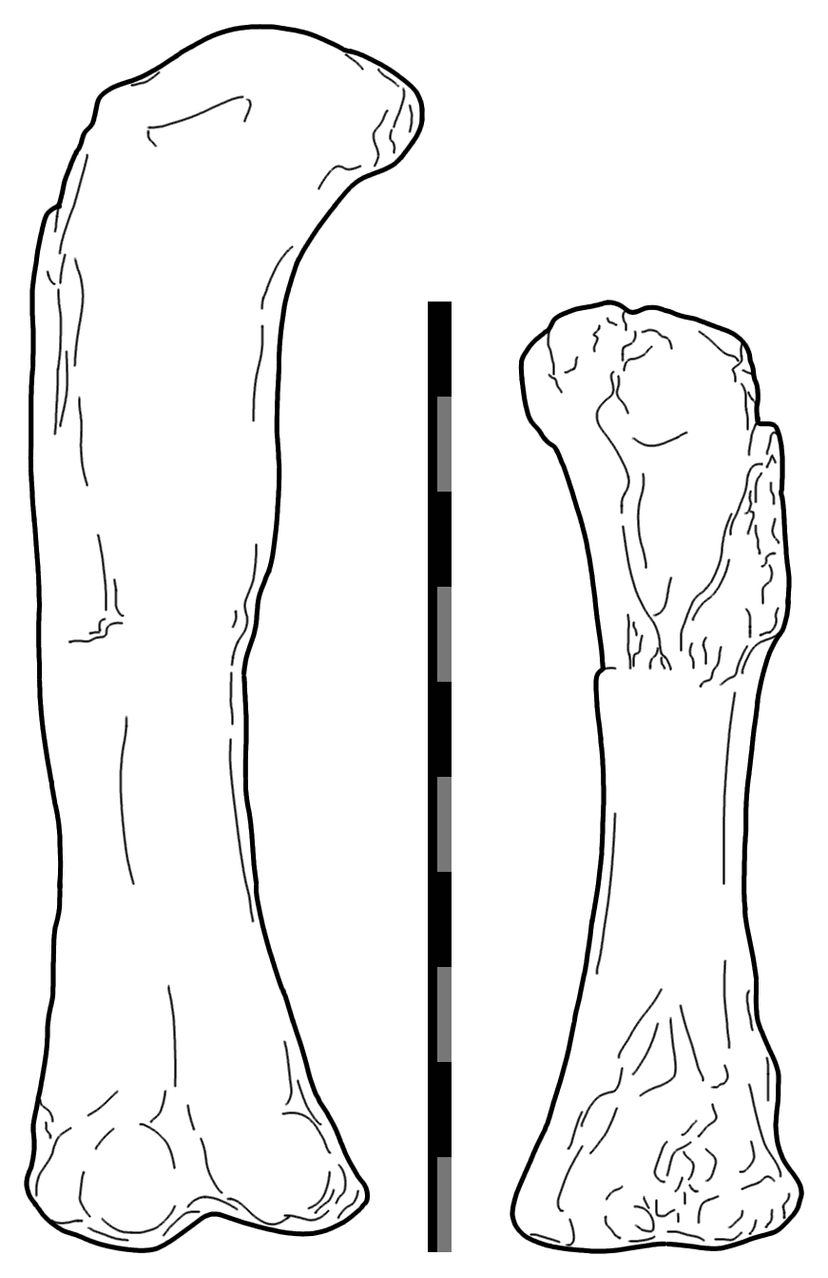
Aegyptosaurus
Aegyptosaurus was a genus of sauropod dinosaur that lived in Africa approximately 95 million years ago during the Late Cretaceous Period. Its fossils, though largely destroyed during World War II, were first discovered in Egypt and have also been found in Niger. The dinosaur is estimated to have been around 15 meters long and weighed about 7 tonnes.

Aepisaurus
Aepisaurus was a genus of sauropod dinosaur that lived in France during the Early Cretaceous period, approximately 100.5 million years ago. It is considered an obscure and poorly understood dinosaur, known only from a single humerus, which is now partially lost. Due to the limited fossil evidence, its exact taxonomic placement remains uncertain.