
Anhuilong
Herbivore·Cretaceous·Anhui province, China·Quadrupedal
Anhuilong is a genus of mamenchisaurid dinosaur discovered in the Hongqin Formation of Anhui province, China. The genus currently contains only one described species, Anhuilong diboensis, known from fossilized forelimb elements. Its distinct features, particularly in the humerus and ulna, help distinguish it from other sauropods.
Key Facts
- ›Anhuilong means "Anhui dragon".
- ›It is known from the Hongqin Formation in Anhui province, China.
- ›Only one species, Anhuilong diboensis, has been described.
- ›The holotype consists of a forelimb, including the humerus, ulna, and radius.
- ›Anhuilong is classified as a mamenchisaurid dinosaur.
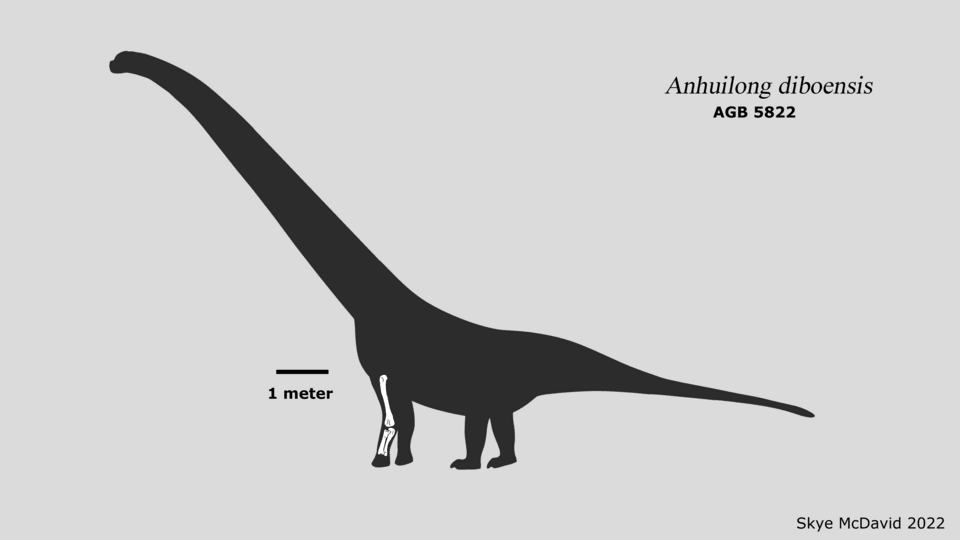
- Forelimb elements are known.
- Distinctive ratios of humerus widths to length.
- Unique deltopectoral crest orientation on the humerus.
- Lateral accessory condyle on the humerus is more robust than the medial one.
- Elliptical cross-sectional shape of the ulna at mid-shaft.
Huangshanlong, Omeisaurus Tianfuensis
China
About Anhuilong
Anhuilong is a genus of dinosaur belonging to the mamenchisaurid family, a group of long-necked, herbivorous sauropods. Its name, meaning "Anhui dragon," directly reflects its discovery in Anhui province, China. The genus is currently represented by a single species, Anhuilong diboensis.
Discovery and Paleontology
The known fossil remains of Anhuilong consist of a forelimb, specifically a left humerus, ulna, and radius, designated as the holotype specimen. Detailed examination of these bones reveals several distinguishing features. These include specific ratios comparing the width of the humerus at its proximal, mid-shaft, and distal ends to its overall length. Furthermore, the orientation of the lateral edge of the deltopectoral crest on the humerus and the relative robustness of the lateral accessory condyle are unique characteristics. The ulna also possesses an elliptical cross-section at its mid-shaft, with a notably high ratio of transverse to craniocaudal diameter compared to other mamenchisaurids.
Classification and Relationships
Phylogenetic analyses place Anhuilong within the Mamenchisauridae family. Studies by Ren et al. in 2020 recovered Anhuilong as the sister taxon to Huangshanlong, another mamenchisaurid. The closest relative to this pair was identified as Omeisaurus tianfuensis, suggesting a close evolutionary connection among these Chinese sauropods.
Source: Wikipedia ↗
Frequently Asked Questions
What does the name Anhuilong mean?
The name Anhuilong translates to "Anhui dragon." This name reflects its discovery location in Anhui province, China, and its classification as a dinosaur.
Where were the fossils of Anhuilong found?
Fossils of Anhuilong were discovered in the Hongqin Formation, located in Anhui province, China. This formation is the geological context from which this dinosaur is known.
What fossils have been found for Anhuilong?
The known fossil material for Anhuilong consists of a forelimb, specifically the left humerus, ulna, and radius. This holotype specimen (AGB 5822) provides the primary evidence for the genus's existence and characteristics.
What other dinosaurs are closely related to Anhuilong?
Phylogenetic analyses suggest that Anhuilong is the sister taxon to Huangshanlong. The closest relative to this pair is Omeisaurus tianfuensis, indicating a close evolutionary relationship within the mamenchisaurid group.
Related Dinosaur species
Abdarainurus
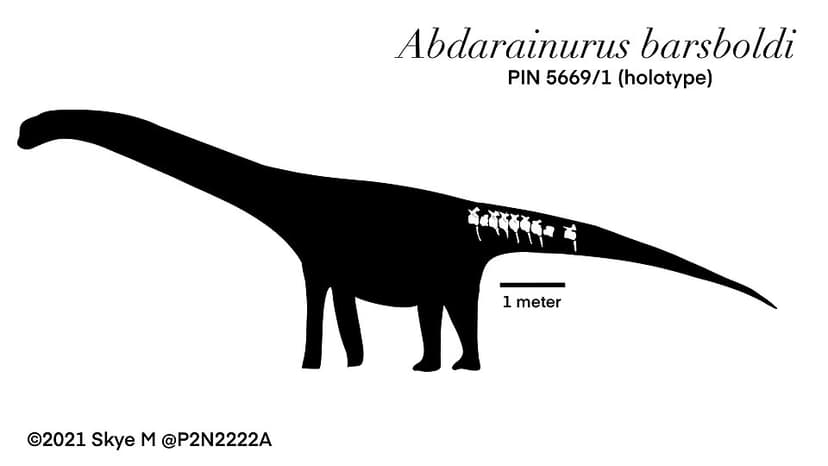
Abdarainurus is a genus of titanosaur dinosaur known from the Alagteeg Formation in Mongolia. The only known species, A. barsboldi, is currently considered an indeterminate titanosaur and might represent a previously undocumented lineage of Asian macronarians. Its existence is primarily evidenced by a limited number of tail vertebrae.
Aegyptosaurus
Aegyptosaurus was a genus of sauropod dinosaur that lived in Africa approximately 95 million years ago during the Late Cretaceous Period. Its fossils, though largely destroyed during World War II, were first discovered in Egypt and have also been found in Niger. The dinosaur is estimated to have been around 15 meters long and weighed about 7 tonnes.

Aepisaurus
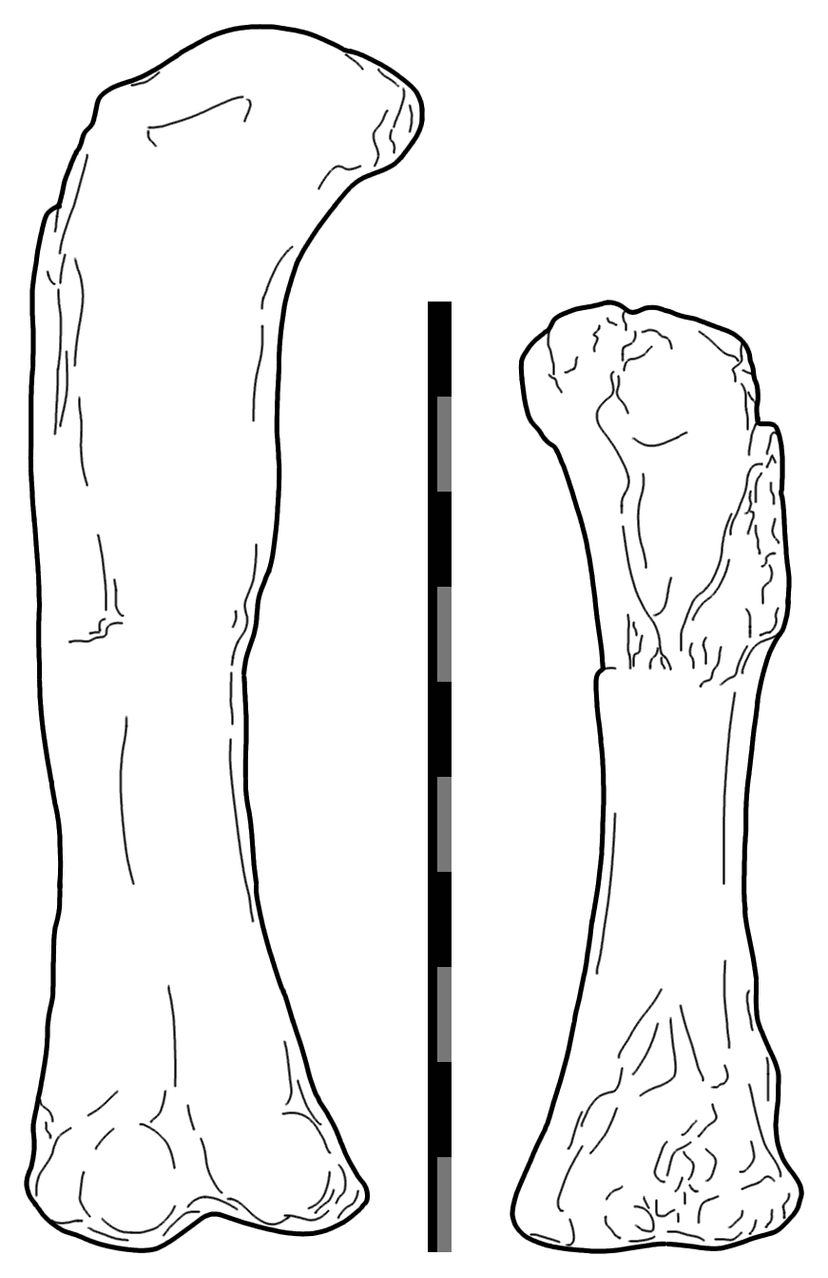
Aepisaurus was a genus of sauropod dinosaur that lived in France during the Early Cretaceous period, approximately 100.5 million years ago. It is considered an obscure and poorly understood dinosaur, known only from a single humerus, which is now partially lost. Due to the limited fossil evidence, its exact taxonomic placement remains uncertain.