
Animantarx
Animantarx was a herbivorous ankylosaurian dinosaur that lived in western North America during the Early and Late Cretaceous periods. Known for its heavily armored body and lack of a tail club, this quadrupedal dinosaur is estimated to have been around 3 meters (10 feet) in length. Its discovery in the Cedar Mountain Formation of Utah was unique, stemming from a radiological survey that detected unusual radioactivity in the fossil-bearing rock.
Key Facts
- ›Animantarx was a quadrupedal herbivore belonging to the nodosaurid ankylosaur group.
- ›It was characterized by heavy body armor but lacked a tail club.
- ›Fossils were discovered in the Mussentuchit Member of the Cedar Mountain Formation in Utah.
- ›The dinosaur lived during the late Albian through early Cenomanian stages of the Late Cretaceous Period, approximately 106 to 97 million years ago.
- ›Its skull measured about 25 cm (10 inches) long, suggesting a total body length of no more than 3 meters (10 feet).
- ›The discovery was facilitated by detecting radioactive anomalies in the rock using a radiological survey.
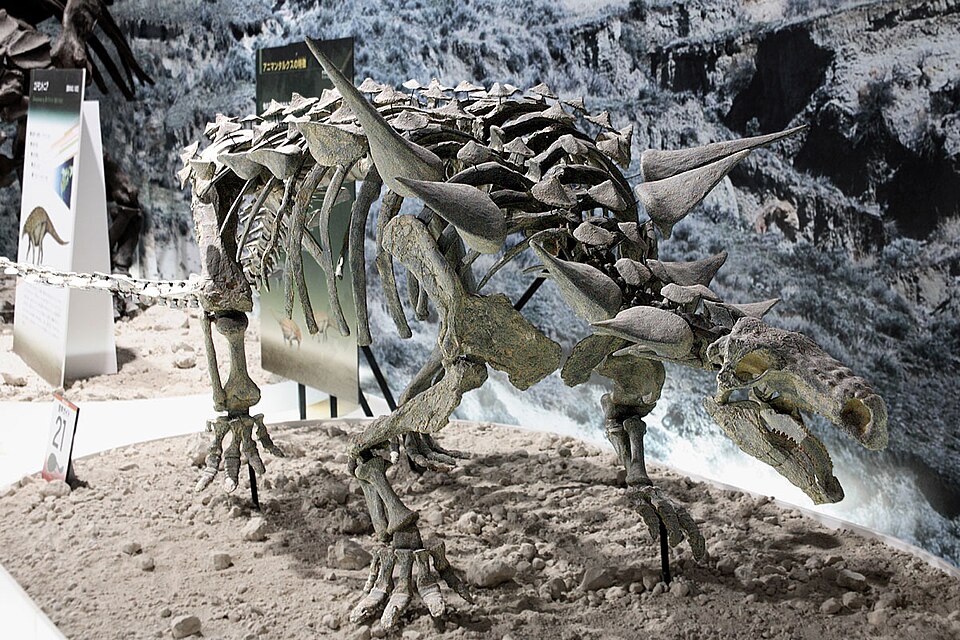
- Quadrupedal
- Covered in heavy armor scutes
- Lacked a tail club
- Skull length approximately 25 cm
- Estimated total length of no more than 3 meters
- Highly domed skull back
- Small horns on postorbital and quadratojugal bones
- Mandible armored on only half its length
Edmontonia, Gastonia, Peloroplites, Sauropelta
Western North America
About Animantarx
Animantarx is a genus of nodosaurid ankylosaurian dinosaur that roamed western North America during the Early and Late Cretaceous periods. The name itself, derived from Latin, translates to 'living citadel,' a fitting description for a dinosaur renowned for its extensive armor plating. Unlike some of its ankylosaur relatives, Animantarx did not possess a tail club, but its body was covered in heavy scutes, contributing to its formidable defense.
Discovery and Characteristics
The single known specimen of Animantarx was discovered in the Mussentuchit Member of the Cedar Mountain Formation in Utah. The discovery was unique, as the fossil remains were located through a radiological survey that detected higher levels of radioactivity in the area, suggesting the bones themselves were slightly radioactive. The recovered fossils include parts of the skull, jaw, vertebrae, and limb elements. These remains reveal key characteristics such as a highly domed skull back, small horns, and a partially armored mandible. Based on its skull, which measures about 25 cm (10 inches) in length, Animantarx is estimated to have been no more than 3 meters (10 feet) long.
Paleoenvironment and Classification
Fossils from the Mussentuchit Member indicate a floodplain environment, with the presence of aquatic animals like fish and frogs alongside terrestrial vertebrates. Animantarx lived during the late Albian through early Cenomanian stages, approximately 106 to 97 million years ago. It is classified as a nodosaurid ankylosaur, though its precise relationships within the family are still being studied. Some analyses suggest it may be the sister taxon to Edmontonia.
Diet and Locomotion
As a herbivore, Animantarx subsisted on plant matter. Its locomotion was quadrupedal, meaning it walked on all four limbs. Its slow-moving nature, combined with its heavy armor, would have provided protection against predators in its ancient ecosystem.
Source: Wikipedia ↗
Frequently Asked Questions
What does the name Animantarx mean?
The name Animantarx is derived from the Latin words 'animatus' (living or animated) and 'arx' (fortress or citadel). This name reflects the dinosaur's armored nature, referencing its perceived unassailability.
Where were Animantarx fossils found?
Fossils of Animantarx were discovered in the Mussentuchit Member of the Cedar Mountain Formation in eastern Utah, USA. This geological formation is known for its rich fossil record from the Cretaceous period.
What did Animantarx eat?
Animantarx was a herbivore, meaning it primarily consumed plants. As a nodosaurid ankylosaur, it would have grazed on vegetation available in its floodplain habitat.
How large was Animantarx?
Based on the skull length of approximately 25 cm (10 inches), Animantarx is estimated to have been no more than 3 meters (10 feet) long. It was a relatively stocky, quadrupedal dinosaur.
What were the key physical characteristics of Animantarx?
Animantarx was a quadrupedal herbivore covered in heavy armor scutes, but it did not possess a tail club. Distinctive features include a highly domed skull back, small horns on the postorbital and quadratojugal bones, and a partially armored mandible.
When did Animantarx live?
Animantarx lived during the late Albian through early Cenomanian stages of the Late Cretaceous Period, an interval estimated to be between 106 and 97 million years ago. This places it in the Early and Late Cretaceous.
Related Dinosaur species

Cedarosaurus
Cedarosaurus was a nasal-crested macronarian sauropod dinosaur that lived during the Early Cretaceous Period. Its fossils were discovered in eastern Utah and it is known for its distinct vertebrae and forelimb bones, which led to its classification as a new genus. This herbivore is estimated to have reached lengths of up to 15 meters and weighed up to 10 metric tons.
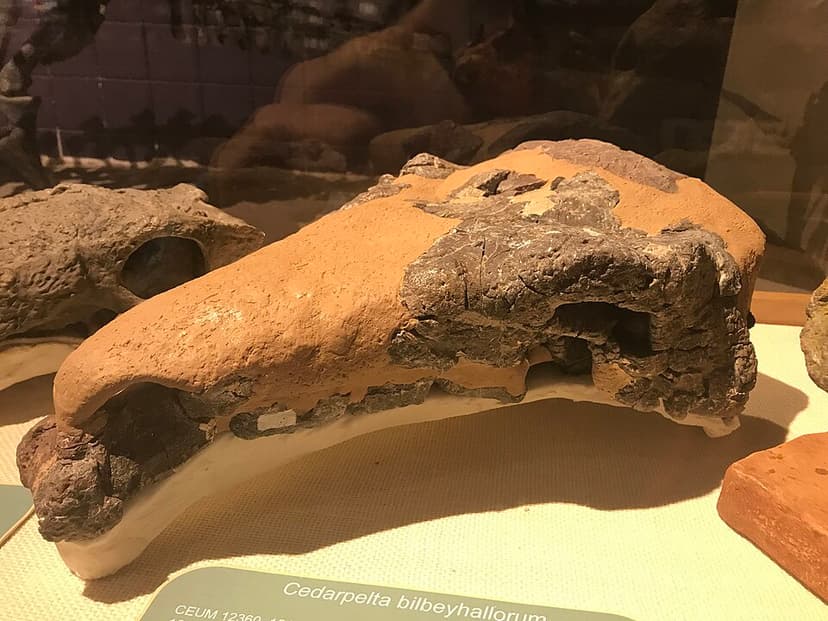
Cedarpelta
Cedarpelta is an extinct genus of basal ankylosaurid dinosaur that lived in Utah during the Late Cretaceous period. Known from multiple specimens, including partial skulls and postcranial material, it is notable for its skull lacking extensive ornamentation and having unfused cranial bones. This dinosaur is estimated to have been around 7 meters long and weighed approximately 5 tonnes.

Adelolophus
Adelolophus is a genus of lambeosaurine dinosaur, a type of "duck-bill" known for its cranial crests, that lived during the Late Cretaceous period in what is now Utah, USA. The only known species, *Adelolophus hutchisoni*, is represented by a partial maxilla (upper jaw bone). It is significant as the oldest known lambeosaur remains from North America and a member of the Parasaurolophini tribe, indicating a close relationship with dinosaurs like Parasaurolophus.