
Cedarpelta
Cedarpelta is an extinct genus of basal ankylosaurid dinosaur that lived in Utah during the Late Cretaceous period. Known from multiple specimens, including partial skulls and postcranial material, it is notable for its skull lacking extensive ornamentation and having unfused cranial bones. This dinosaur is estimated to have been around 7 meters long and weighed approximately 5 tonnes.
Key Facts
- ›Cedarpelta lived in Utah during the Late Cretaceous period (Cenomanian to lower Turonian stages).
- ›Its estimated length is 7 meters (23 feet) and its weight is 5 tonnes (11,023 lbs).
- ›The skull of Cedarpelta is characterized by a lack of extensive cranial ornamentation and unfused individual skull bones.
- ›It possessed premaxillary teeth, a plesiomorphic trait inherited from earlier Ornithischia.
- ›The closure of the lateral temporal fenestra (an opening behind the eye) is a derived characteristic found in ankylosaurid ankylosaurians.
- ›Fossils were discovered in the Mussentuchit Member of the Cedar Mountain Formation.
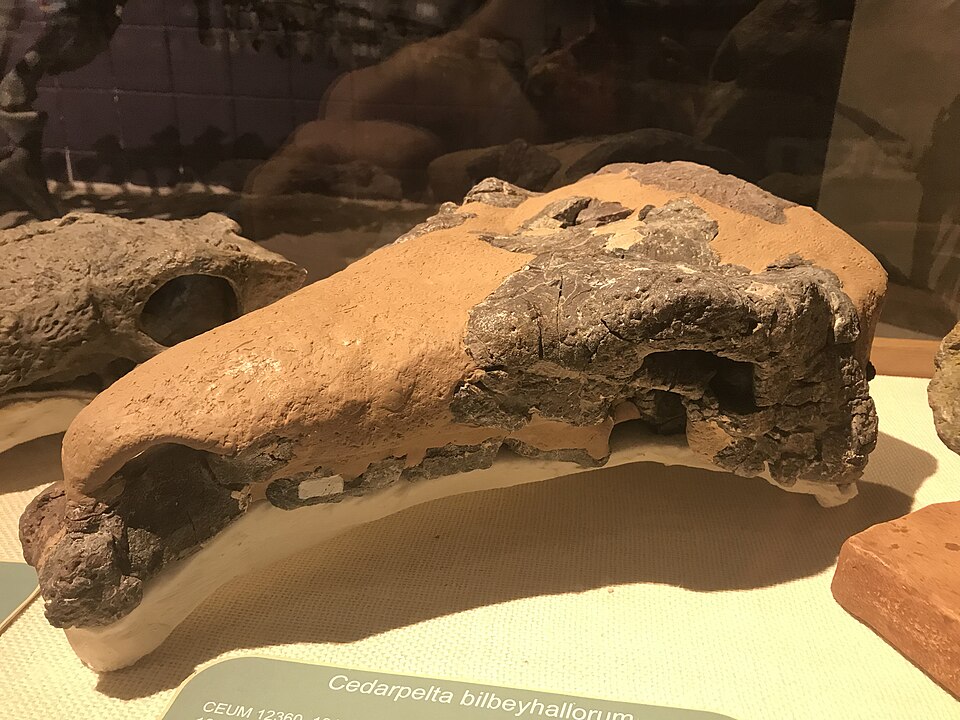
- Estimated length of 7 meters.
- Estimated weight of 5 tonnes.
- Skull lacks extensive cranial ornamentation.
- Individual skull bones are not completely fused.
- Possesses premaxillary teeth.
- Skull length estimated at roughly 60 centimeters.
Gobisaurus, Shamosaurus, Liaoningosaurus, Aletopelta, Chuanqilong, Peloroplites, Pawpawsaurus, Silvisaurus, Sauropelta
North America
About Cedarpelta
Cedarpelta is an extinct genus of basal ankylosaurid dinosaur that roamed the land of what is now Utah during the Late Cretaceous period. Specifically, it lived from the Cenomanian to the lower Turonian stages, approximately 98.2 to 93 million years ago, in an area now known as the Mussentuchit Member of the Cedar Mountain Formation. The genus is represented by its type and only species, Cedarpelta bilbeyhallorum, known from multiple fossil specimens that include partial skulls and postcranial material.
Discovery and Naming
The partial remains of Cedarpelta were discovered by Evan Hall and Sue Ann Bilbey at the CEM site near the Price River in Carbon County, Utah. Initially thought to be from a different geological layer, more recent dating places the fossils firmly within the Mussentuchit Member. The discovery was reported in 1998, and the dinosaur was formally described and named in 2001 by Kenneth Carpenter, James Kirkland, Don Burge, and John Bird. The generic name, Cedarpelta, reflects its discovery in the Cedar Mountain Formation and the Greek word 'pelte' for 'small shield.' The specific epithet, bilbeyhallorum, honors the discoverers.
Description and Characteristics
Cedarpelta is estimated to have reached a length of about 7 meters (23 feet) and a weight of approximately 5 tonnes (11,023 lbs). A distinctive feature of Cedarpelta is its skull, which lacks extensive cranial ornamentation. Unusually for ankylosaurs, the individual bones of the skull were not completely fused, offering a unique window into their anatomy for paleontologists. It possessed six conical teeth in each premaxilla and eighteen teeth in the maxilla. The presence of premaxillary teeth is considered a primitive trait, while the closure of the lateral temporal fenestra is a more advanced characteristic found in ankylosaurids.
Classification
Paleontological classifications have placed Cedarpelta within the Ankylosauridae family. Some interpretations suggest it may be one of the most basal or earliest branching members of this group. Other studies have proposed it could also be considered a basal member of the Nodosauridae family. Its position within ankylosaurian phylogeny continues to be a subject of research, with various analyses placing it in different relationships with other genera like Gobisaurus, Shamosaurus, and Chuanqilong.
Source: Wikipedia ↗
Frequently Asked Questions
When did Cedarpelta live?
Cedarpelta lived during the Late Cretaceous period, specifically from the Cenomanian to the lower Turonian stages. This time frame is estimated to be between 98.2 and 93 million years ago.
Where were Cedarpelta fossils found?
Fossils of Cedarpelta were discovered in Utah, within what is now known as the Mussentuchit Member of the Cedar Mountain Formation. The initial discoveries were made near the Price River in Carbon County.
What is the estimated size of Cedarpelta?
Estimates for Cedarpelta suggest an average length of about 7 meters (23 feet) and a weight of approximately 5 tonnes (11,023 lbs). Some earlier estimates were slightly higher.
What made Cedarpelta's skull unique?
The skull of Cedarpelta is notable for its lack of extensive cranial ornamentation. Uniquely among known ankylosaurs, its individual skull bones were not completely fused together, allowing for detailed examination of its anatomy.
What does the name Cedarpelta mean?
The genus name, Cedarpelta, is derived from the Cedar Mountain Formation where it was found and the Greek word 'pelte,' meaning 'small shield.' The species name, bilbeyhallorum, honors Sue Ann Bilbey and Evan Hall, who discovered the remains.
What group of dinosaurs does Cedarpelta belong to?
Cedarpelta is classified as a basal ankylosaurid dinosaur. Some studies have also interpreted it as a basal member of the Nodosauridae family.
Related Dinosaur species
Animantarx
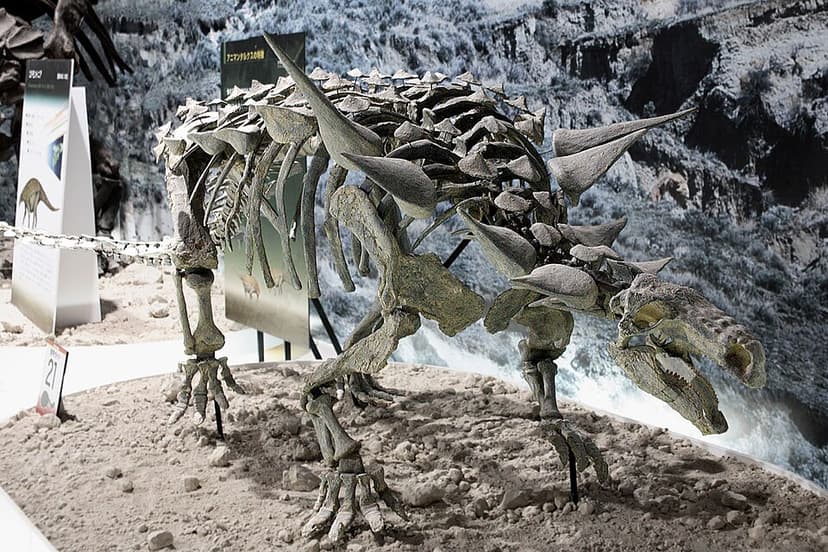
Animantarx was a herbivorous ankylosaurian dinosaur that lived in western North America during the Early and Late Cretaceous periods. Known for its heavily armored body and lack of a tail club, this quadrupedal dinosaur is estimated to have been around 3 meters (10 feet) in length. Its discovery in the Cedar Mountain Formation of Utah was unique, stemming from a radiological survey that detected unusual radioactivity in the fossil-bearing rock.

Cedarosaurus
Cedarosaurus was a nasal-crested macronarian sauropod dinosaur that lived during the Early Cretaceous Period. Its fossils were discovered in eastern Utah and it is known for its distinct vertebrae and forelimb bones, which led to its classification as a new genus. This herbivore is estimated to have reached lengths of up to 15 meters and weighed up to 10 metric tons.

Adelolophus
Adelolophus is a genus of lambeosaurine dinosaur, a type of "duck-bill" known for its cranial crests, that lived during the Late Cretaceous period in what is now Utah, USA. The only known species, *Adelolophus hutchisoni*, is represented by a partial maxilla (upper jaw bone). It is significant as the oldest known lambeosaur remains from North America and a member of the Parasaurolophini tribe, indicating a close relationship with dinosaurs like Parasaurolophus.