
Cedarosaurus
Cedarosaurus was a nasal-crested macronarian sauropod dinosaur that lived during the Early Cretaceous Period. Its fossils were discovered in eastern Utah and it is known for its distinct vertebrae and forelimb bones, which led to its classification as a new genus. This herbivore is estimated to have reached lengths of up to 15 meters and weighed up to 10 metric tons.
Key Facts
- ›Cedarosaurus means "Cedar lizard", named after the Cedar Mountain Formation where it was found.
- ›It was a macronarian sauropod, belonging to the brachiosaurid family.
- ›Fossils were discovered in 1996 in eastern Utah, USA.
- ›Estimated to be up to 15 meters long and weigh up to 10 metric tons.
- ›Possessed unusual lateral fossae on its middle tail vertebrae, similar to other sauropods.
- ›Associated with gastroliths, stones likely used to aid digestion.

- Nasal crest
- More gracile ulna and radius than Venenosaurus
- Metatarsal ii more gracile
- Middle tail vertebrae's neural spines angled anteriorly
- Less well-developed lateral fossae on vertebral centra
Eucamerotus, Brachiosaurus, Astrodon, Venenosaurus, Gondwanatitan, Aeolosaurus
North America
About Cedarosaurus
Cedarosaurus is a genus of sauropod dinosaur belonging to the macronarian group, distinguished by its nasal crest. It roamed the Earth during the Early Cretaceous Period, specifically the Valanginian stage. The genus name, meaning "Cedar lizard," reflects the discovery of its fossils within the Cedar Mountain Formation in eastern Utah.
Description and Classification
Classified as a brachiosaurid sauropod, Cedarosaurus possessed distinct anatomical features that set it apart from previously known North American brachiosaurids. Its vertebrae and forelimb bones, including a more gracile ulna, radius, and metatarsal II compared to its relative Venenosaurus, were significant in establishing it as a new genus. The middle tail vertebrae feature neural spines that angle forward when aligned, a characteristic also seen in other sauropods like Gondwanatitan and Aeolosaurus. Like some other sauropods, Cedarosaurus exhibited less well-developed lateral fossae on its vertebral centra, which appeared as depressions on the external walls.
Size and Diet
Estimates suggest that Cedarosaurus could reach impressive dimensions, with a maximum length of up to 15 meters (49 feet) and a weight of up to 10 metric tons (11 short tons). As a herbivore, its digestive system likely benefited from the presence of gastroliths. Studies have documented numerous gastroliths found in association with Cedarosaurus specimens, indicating that these swallowed stones played a role in grinding ingested plant material. The gastroliths varied in size and composition, including chert, sandstone, siltstone, and quartzite, and their high surface area-to-volume ratio in larger specimens points to their efficiency in aiding digestion.
Source: Wikipedia ↗
Frequently Asked Questions
What does the name Cedarosaurus mean?
The name Cedarosaurus means "Cedar lizard". It was named in reference to the Cedar Mountain Formation in Utah, where its fossils were discovered.
When did Cedarosaurus live?
Cedarosaurus lived during the Early Cretaceous Period, specifically the Valanginian stage.
Where were Cedarosaurus fossils found?
The primary discovery location for Cedarosaurus fossils was eastern Utah, within the Yellow Cat Member of the Cedar Mountain Formation.
What did Cedarosaurus eat?
Cedarosaurus was a herbivore. Evidence suggests it may have used gastroliths, or swallowed stones, to help grind ingested plant material in its digestive tract.
How large was Cedarosaurus?
Gregory S. Paul estimated in 2010 that Cedarosaurus could reach a maximum length of up to 15 meters (49 ft) and a mass of up to 10 metric tons (11 short tons).
What are gastroliths and how are they related to Cedarosaurus?
Gastroliths are stones swallowed by animals to aid digestion. A study published in 2001 examined 115 gastroliths found in association with a Cedarosaurus specimen, suggesting they were used to grind plant material.
Related Dinosaur species
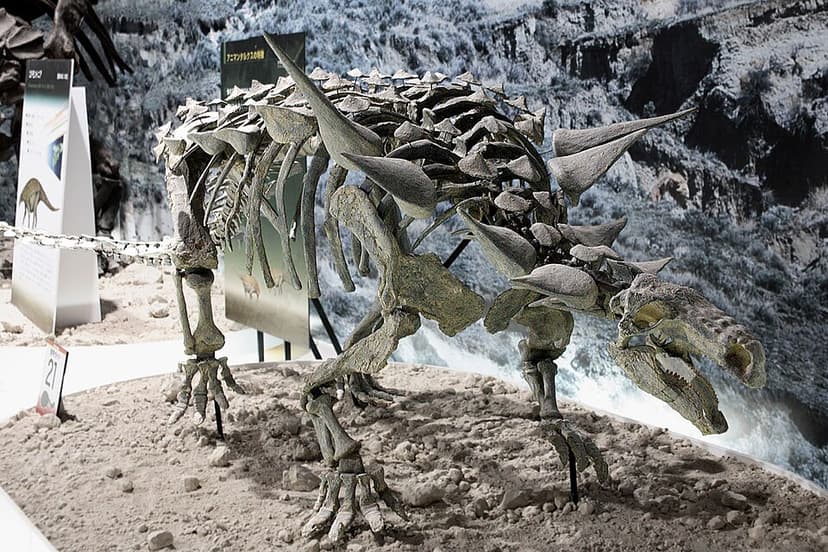
Animantarx
Animantarx was a herbivorous ankylosaurian dinosaur that lived in western North America during the Early and Late Cretaceous periods. Known for its heavily armored body and lack of a tail club, this quadrupedal dinosaur is estimated to have been around 3 meters (10 feet) in length. Its discovery in the Cedar Mountain Formation of Utah was unique, stemming from a radiological survey that detected unusual radioactivity in the fossil-bearing rock.
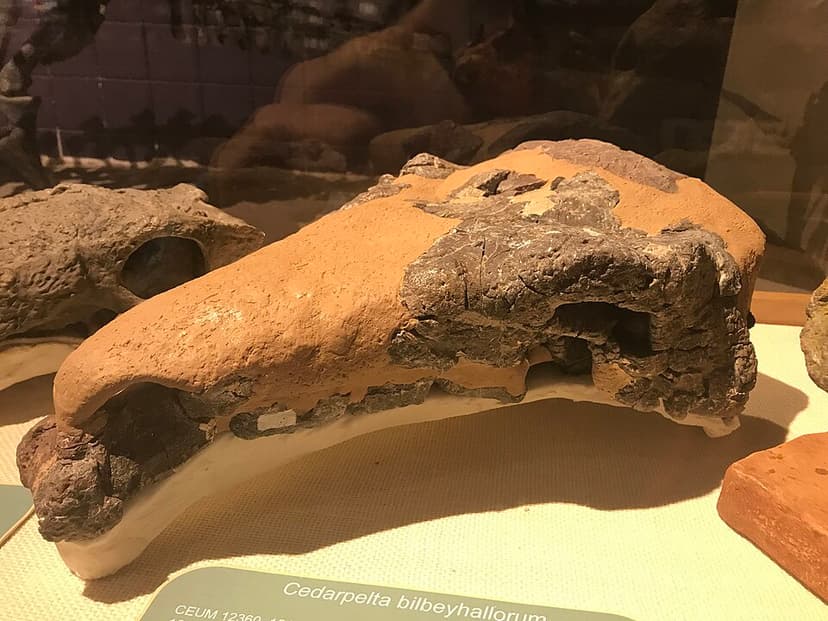
Cedarpelta
Cedarpelta is an extinct genus of basal ankylosaurid dinosaur that lived in Utah during the Late Cretaceous period. Known from multiple specimens, including partial skulls and postcranial material, it is notable for its skull lacking extensive ornamentation and having unfused cranial bones. This dinosaur is estimated to have been around 7 meters long and weighed approximately 5 tonnes.

Adelolophus
Adelolophus is a genus of lambeosaurine dinosaur, a type of "duck-bill" known for its cranial crests, that lived during the Late Cretaceous period in what is now Utah, USA. The only known species, *Adelolophus hutchisoni*, is represented by a partial maxilla (upper jaw bone). It is significant as the oldest known lambeosaur remains from North America and a member of the Parasaurolophini tribe, indicating a close relationship with dinosaurs like Parasaurolophus.