
Ankylosaurus
Herbivore·Cretaceous·Western North America (Montana, Wyoming, Alberta)·Quadrupedal
Ankylosaurus was a large, quadrupedal, armored dinosaur that lived at the very end of the Cretaceous Period in western North America. It is known for its extensive bony armor, including half-rings around its neck and a formidable tail club used for defense. Despite being the archetypal member of its group, Ankylosaurus possessed some unusual features and is considered among the last of the non-avian dinosaurs.
Key Facts
- ›Ankylosaurus was one of the last non-avian dinosaurs, living from approximately 70 to 66 million years ago.
- ›It was a heavily armored dinosaur, possessing bony plates (osteoderms) and a powerful tail club.
- ›Estimated to be between 6 and 8 meters long, it was one of the largest known ankylosaurids.
- ›Its broad muzzle and beak suggest it was a non-selective browser.
- ›The tail club was likely used for defense against predators or in combat with other Ankylosaurus.
- ›Fossils have been found in formations like Hell Creek and Lance in western North America.

- Quadrupedal with a broad, robust body.
- Low, wide skull with backward-pointing horns.
- Broad beak at the front of the jaws with small, leaf-shaped teeth.
- Covered in armor plates and bony half-rings on the neck.
- Possessed a large, bony club at the end of its tail.
- Estimated length of 6-8 meters.
- Estimated weight of 4.8-8 tonnes.
Anodontosaurus, Euoplocephalus
North America
About Ankylosaurus
Ankylosaurus is a genus of armored dinosaur that roamed western North America during the very end of the Cretaceous Period, approximately 70 to 66 million years ago. It is recognized as one of the last of the non-avian dinosaurs to exist before the mass extinction event. The genus name, Ankylosaurus, translates to "fused lizard" or "bent lizard," a reference to the fused bones in its skull and body, while the species name, magniventris, means "great belly" in Latin, describing its wide physique.
Description and Physical Characteristics
Ankylosaurus was a large, quadrupedal dinosaur, estimated to have been between 6 and 8 meters (20–26 feet) in length and weighing between 4.8 and 8 tonnes (5.3–8.8 short tons). It was characterized by its broad, robust body and a low, wide skull. Unlike many other ankylosaurs, its nostrils faced sideways. The front of its jaws featured a beak, with rows of small, leaf-shaped teeth located further back. A defining feature was its extensive armor plating, known as osteoderms, which covered its body. This included bony half-rings around its neck and, most notably, a large, formidable club at the end of its tail. Bones in its skull and other parts of its body were fused, enhancing their strength.
Diet and Behavior
Ankylosaurus is classified as a herbivore. Its broad muzzle suggests it was a non-selective browser, likely feeding on a variety of low-lying plant material. The sinuses and nasal chambers within its snout may have played a role in regulating heat and water balance, or potentially in vocalization. The powerful tail club is thought to have been a primary defensive mechanism, used to ward off predators or in intraspecific combat.
Discovery and Fossil Record
The first specimen of Ankylosaurus magniventris was discovered in 1906 in the Hell Creek Formation of Montana by an expedition led by paleontologist Barnum Brown, who formally described the genus in 1908. While a complete skeleton has never been found, a handful of specimens have been excavated, including skulls, vertebrae, armor plates, and, significantly, the only known tail club belonging to the genus. Other fossils have been found in formations across Montana, Wyoming, and Alberta, Canada. Despite its fame as the archetypal ankylosaurid, Ankylosaurus is known from fewer remains than some of its close relatives, such as Anodontosaurus and Euoplocephalus.
Source: Wikipedia ↗
Frequently Asked Questions
What does the name Ankylosaurus mean?
The genus name Ankylosaurus is derived from the Greek words 'ankulos' meaning 'bent' or 'crooked', and 'sauros' meaning 'lizard'. This name refers to the stiffness caused by the fusion of bones in its skull and body. The specific name, magniventris, comes from Latin and means 'great belly,' referencing the dinosaur's wide body.
How large was Ankylosaurus?
Ankylosaurus is estimated to have been between 6 and 8 meters (20-26 feet) long. Its weight is estimated to have ranged from 4.8 to 8 tonnes (5.3 to 8.8 short tons), making it one of the largest members of the ankylosaurid family.
What did Ankylosaurus eat?
Ankylosaurus had a broad beak at the front of its jaws and rows of small, leaf-shaped teeth further back. Its broad muzzle suggests it was a non-selective browser, meaning it likely consumed a variety of low-lying vegetation.
What was the purpose of Ankylosaurus's tail club?
The large, bony club at the end of Ankylosaurus's tail is believed to have been a defensive weapon. It could have been swung with considerable force to deter predators like Tyrannosaurus Rex or used in combat with other Ankylosaurus.
Where were Ankylosaurus fossils found?
Fossils of Ankylosaurus have been discovered in western North America, primarily in geological formations such as the Hell Creek, Lance, Scollard, Frenchman, and Ferris formations. These locations are in present-day Montana, Wyoming, and Alberta, Canada.
What kind of armor did Ankylosaurus have?
Ankylosaurus was covered in bony plates called osteoderms, embedded in its skin. It also possessed distinctive half-rings of armor around its neck and a large tail club. The exact arrangement of its body armor is not fully known, but it provided significant protection.
Related Dinosaur species
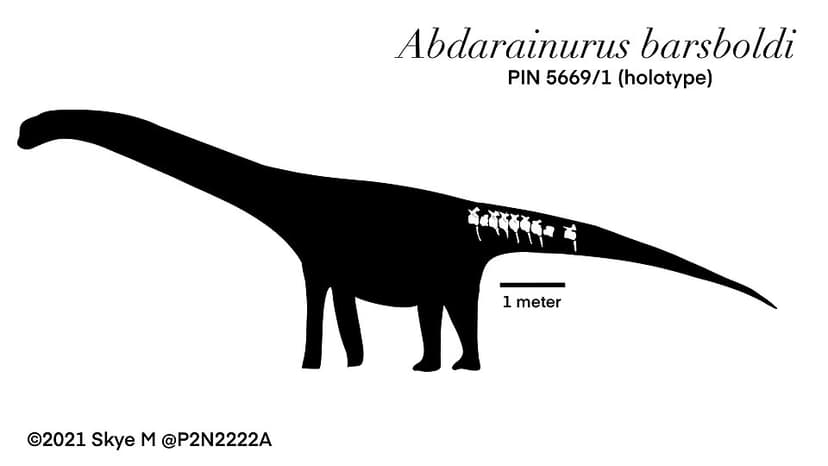
Abdarainurus
Abdarainurus is a genus of titanosaur dinosaur known from the Alagteeg Formation in Mongolia. The only known species, A. barsboldi, is currently considered an indeterminate titanosaur and might represent a previously undocumented lineage of Asian macronarians. Its existence is primarily evidenced by a limited number of tail vertebrae.
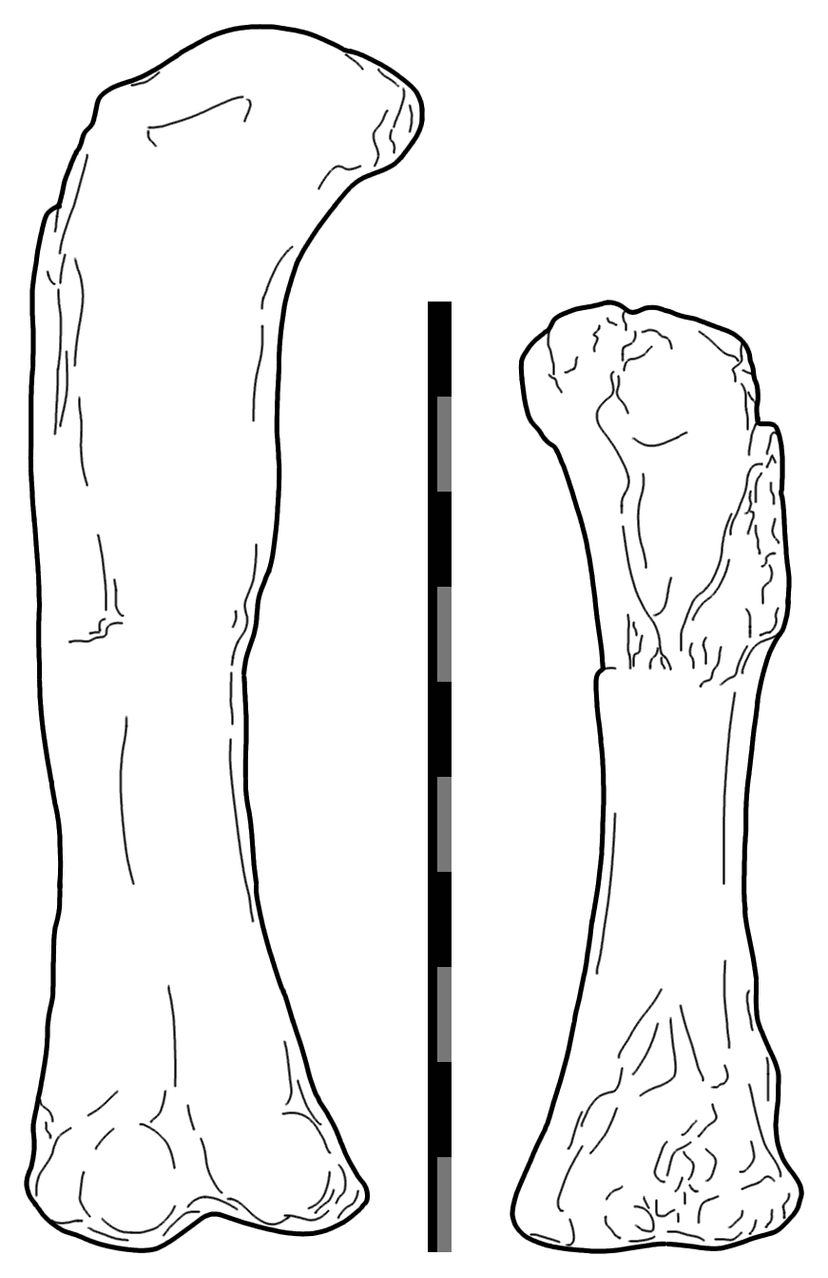
Aegyptosaurus
Aegyptosaurus was a genus of sauropod dinosaur that lived in Africa approximately 95 million years ago during the Late Cretaceous Period. Its fossils, though largely destroyed during World War II, were first discovered in Egypt and have also been found in Niger. The dinosaur is estimated to have been around 15 meters long and weighed about 7 tonnes.

Aepisaurus
Aepisaurus was a genus of sauropod dinosaur that lived in France during the Early Cretaceous period, approximately 100.5 million years ago. It is considered an obscure and poorly understood dinosaur, known only from a single humerus, which is now partially lost. Due to the limited fossil evidence, its exact taxonomic placement remains uncertain.