
Apatoraptor
Apatoraptor is a genus of caenagnathid dinosaur known from a single species, A. pennatus. Its name, "deceptive thief," reflects how its true identity was hidden for years. Discovered in Alberta, Canada, this dinosaur is notable for evidence of feathers.
Key Facts
- ›Apatoraptor pennatus is the only known species in the genus Apatoraptor.
- ›The genus name "Apatoraptor" means "deceptive thief" in Greek and Latin.
- ›Fossil evidence includes quill knobs on the ulna, indicating the presence of wings and feathers.
- ›It was discovered in the Campanian-aged Horseshoe Canyon Formation of Alberta, Canada.
- ›Apatoraptor is classified within the Caenagnathidae family, a group of oviraptorosaurs.

- Partial Skeleton With Skull
- Possessed Wings With Feathers
- Had Neck and Back Vertebrae, Ribs, Shoulder Girdle, Arm, Sternum, Belly Ribs, Pelvis, Thighbone, Shinbone, and Calfbone
Elmisaurus
North America
About Apatoraptor
Apatoraptor is a genus of caenagnathid dinosaur, with a single recognized species, Apatoraptor pennatus. The name "Apatoraptor" is a combination of the Greek goddess Apatè (deceit) and the Latin word "raptor" (robber), reflecting how the only known specimen initially concealed its unique identity for many years. The specific epithet "pennatus" is Latin for "feathered," a direct reference to the significant discovery of quill knobs on the ulna, which strongly indicate the presence of wings and feathers.
Discovery and Classification
The sole known specimen of Apatoraptor was unearthed in 1993 near Drumheller, Alberta, Canada, within the Campanian-aged Horseshoe Canyon Formation. Initially misidentified as an unimportant ornithomimid, its preparation was delayed and nearly abandoned. Research resumed in 2008, leading to the recognition that the fossil represented a new species. In 2016, Gregory F. Funston and Philip John Currie formally named and described Apatoraptor pennatus. The holotype specimen (TMP 1993.051.0001) consists of a largely articulated partial skeleton, including skull elements, vertebrae, arm bones, and parts of the hind limbs. Apatoraptor is classified within the Oviraptorosauria, specifically as a derived member of the Caenagnathidae family, possibly as a sister species to Elmisaurus.
Source: Wikipedia ↗
Frequently Asked Questions
What does the name Apatoraptor mean?
The name Apatoraptor translates to "deceptive thief." This name was chosen because the specimen initially hid its true identity as a new species for many years during its discovery and preparation.
What evidence suggests Apatoraptor had feathers?
Fossils of Apatoraptor show quill knobs on its ulna, which are attachment points for large feathers. This strongly indicates that the dinosaur possessed wings and was feathered.
Where were the fossils of Apatoraptor found?
The only known specimen of Apatoraptor was discovered in Alberta, Canada. Specifically, it was found in the Horseshoe Canyon Formation, a geological layer dating back to the Campanian age.
When was Apatoraptor discovered and named?
The skeleton was initially found in 1993, but preparation and research were sporadic. The species Apatoraptor pennatus was formally named and described in 2016 by paleontologists Gregory F. Funston and Philip John Currie.
What kind of dinosaur was Apatoraptor?
Apatoraptor was a theropod dinosaur belonging to the Caenagnathidae family. This family is part of the larger Oviraptorosauria group, known for their often bird-like features.
Related Dinosaur species

Colepiocephale
Colepiocephale, meaning "knucklehead," was a genus of pachycephalosaurid dinosaur that lived during the Late Cretaceous period in what is now Alberta, Canada. This dome-headed dinosaur is distinguished by specific cranial features, including a steeply down-turned parietal bone and the absence of certain bony shelves.

Caenagnathus
Caenagnathus was a large oviraptorosaurian dinosaur that lived during the Late Cretaceous period in what is now Alberta, Canada. Known from partial remains, it possessed a toothless beak and likely had a coat of feathers. Its classification has been complex, with debates about its relationship to other caenagnathids like Chirostenotes and Anzu.
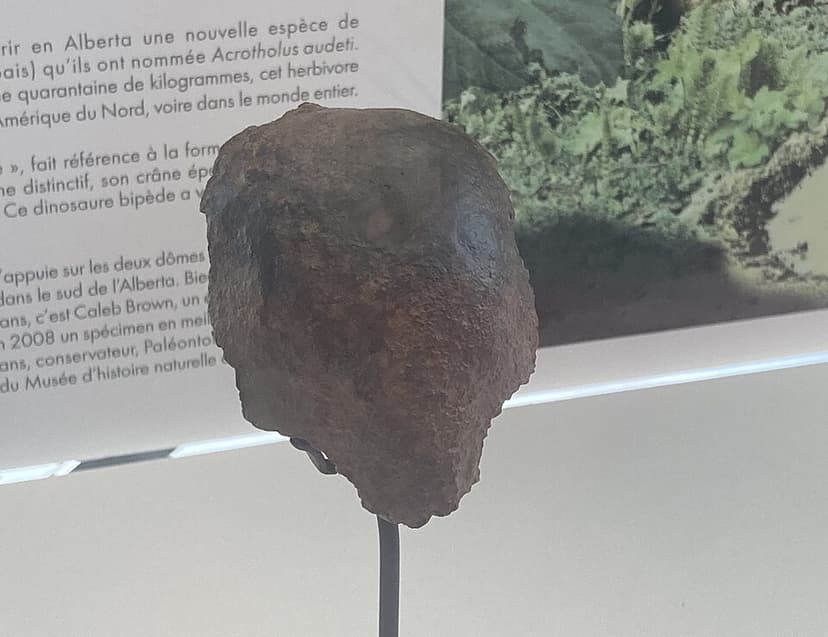
Acrotholus
Acrotholus is an extinct genus of pachycephalosaurian dinosaur that lived during the Santonian stage of the Late Cretaceous period in what is now Canada. It is notable for being one of the earliest known members of the pachycephalosaur family with a well-developed, dome-shaped skull. Acrotholus was a bipedal herbivore whose cranial dome has been theorized to have been used for intraspecies combat or display.