
Aquilops
Aquilops is an early herbivorous ceratopsian dinosaur that lived in North America during the Early Cretaceous period, roughly 109 to 104 million years ago. Discovered in Montana, its partial skull provided insights into the early evolution of neoceratopsian dinosaurs. The name "Aquilops" combines Latin and Greek for "eagle face," referencing its distinctive beaked snout.
Key Facts
- ›Aquilops was an early herbivorous ceratopsian dinosaur.
- ›Fossils were discovered in Carbon County, Montana, USA.
- ›The type species is Aquilops americanus.
- ›It lived approximately 109 to 104 million years ago during the Early Cretaceous.
- ›Estimated body length was around 60 cm (23.6 inches) with a weight of 1.5 kg (3.3 lb).
- ›Its scientific name means "eagle face" due to its beaked snout.

- Skull length of 84.2 mm.
- Estimated total body length of 60 cm.
- Estimated weight of 1.5 kg.
- Distinctive beaked snout with a downward-curving rostral bone.
- Arched keel and a bump on the front of the rostral bone.
- Concave upper jaw rim in side view.
- Antorbital fenestra twice as long as tall, with a pointed rear.
Leptoceratops, Liaoceratops, Psittacosaurids
North America
About Aquilops
Aquilops: An Early North American Ceratopsian
Aquilops is an early herbivorous ceratopsian dinosaur that inhabited North America during the Early Cretaceous period, approximately 109 to 104 million years ago. The discovery of a single partial skull in Montana has provided valuable insights into the evolutionary history of neoceratopsian dinosaurs.
Discovery and Naming
The fossil specimen, a partial skull, was discovered in 1997 by paleontologist Scott Madsen in Carbon County, southern Montana. Initially thought to belong to another species, further examination revealed it to be a new species to science. In 2014, the species was formally named and described by Andrew Farke and colleagues. The genus name, Aquilops, is a combination of the Latin "aquila" (eagle) and Greek "ops" (face), referring to its beaked snout. The species name, americanus, highlights its significance as the first unequivocal basal neoceratopsian found in America.
Physical Characteristics and Classification
The skull of Aquilops is relatively small, measuring 84.2 mm (3.3 inches) in length. Based on comparisons with related species, the individual specimen is believed to have been a subadult, potentially representing about 60% of its adult size. Estimates suggest an adult Aquilops would have reached a body length of approximately 60 cm (23.6 inches) and weighed around 1.5 kg (3.3 lb). Distinctive features include a downward-curving rostral bone forming the beak, a keel on its upper surface, and a concave upper jaw rim. Its classification places it as a basal neoceratopsian, meaning it was an early member of the group that would later include the more familiar horned dinosaurs like Triceratops. The presence of such an early neoceratopsian in North America suggests a migration event from Asia during the late Early Cretaceous.
Source: Wikipedia ↗
Frequently Asked Questions
When did Aquilops live?
Aquilops lived during the Early Cretaceous period, approximately 109 to 104 million years ago. This places it in the middle to late Albian stage of the Cretaceous.
Where were Aquilops fossils found?
The single known fossil of Aquilops, a partial skull, was discovered in Carbon County, southern Montana, USA. It was found within the Cloverly Formation.
What does the name Aquilops mean?
The generic name Aquilops is derived from the Latin word "aquila" meaning "eagle" and the Greek word "ops" meaning "face." This name refers to the dinosaur's beaked snout.
What did Aquilops eat?
Aquilops is classified as an herbivorous dinosaur. This means its diet primarily consisted of plants.
How large was Aquilops?
Based on comparisons with related species and the subadult holotype, Aquilops is estimated to have had a total body length of about 60 cm (23.6 inches) and weighed around 1.5 kg (3.3 lb).
What are the key physical characteristics of Aquilops?
Aquilops possessed a beaked snout. Unique traits include a rostral bone that curves downwards with an arched keel and a bump on its front, and an upper jaw rim that is concave in side view. The skull opening, the antorbital fenestra, is twice as long as it is tall with a pointed rear.
Related Dinosaur species
Ceratops
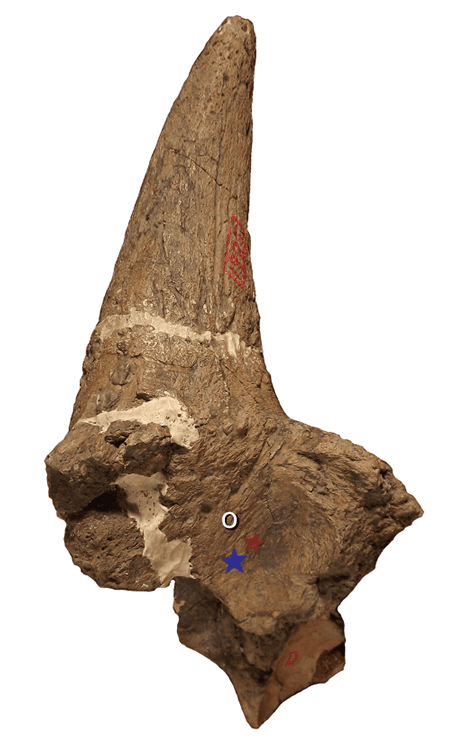
Ceratops is a dubious genus of herbivorous ceratopsian dinosaur from the Late Cretaceous period, known from fossils found in Montana's Judith River Formation. Despite its poorly understood nature, Ceratops holds historical significance as the type genus for both the Ceratopsia and Ceratopsidae groups. Its scientific name, meaning 'horn face,' reflects its most prominent feature.
Aublysodon
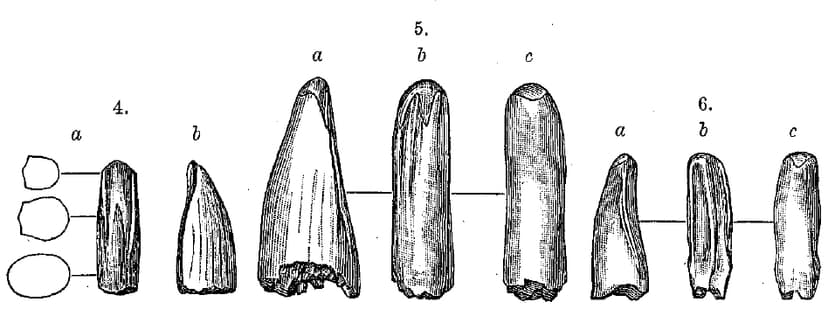
Aublysodon is a dubious genus of carnivorous dinosaurs known from isolated teeth discovered in the Judith River Formation of Montana, dating to the late Campanian stage of the Late Cretaceous period. The type species, Aublysodon mirandus, was named by Joseph Leidy in 1868, but its classification is uncertain as the primary fossil evidence is a single lost tooth. Similar teeth are often attributed to juvenile tyrannosaurids, potentially belonging to genera like Daspletosaurus.
Avisaurus
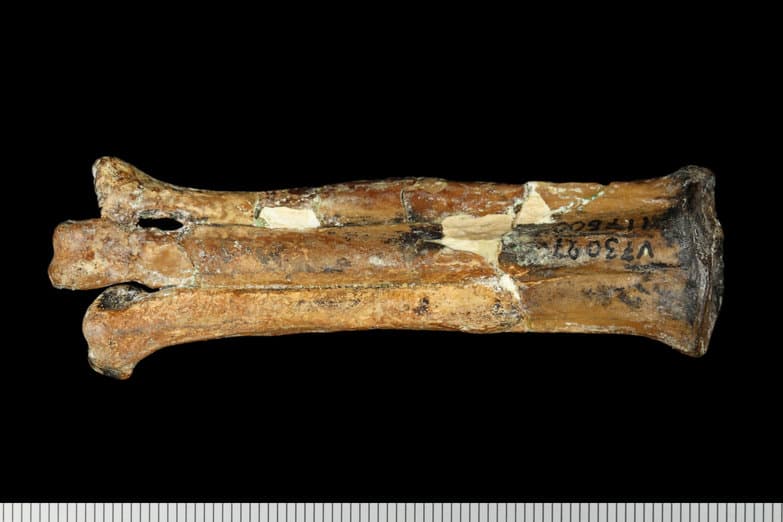
Avisaurus is a genus of enantiornithine avialans that lived in North America during the Late Cretaceous period. This "bird lizard" is known for its large size among enantiornithines and its predatory nature, with inwardly curved claws suggesting it preyed on small vertebrates.