
Avisaurus
Avisaurus is a genus of enantiornithine avialans that lived in North America during the Late Cretaceous period. This "bird lizard" is known for its large size among enantiornithines and its predatory nature, with inwardly curved claws suggesting it preyed on small vertebrates.
Key Facts
- ›Avisaurus lived in North America during the Late Cretaceous, making it one of the last enantiornithines.
- ›Its name, "bird lizard," reflects its classification as an avialan.
- ›Fossils have been found in the Hell Creek Formation and Upper two Medicine Formation of Montana, USA.
- ›Avisaurus was a relatively large enantiornithine, with estimated weights up to 1.7 kg.
- ›Inwardly curved claws suggest a predatory diet, likely consisting of small vertebrates.
- ›It belonged to the enantiornithine family Avisauridae, which included South American relatives.
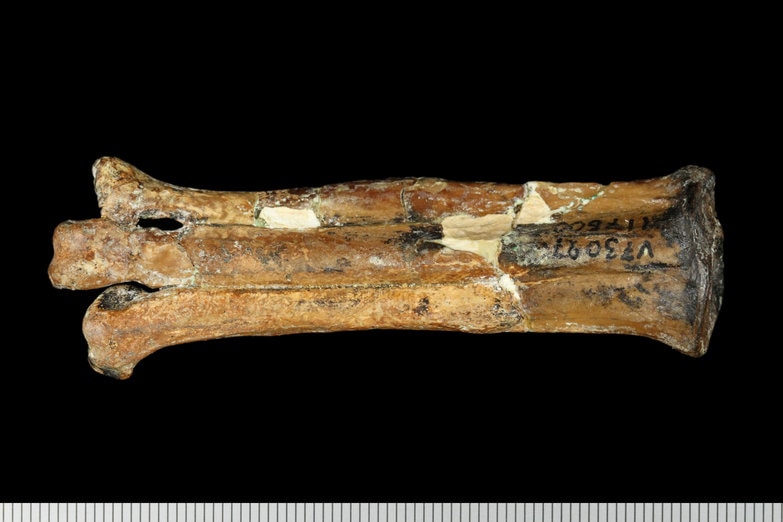
- Large enantiornithine avialan
- Estimated weight for A. darwini up to 1.2 kg
- Estimated weight for A. archibaldi up to 1.7 kg
- Type specimen of A. archibaldi has a tarsometatarsus length of 73.9 mm
- Inwardly curved claws
Soroavisaurus, Neuquenornis, Intiornis, Gettyia
North America
About Avisaurus
Avisaurus is a genus of enantiornithine avialans that inhabited North America during the Late Cretaceous period. The name "Avisaurus" translates to "bird lizard," reflecting its avian characteristics while acknowledging its evolutionary lineage.
Discovery and Classification
The type species, Avisaurus archibaldi, was discovered in the Hell Creek Formation of Montana, USA, and dates back to the Maastrichtian stage, approximately 70.6 to 66 million years ago. The initial discovery was a single fossil of a tarsometatarsus, which was first described as belonging to a non-avian theropod before being reclassified as an enantiornithine bird. Another species, Avisaurus darwini, was later named from the same formation. A species previously assigned to Avisaurus, Avisaurus gloriae, has since been renamed Gettyia.
Avisaurus belongs to the enantiornithine family Avisauridae, a group that also includes similar birds found in South America, such as Soroavisaurus, Neuquenornis, and Intiornis. Early hypotheses suggested Avisaurus might have been a terrestrial dinosaur, potentially indicating a land connection between North and South America, but further study confirmed its avian nature.
Paleoenvironment and Paleobiology
Fossils of Avisaurus have been found in environments characterized by humid, low-lying swamps, lakes, and river basins, particularly along the western shore of the Western Interior Seaway. The inwardly curved claws of Avisaurus are strikingly similar to those found in eudromaeosaur theropods, strongly indicating a predatory lifestyle. It is believed that Avisaurus preyed on other vertebrates, displaying behaviors analogous to some modern raptors.
Physical Characteristics
Avisaurus was a relatively large enantiornithine. Avisaurus darwini is estimated to have weighed up to 1.2 kilograms (2.6 lb), while Avisaurus archibaldi could reach weights of up to 1.7 kilograms (3.7 lb). The tarsometatarsus of the type specimen of A. archibaldi is notably large for an enantiornithine, measuring 73.9 mm (2.91 in) in length.
Source: Wikipedia ↗
Frequently Asked Questions
What does the name Avisaurus mean?
The name Avisaurus means "bird lizard." It reflects its classification as an avialan, an early bird, while also acknowledging its reptilian ancestry.
When did Avisaurus live?
Avisaurus lived during the Late Cretaceous period. Specifically, fossils of Avisaurus archibaldi have been found in deposits dating from approximately 70.6 to 66 million years ago.
Where were Avisaurus fossils found?
Fossils attributed to Avisaurus have been discovered in Montana, USA. Key locations include the Hell Creek Formation and the Upper Two Medicine Formation.
What did Avisaurus eat?
Evidence from its inwardly curved claws suggests that Avisaurus was predatory. It likely preyed on other vertebrates, similar to modern raptors.
How large was Avisaurus?
Avisaurus was considered a large enantiornithine. Avisaurus darwini could weigh up to 1.2 kilograms, and Avisaurus archibaldi up to 1.7 kilograms.
What is the significance of Avisaurus?
Avisaurus is significant as one of the last known enantiornithines, offering insights into avian evolution just before the end-Cretaceous extinction event. Its predatory adaptations also highlight the diversity of early birds.
Related Dinosaur species
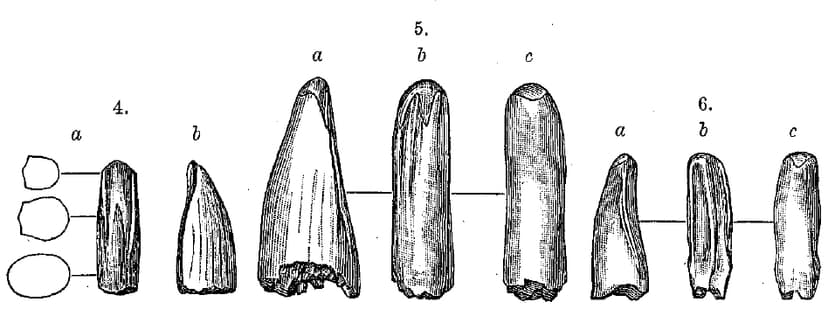
Aublysodon
Aublysodon is a dubious genus of carnivorous dinosaurs known from isolated teeth discovered in the Judith River Formation of Montana, dating to the late Campanian stage of the Late Cretaceous period. The type species, Aublysodon mirandus, was named by Joseph Leidy in 1868, but its classification is uncertain as the primary fossil evidence is a single lost tooth. Similar teeth are often attributed to juvenile tyrannosaurids, potentially belonging to genera like Daspletosaurus.
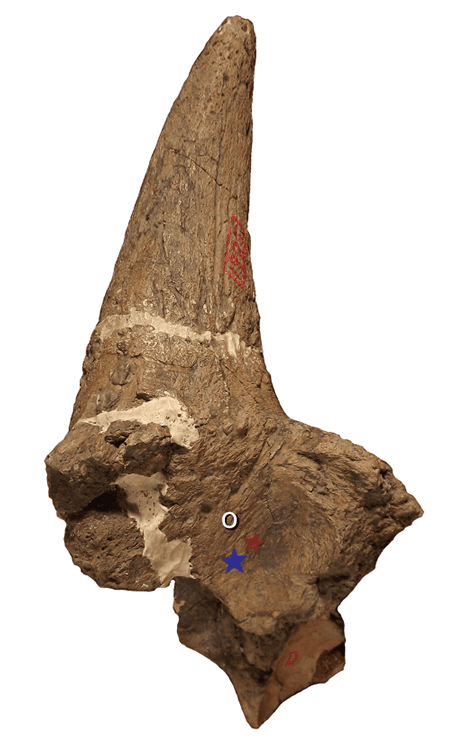
Ceratops
Ceratops is a dubious genus of herbivorous ceratopsian dinosaur from the Late Cretaceous period, known from fossils found in Montana's Judith River Formation. Despite its poorly understood nature, Ceratops holds historical significance as the type genus for both the Ceratopsia and Ceratopsidae groups. Its scientific name, meaning 'horn face,' reflects its most prominent feature.

Aquilops
Aquilops is an early herbivorous ceratopsian dinosaur that lived in North America during the Early Cretaceous period, roughly 109 to 104 million years ago. Discovered in Montana, its partial skull provided insights into the early evolution of neoceratopsian dinosaurs. The name "Aquilops" combines Latin and Greek for "eagle face," referencing its distinctive beaked snout.