
Archaeornithoides
Unknown·Late Cretaceous·Bayn Dzak, Mongolia·Unknown
Archaeornithoides is a genus of small maniraptoran theropod dinosaurs that lived in Mongolia during the Late Cretaceous period. Its name, meaning "shaped like an ancient bird," reflects early hypotheses about its close relationship to birds. However, later research has suggested it may be a juvenile troodontid or a distinct species, with its exact classification still debated.
Key Facts
- ›Lived during the Late Cretaceous period in Mongolia.
- ›Its name means "shaped like an ancient bird."
- ›The holotype specimen was a juvenile individual.
- ›Estimated body length was 50-60 centimeters, making it one of the smallest known non-avian dinosaurs.
- ›Fossil shows evidence of being bitten by a small mammal, possibly after death.
- ›Its exact classification, particularly its relationship to birds, remains a subject of scientific discussion.

- Skull fragment approximately 27 mm long, indicating an original skull length of about 5 cm.
- Estimated body length of 50-60 cm.
- Maxilla bears at least eight small, conical, and smooth teeth lacking wrinkles, serrations, or carinae.
- Long antorbital fenestra on the snout.
- Palatine bone may show the presence of a secondary fenestra.
Troodontids, Saurornithoides, Byronosaurus
Mongolia
About Archaeornithoides
Archaeornithoides is a genus of small maniraptoran theropod dinosaurs that lived in Mongolia during the Late Cretaceous period. Discovered in 1965 by a Polish-Mongolian paleontological expedition at Bayn Dzak, the fossil remains were formally named Archaeornithoides deinosauriscus by Andrzej Elzanowski and Peter Wellnhofer in 1992. The genus name, derived from Ancient Greek, translates to "shaped like an ancient bird," a designation that reflected early scientific hypotheses regarding its close evolutionary relationship with birds.
Discovery and Classification
The holotype specimen of Archaeornithoides is a juvenile individual, consisting of an articulated but fragmentary skull and lower jaws. This specimen was found within the Djadokhta Formation, dating to the late Campanian stage of the Late Cretaceous. The skull fragment preserved is extremely small, measuring just twenty-seven millimeters in length, suggesting an original skull length of approximately five centimeters. This led to an estimated body length of 50 to 60 centimeters, positioning Archaeornithoides among the smallest known non-avian dinosaurs.
Early interpretations by Elżanowski and Wellnhofer in 1993 proposed that Archaeornithoides was the closest known relative to birds, citing several bird-like features such as an interdigitated suture between the premaxilla and maxilla, broad palatal shelves, pneumatic sinuses, and unserrated teeth. However, subsequent discoveries and analyses have led to a re-evaluation of these claims. Many of the previously cited bird-like features have since been identified in other theropods, particularly troodontids and dromaeosaurs. Current scientific consensus suggests that while Archaeornithoides may be a juvenile troodontid, its exact placement remains uncertain, with some research indicating only weak support for a close relationship to Avialae (birds) and questioning its proposed close ties to spinosaurids and other taxa.
Paleobiology and Fossil Record
The dental morphology of Archaeornithoides includes small, conical, and smooth teeth that lack wrinkles, serrations, or carinae. The snout features a long antorbital fenestra, and the palatine bone may exhibit a secondary fenestra. A significant finding regarding the paleobiology of Archaeornithoides is the presence of distinct bite marks on the skull fragment of the holotype. This evidence, coupled with a ragged appearance of the bone, suggests that the jaws may have been bitten off from the braincase by a small mammal, possibly a Deltatheridium. It is also speculated that the remains may have passed through the digestive tract of a predator before fossilization, which could represent early evidence of Mesozoic mammals preying on dinosaurs.
Source: Wikipedia ↗
Frequently Asked Questions
What does the name Archaeornithoides mean?
The generic name Archaeornithoides means "shaped like an ancient bird" in Ancient Greek. This name was chosen due to early hypotheses about its close relationship to birds.
When and where did Archaeornithoides live?
Archaeornithoides lived during the Late Cretaceous period in what is now Mongolia. The fossils were discovered at Bayn Dzak.
How large was Archaeornithoides?
The holotype specimen was a very small, juvenile individual. Its estimated body length was 50 to 60 centimeters, making it one of the smallest known non-avian dinosaurs.
What is known about the diet of Archaeornithoides?
The text does not explicitly state the diet of Archaeornithoides. However, its small, conical, and smooth teeth suggest it may have eaten small prey.
What is the current understanding of Archaeornithoides' classification?
Early research suggested Archaeornithoides was a close relative of birds. However, more recent studies have questioned this, suggesting it might be a juvenile troodontid or a distinct species, with its placement near Avialae only weakly supported.
Is there any evidence of predation on Archaeornithoides?
Yes, the holotype specimen exhibits distinct bite marks on its skull fragment, suggesting it was bitten by a small mammal. It's also possible the remains passed through the mammal's digestive tract before fossilization.
Related Dinosaur species
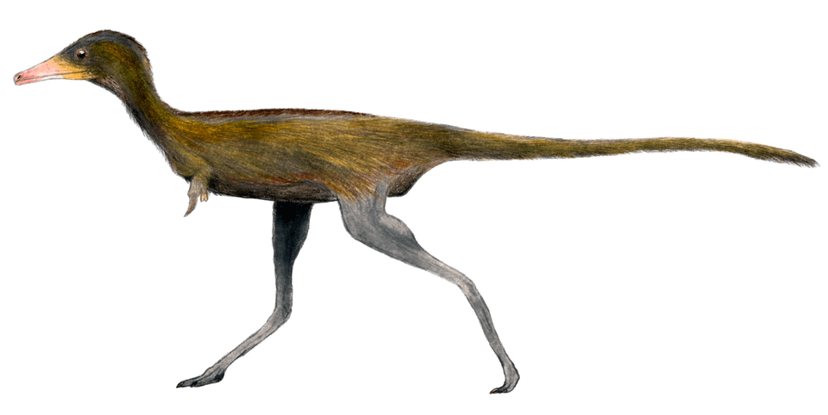
Albinykus
Albinykus is a genus of small alvarezsaurid dinosaur discovered in Mongolia's Gobi Desert. Living during the Late Cretaceous period, it was notable for its extremely small size, weighing under 1 kilogram, and a unique fusion of tarsal bones in its legs, a feature not observed in other alvarezsaurids. Its fossil remains suggest a posture similar to that of modern birds, hinting at the close evolutionary link between non-avian dinosaurs and birds.

Amtocephale
Amtocephale is a genus of pachycephalosaurid dinosaur discovered in the southern Gobi Desert of Mongolia. Known from a nearly complete frontoparietal dome, it represents a subadult individual. Amtocephale is considered a potentially very old representative of its family, dating back to the early Late Cretaceous period.
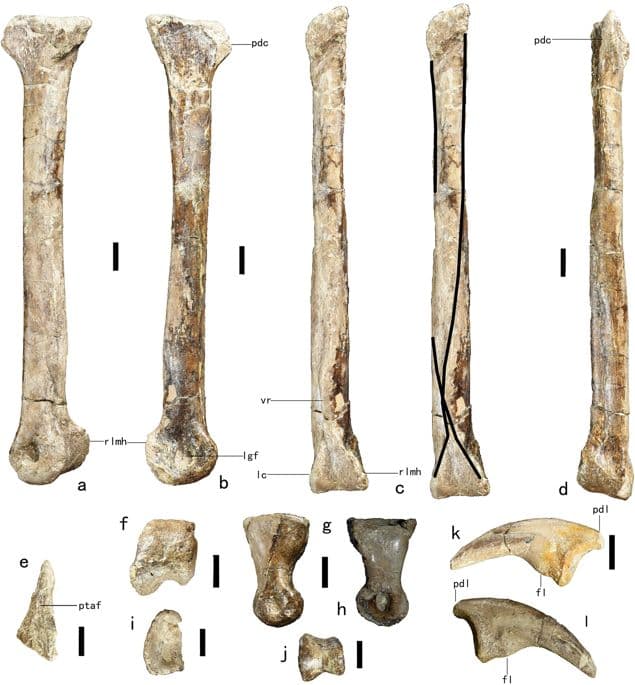
Anomalipes
Anomalipes is an extinct genus of oviraptorosaurian dinosaurs from the Late Cretaceous period of China. Known from a partial hindlimb, its name, meaning "unusual foot," reflects the peculiar shape of its foot bones. The only known species, Anomalipes zhaoi, was named in honor of Zhao Xijin.