
Asiatosaurus
Herbivore·Early Cretaceous·Mongolia and China·Quadrupedal
Asiatosaurus is an extinct genus of herbivorous sauropod dinosaur that lived during the Early Cretaceous period in what is now Mongolia and China. The genus is known primarily from teeth, with the type species, Asiatosaurus mongoliensis, and another species, Asiatosaurus kwangshiensis, both being classified as nomina dubia due to the scant nature of their fossil remains. Despite its limited fossil evidence, Asiatosaurus holds significance as the first sauropod genus named from East Asia.
Key Facts
- ›Asiatosaurus lived during the Early Cretaceous period.
- ›Fossils have been found in Mongolia and China.
- ›The genus is known mainly from teeth, making classification difficult.
- ›Both recognized species, Asiatosaurus mongoliensis and Asiatosaurus kwangshiensis, are considered nomina dubia.
- ›It was the first sauropod genus to be named from East Asia.
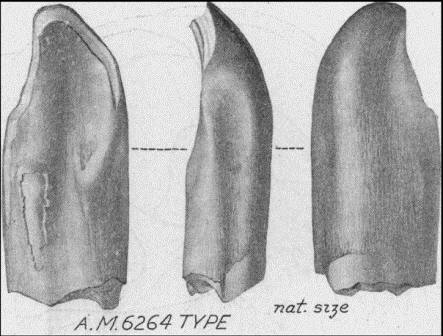
Known primarily from teeth., Classification as a sauropod dinosaur.
Mongolia, China
About Asiatosaurus
Asiatosaurus is an extinct genus of herbivorous sauropod dinosaur that roamed East Asia during the Early Cretaceous period. Its name, meaning "Asian lizard," directly refers to its geographic origin and reptilian nature. The genus is significant as the first sauropod to be formally named from East Asia, dating back to its description in 1924.
Fossil Evidence and Classification
The fossil record for Asiatosaurus is notably sparse, with the genus being known primarily from isolated teeth. This scarcity of remains has led to considerable uncertainty regarding its precise classification. The type species, Asiatosaurus mongoliensis, described by Henry Fairfield Osborn, and a second species, Asiatosaurus kwangshiensis, are both currently classified as nomina dubia, or "dubious names." This designation reflects the difficulty in relying on limited evidence, such as teeth, to establish definitive characteristics and distinctions from other dinosaur genera. Despite these challenges, Asiatosaurus has been considered within the brachyosaurid and euhelopodid groups by various researchers over time.
Geographic Distribution and Time Period
Fossils attributed to Asiatosaurus have been discovered in both Mongolia and China, indicating a geographic range across parts of East Asia. The dinosaur lived during the Early Cretaceous epoch, a period characterized by significant evolutionary developments in dinosaur lineages. While extensive fossil finds are lacking, the existing evidence points to its presence in the regional ecosystems of that era.
Source: Wikipedia ↗
Frequently Asked Questions
What does the name Asiatosaurus mean?
The name Asiatosaurus means "Asian lizard." It reflects the continent where its fossils were discovered, and its classification as a reptile.
When did Asiatosaurus live?
Asiatosaurus lived during the Early Cretaceous period. This geological time frame was approximately 145 to 100.5 million years ago.
Where were Asiatosaurus fossils found?
Fossils attributed to Asiatosaurus have been discovered in both Mongolia and China. These discoveries place the dinosaur in East Asia during its existence.
What did Asiatosaurus eat?
Asiatosaurus was a herbivorous dinosaur. This means its diet consisted of plants.
Why is Asiatosaurus considered a "dubious name"?
Both recognized species of Asiatosaurus are classified as nomina dubia, which means "dubious names." This classification is due to the extremely limited fossil evidence, primarily teeth, making it difficult to definitively identify and distinguish them from other dinosaurs.
Related Dinosaur species

Amargasaurus
Amargasaurus is a genus of sauropod dinosaur that lived in what is now Argentina during the Early Cretaceous epoch. It is distinguished by two parallel rows of tall spines running down its neck and back, a feature unique among known sauropods. While relatively small for a sauropod, Amargasaurus was a herbivore with a body plan typical of its group, characterized by a long tail, short neck, and barrel-shaped trunk.

Aragosaurus
Aragosaurus was a large, quadrupedal, herbivorous sauropod dinosaur that lived during the Early Cretaceous period in what is now Spain. With an estimated length of 18 meters and a weight of 25 tonnes, it possessed a long neck, a powerful tail, and a bulky body, similar in build to Camarasaurus. Its large, wide teeth were adapted for slicing leaves and branches from tall conifer trees.

Astrodon
Astrodon was a large herbivorous sauropod dinosaur that lived in what is now the eastern United States during the Early Cretaceous period. Fossils of this genus were discovered in Maryland and are estimated to be around 110 to 112 million years old. Its scientific name, Astrodon johnstoni, refers to the star-shaped cross-section found when one of its teeth was cut.